Work Integrated Learning in Grattan Street Press: a simulated workplace with real-world outcomes in the publishing industry
Matt Holden
Grattan Street Press is a student-staffed small press and a Work Integrated Learning (WIL) capstone subject in the Master of Publishing and Communications and Master of Creative Writing, Publishing and Editing. In this guest blog post, one of the subject coordinators, Dr Matt Holden, reflects on Grattan Street Press as an exciting alternative to more common WIL models, such as internships or industry projects.
It’s the last Wednesday in May, Week 12 of semester 1, 2025. Late in the afternoon, 24 students and two lecturers squeeze into a cramped classroom in the Sydney Myer Asia Centre. We are about to hit the “upload” button on the website of our printer, Ingram Spark, and send Grattan Street Press’s latest book to print. Stranger Weather is an anthology of new writing by emerging authors and it’s an exciting moment, the culmination of a semester’s work.
The Press is structured as a small publishing company and led by academics with extensive experience in trade publishing, bookselling and marketing. Associate Professor Sybil Nolan and Dr Katie Day are the publishers, while I, Dr Matt Holden, am the sales and marketing manager. Through the lens of our industry experience, we frame Grattan Street Press as offering our students the experience of working in a small publishing business.
Grattan Street Press aligns with the WIL principles by engaging students in authentic publishing work through the integration of theory into practice (Ferns et al., 2024). Upon enrolling in the subject, students apply to fill a particular role within the Press by explaining their skills and achievements in the pre-requisite subjects. The application questionnaire mirrors a real-world job application and determines students’ roles in the Press.
The Press is a set up as a trade publisher with various teams working towards real world outcomes: new manuscripts to work with, a published book, sales in bookshops, appearance of Grattan Street Press books and authors in the media, and social media interactions with a range of audiences. The editorial team works closely with authors on a structural edit of the manuscript and later checking proofs. The production team also engages with the authors and other stakeholders to lay out the text of the book, design the cover and manage the overall production process. The sales, marketing and publicity teams engage in the trade book market by creating campaigns to promote Grattan Street Press books and authors to readers, booksellers, the media and the wider public. These teams also organise a public book launch for each new title and Pitch to the Press events, where potential authors put forward their manuscript ideas to commissioning editors, whose responsibility is to select future books to publish. The Press’s publicity is also strengthened by the efforts of the social media team, who run campaigns on Instagram, TikTok, Bluesky, Facebook and LinkedIn. These tasks are all the type of meaningful practice expected in WIL: they are central to the business of acquiring, developing, publishing and selling books in the trade market, and organised, structured and carried out in the manner they would be in a publishing workplace. To that end, this WIL experience combines elements of a simulation and professional placement: though situated in a simulated environment, it yields real-world outcomes (TEQSA, 2022).
In a small publishing business, the lines between departments can be blurred, and Grattan Street Press reflects this, too. Students need to collaborate within and across teams, communicating, supporting and helping one another and sometimes just taking a load off someone else. Effective workplace communication and teamwork are two of Grattan Street Press’s key learnings, along with the more specific publishing skills and knowledge that students develop in their roles. Importantly, each team works to a tight schedule over the semester. Not meeting a deadline impacts other teams and the overall process; this helps students to get a sense of a real workplace in the publishing industry and develop time management skills.
Adding to the authenticity of the experience, students in all teams work with industry-standard applications, including Adobe Creative Cloud, Submittable (a manuscript submission platform), WordPress (for content management) and Basecamp (for file and project management). All communications with external stakeholders occur via dedicated grattanstreetpress.com email addresses.
Sybil, Katie and I see our roles in the Press as a combination of mentor, manager and teacher. While Grattan Street Press provides a structure for each project and a set of basic responsibilities for each team, we expect students to take charge of their roles and develop their own plans for carrying out their team’s work. Typically, we see students unsure of what they should be doing in the first few weeks, but we also see them quickly develop initiative and a sense of personal responsibility for their roles. Work in the Press continues between semesters as Sybil, Katie and I find and develop manuscripts, fulfill orders for Grattan Street Press books, and maintain relationships with the media and booksellers. In this sense we are managers as well as WIL educators, and each new group of students is responsible to us in the way they would be to a manager in a workplace.
The key assessment task is a handover report that serves as an operating manual for the students coming into a role in the following semester. The handover report gives students a structured opportunity to document what they have achieved and learned and to reflect on what has been effective, what hasn’t and where processes could be improved. It also lets students develop a narrative about their experience in Grattan Street Press that they can take into future job interviews and workplaces.
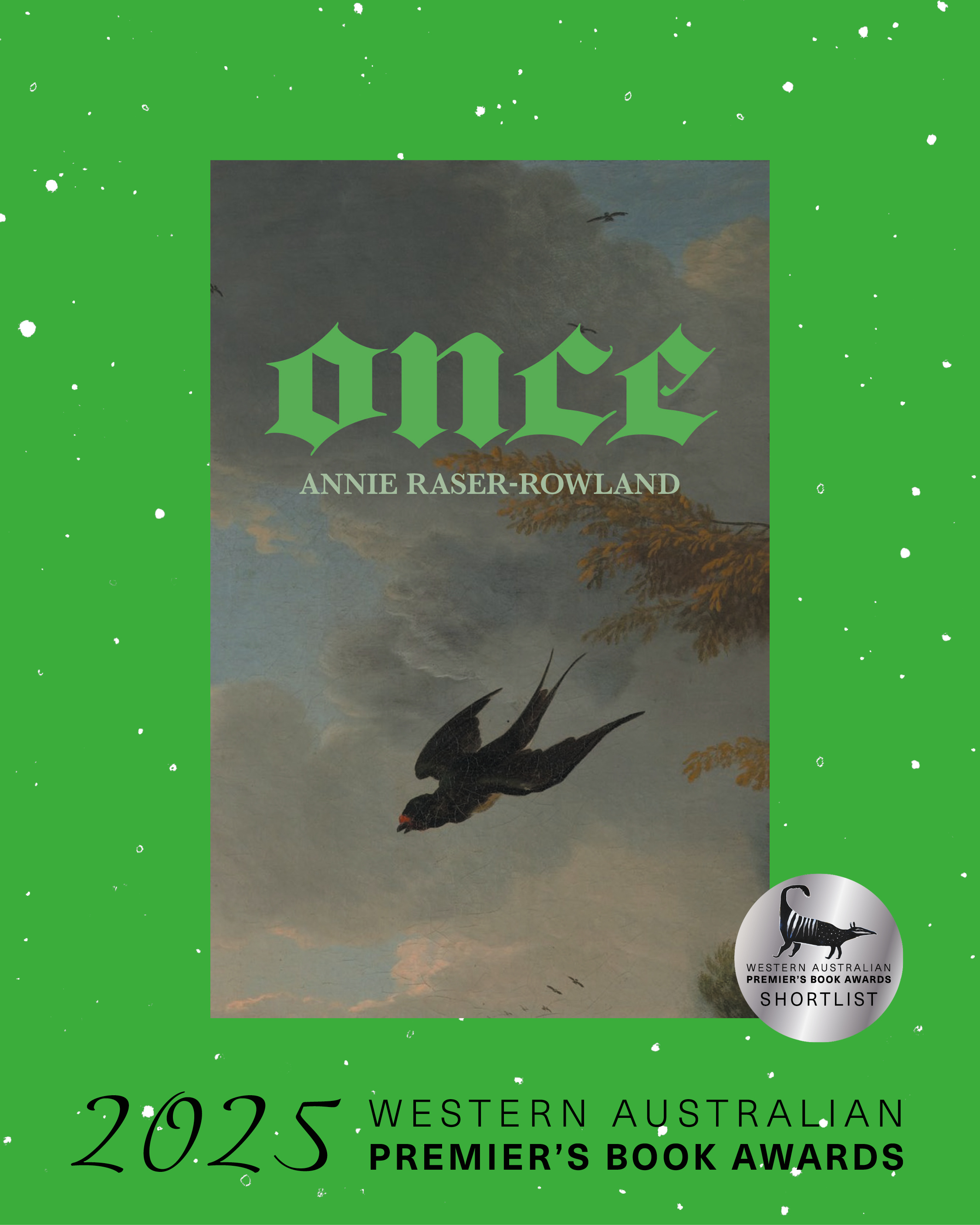
Grattan Street Press makes room for students to fail in work-like tasks without life-changing consequences, but it also gives them a sense of accomplishment. A week or so after we hit the “upload” button, students have a copy of the printed book in their hands: a concrete outcome to their semester’s work, and an artefact that has a life in the world outside the University through sales, reviews, publicity and events. Grattan Street Press books are sold through bookshops such as Readings, Avenue Bookstore and New Edition, and on the University of Melbourne e-commerce site. Our authors appear at writers festivals and in the media . Once, the novella by Annie Raser-Rowland that Grattan Street Press published in semester two, 2024, has just been short-listed for the WA Premier’s Book Awards in the fiction category. This public recognition of Grattan Street Press, our authors and our books, is an intentional outcome of the students’ work. Importantly, students also acquire new knowledge, skills and experience that they can take into their future working lives.
References
Ferns, S. J., Zegwaard, K. E., Pretti, T. J., & Rowe, A. D. (2024). Defining and designing work-integrated learning curriculum. Higher Education Research & Development, 44(2), 371–385.
TEQSA (2022, May 4) Guidance note: Work-integrated learning. Version 2.