Follow the guide!
Students curate a virtual exhibition to develop understanding of Italian culture, art and history and deepen their Italian language skills.
Snapshot
- Educator: Elisabetta Ferrari
- Subject: ITAL20001 Italian Cultural Studies B
- Discipline: Italian Studies
- Study Level: Undergraduate, Level Two
- Class Size: 15 students
- Delivery Mode: Combination of on-campus lectures and seminars
Design
Why?
ITAL20001 Italian Cultural Studies B features multiple interactive resources, including VR experiences, 360-degree video, use of primary sources, to promote students’ engagement. These resources allow students to visualise, analyse and be immersed in significant periods of Italian history and conceptualise their connection to the present. The virtual exhibition assessment addressed the challenge of making the development of these higher-order skills visible and assessable. For this assessment, students work in small groups to curate and exhibit relevant objects from a particular period in a meaningful narrative. Students then act as gallery guides guiding their peers and assessors through their virtual gallery. Artifactual literacy, involving interacting with objects from everyday items to artworks, allows engagement with the language of life, both past and present. These generate individual interpretations, felt connections and emotional responses which can be negotiated and discussed naturally in the target language (Abdelhad et al., 2020). The authenticity of artworks and cultural objects can change language production from formulaic to true to life communication and bring in the cultural aspect of language learning (Bayri, 2010).
How?
Preparation and resources
- During a 12 weeks semester, students study the Italian historical period spanning from the mid-1800s to the end of WWII through the analysis of visual arts, architecture and other primary sources (e.g. diaries, literature and archival materials). Historical context and primary texts are introduced during the lectures, while seminars are dedicated to text analysis and discussion.
- All prescribed material is made available to students via Canvas. Throughout the semester, students also have the opportunity to analyse primary sources from the University of Melbourne’s Special Collections. These materials are accessed in the Object-Based Learning Lab, where students may take digital photographs for their projects.
- During the semester, students watch short videos of museum exhibition to prepare for their assessment.
- The Virtual Exhibition assessment constitutes 20% of the total mark for the subject. For this assessment, students work in groups of two, three, or four, depending on class size.
Activity Sequence
- Step One
-
Choose an exhibition theme
Each group chooses a topic linked to a historical period, such as Italian Futurism and the avant-garde.
- Step Two
-
Develop a curatorial approach
Create a curatorial rationale and select up to six items, including artworks or other artefacts. Develop an original exhibition narrative and consider innovative curatorial aproaches.
- Step Three
-
Prepare and submit exhibition materials
Each group submits an exhibition plan outlining the layout, colour scheme, item placement and display order, along with high-resolution artefact images and/or YouTube links for video installations, exhibition title panels and a short audio commentary for each artwork. Every student contributes an equal number of artworks, and the instructor uploads all submitted content to Artsteps.
- Step Four
-
Research individual artworks
Each student conducts in-depth research on their chosen artworks and submits a 400-word report plus bibliography.
- Step Five
-
Present the exhibition to the class
Group exhibitions are displayed in class, using multiple rooms within a shared Artsteps exhibition space. Each group guides classmates through its exhibition and answers audience questions.
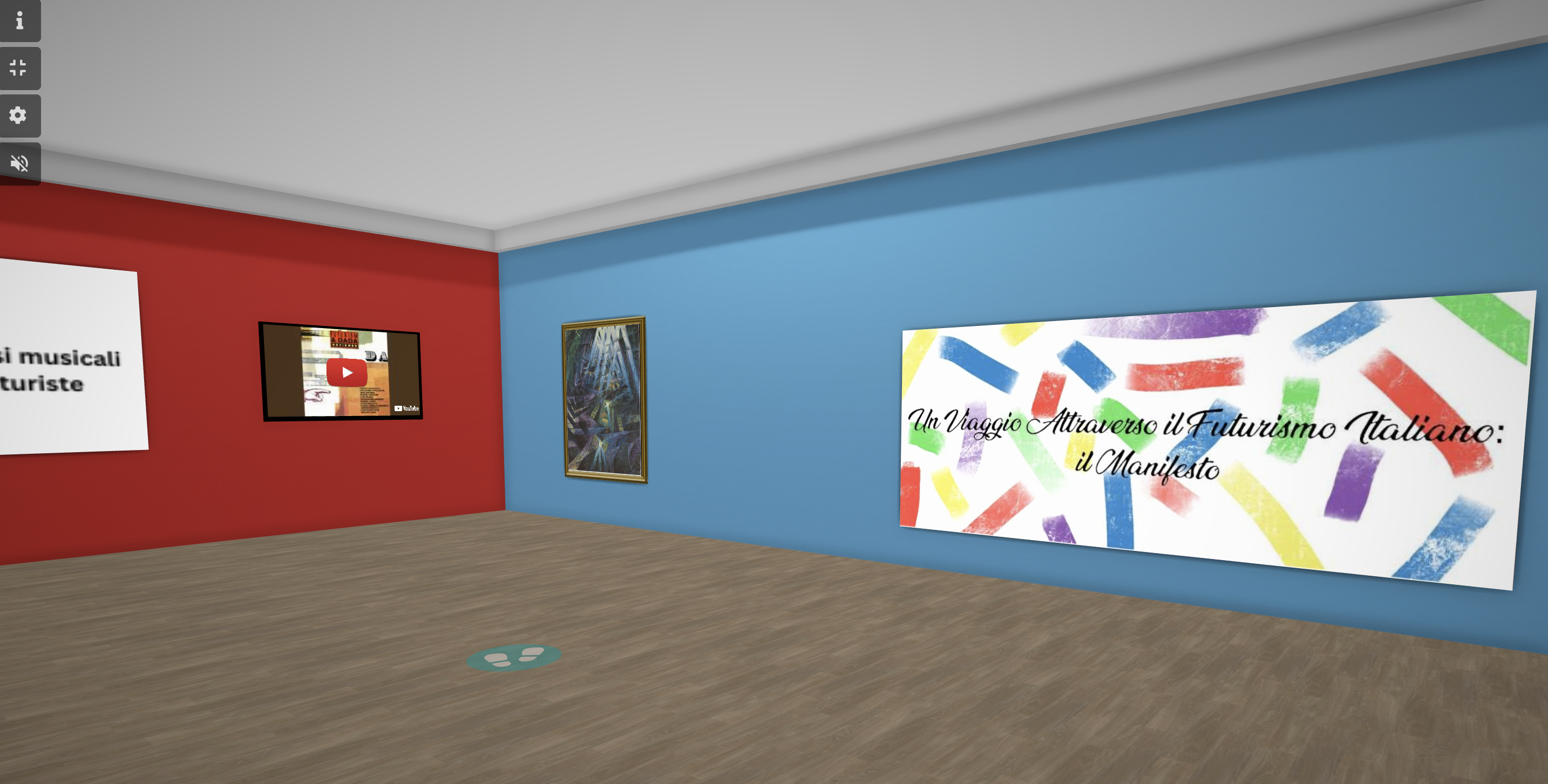
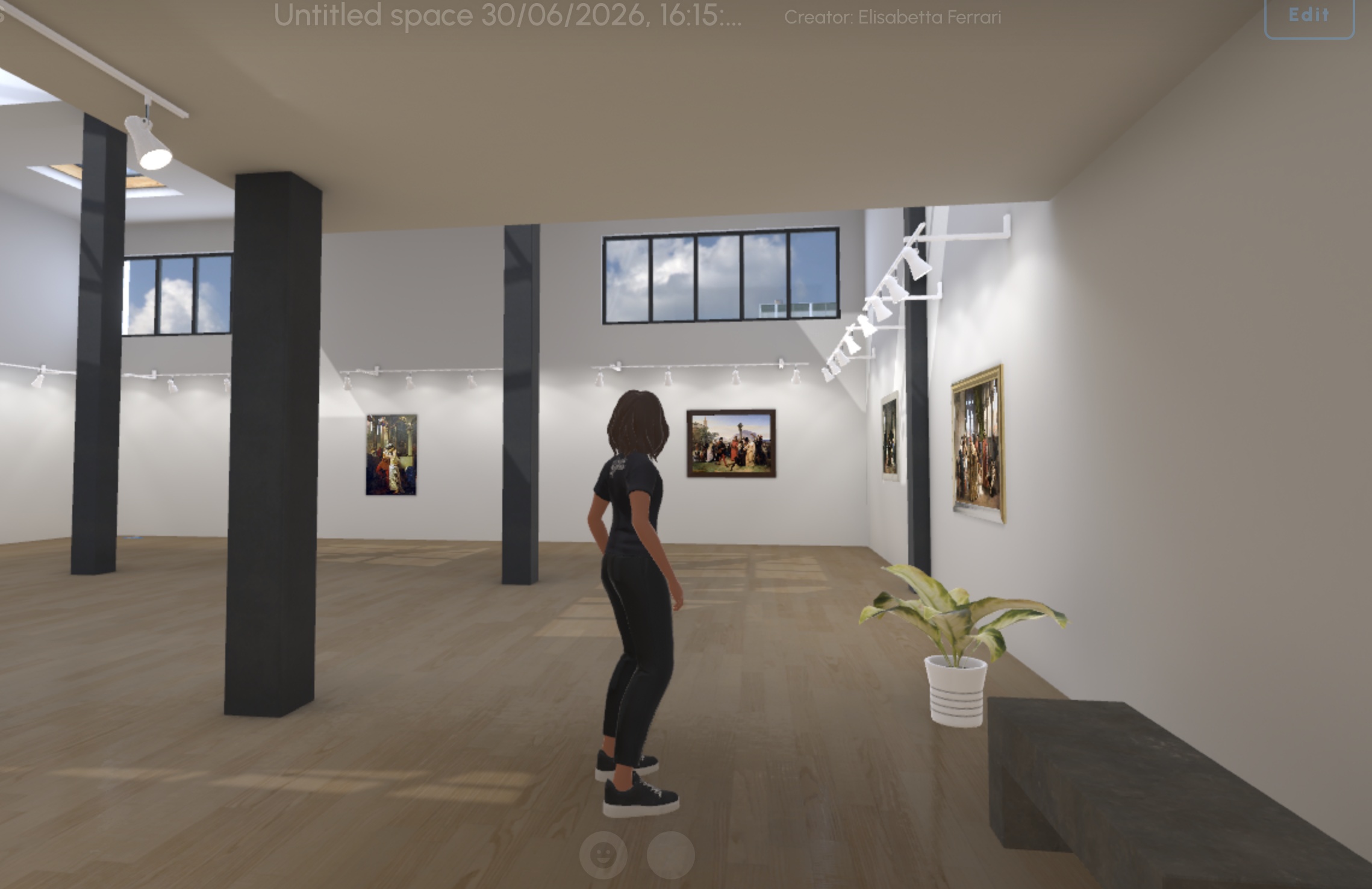
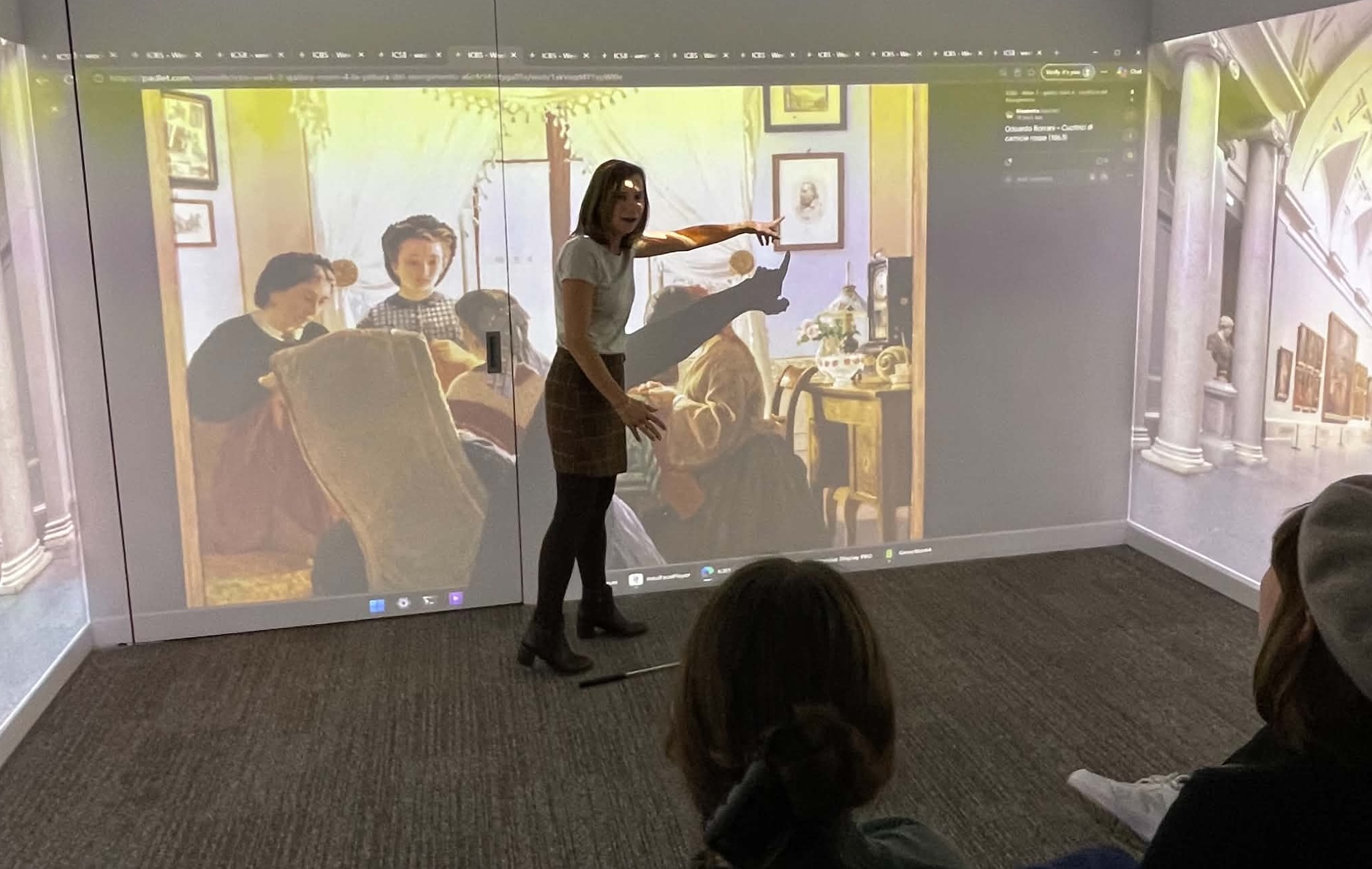
Credit: Elisabetta Ferrari
Reflection
One week after the in-class exhibition presentations, each student submits an individual reflection on their contribution to the project and their role within the group.
Insights
What have we learned?
Interviewed students shared that the interaction with and curation of artworks and objects prompted deep research that allowed them to develop very thorough knowledge of their topics and feel like ‘experts’. Students found that using exhibition software provided an interesting point of difference to the activity and allowed the development of ‘more skills’ such as ‘story-telling skills.’ Seeing the finished product of the virtual gallery was rewarding for students - ‘it made it really, really worthwhile.’ Group work was seen as a key aspect of the activity, which students saw as ‘very, very collaborative’, providing opportunities to speak and practise clear communication skills. They also identified the value of supporting each other to make the activity ‘a lot more manageable.’
Through this activity, students had the opportunity to engage critically and creatively with the content studied during the semester. By curating a virtual exhibition and acting as guides for their peers, they not only deepened their understanding of specific historical and artistic periods but also developed written and oral competency in Italian language, teamwork and organisational abilities, curatorial skills and digital competencies.
Resources
As part of the project, we carried out research on available 360-degree free Virtual Gallery Tour platforms. Of the 9 platforms tested I decided to use Artsteps (now Metasteps), a web-based platform that supports images, text, videos and is suitable for one or multiple rooms.
Contribute
Tell us if you have tried this design or something similar.
Click here to share your design
References
Abdelhadi, R., Hameed, L., Khaled, F., & Anderson, J. (2020), Creative interactions with art works: Engaging approach to Arabic language-and-culture learning. Innovation in Language Learning and Teaching, 14(3), 273-289.
Bayri, G. (2010), The student perception of visual arts in the speaking classroom, International Journal of Arts and Sciences, 3(11), 166-180.