Objects as lasting experiences
Students work with peers to extend their engagement with objects beyond class time, develop discipline-specific analytical capacities and learn how to collaborate effectively.
Snapshot
- Educator: Dr Becky Clifton
- Subject: ANCW20003 Egypt Under the Pharaohs
- Discipline: Ancient World Studies
- Study Level: Undergraduate, Level Two
- Class Size: 70 students
- Delivery Mode: Combination of on-campus lectures and tutorials
Design
Why?
In this subject, students have opportunities to engage with Egyptian artifacts and objects in the object-based learning labs in Arts West. The challenge is extending these time-bound encounters. The activity design, thus, incorporated elements of peer-to-peer work, co-creation and multimodal reflection (Barton & Ryan, 2014) to support the development of students’ analytical engagement with objects and do so in collaboration with others. To that end, this design offers a great example of collaborative peer work with objects. Object-based learning is ideally suited to effective group work. It allows pedagogical layers of interaction, including interaction with the subject through enquiry-based learning, interaction with artefacts through object-based learning, and interaction with peers through collaborative learning (Kukhareva et al., 2020). Objects are open to multiple interpretations and varied values (Thogersen et al., 2018), and, through group work, students learn to collaboratively build diverse understandings while navigating differences to build connections (Kador et al., 2017).
How?
Preparation and resources
The Subject Coordinator, Dr Becky Clifton, followed these steps to prepare for the activity:
- Selected relevant artefacts as objects of students’ analysis.
- Collated basic information about each object, including the date of the object and information about provenance, to give students as a starting point for interpreting their objects.
- Assigned students to small groups, roughly equal in number to facilitate equal division of effort later in the semester.
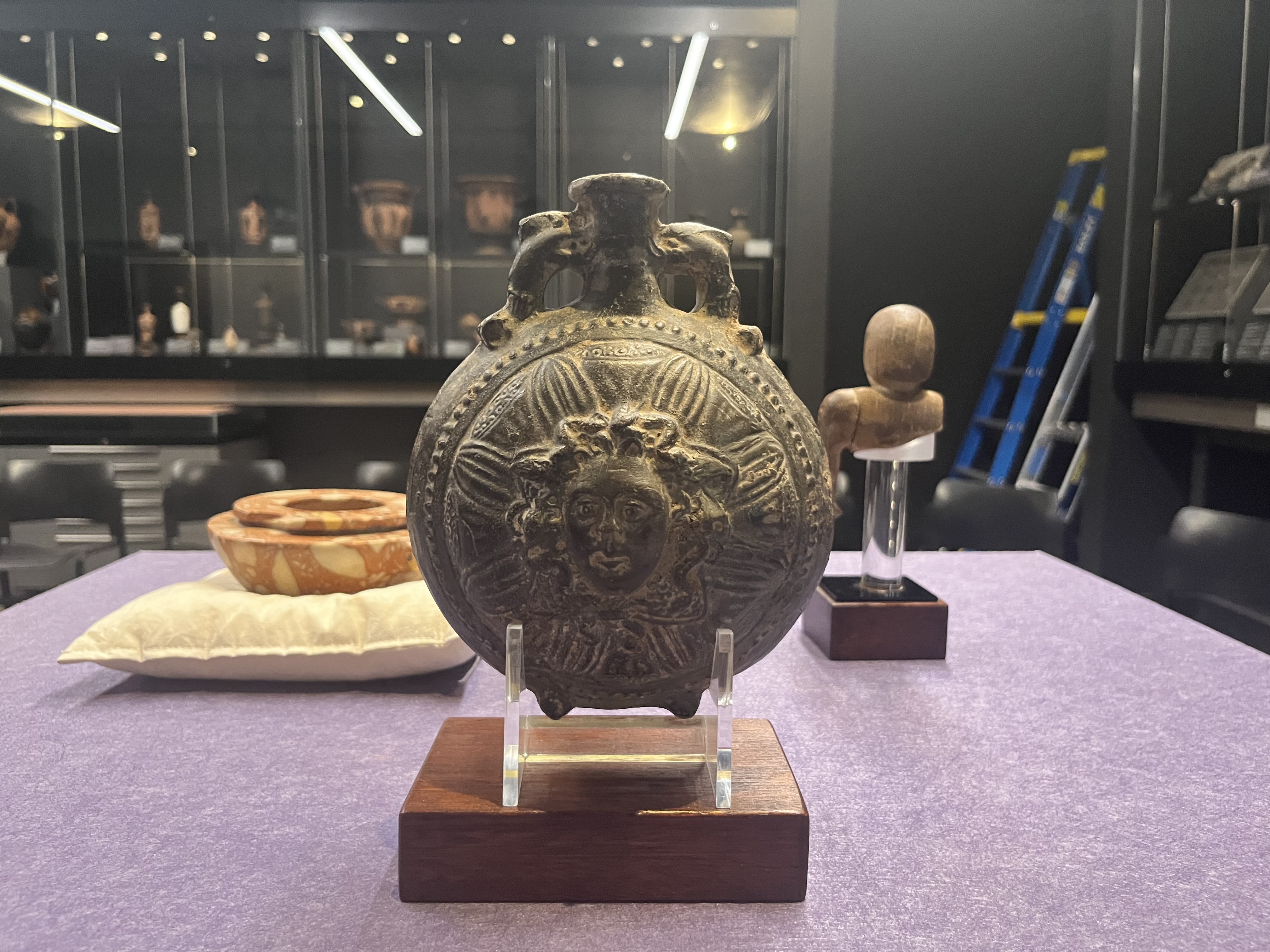
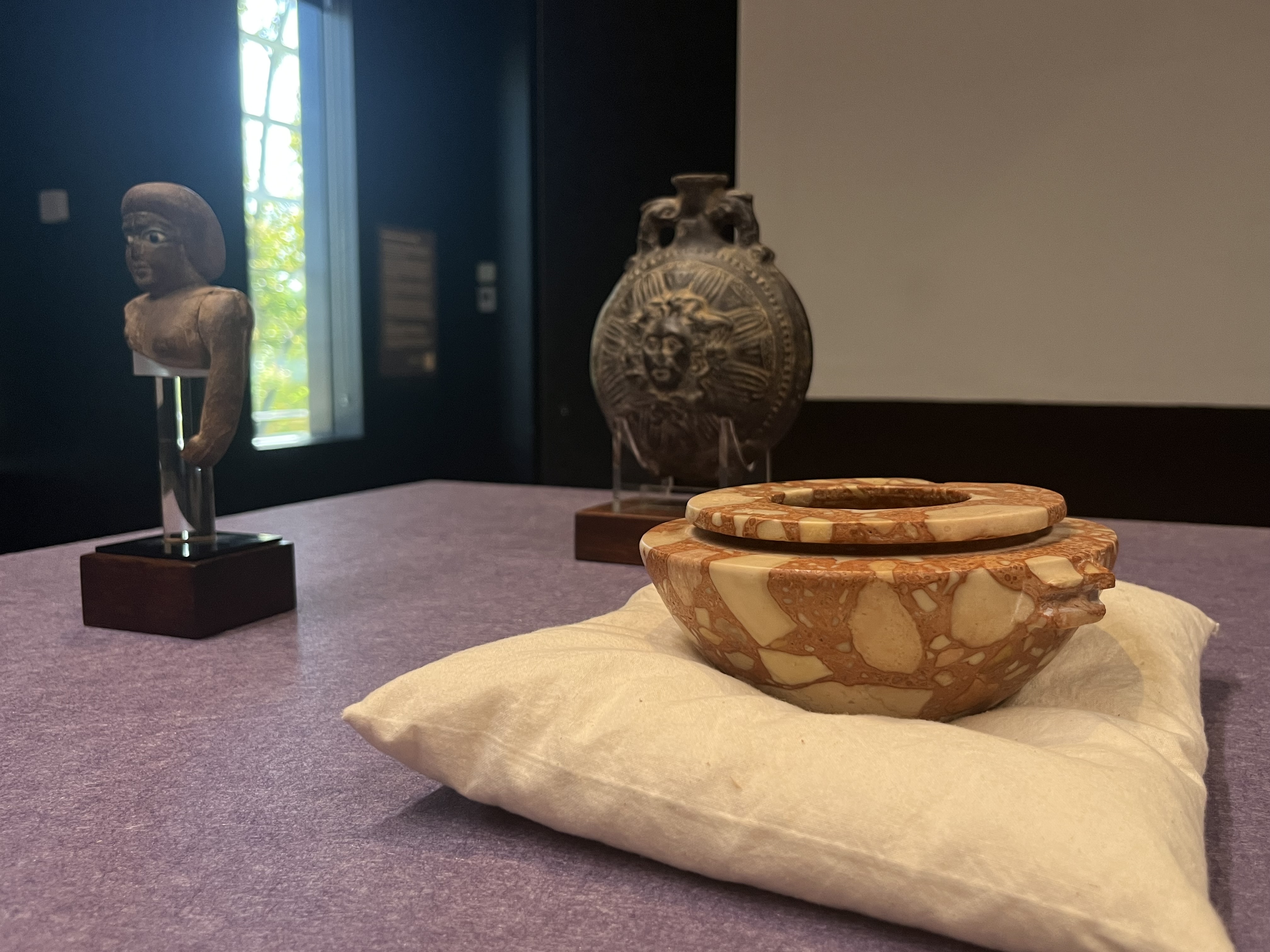
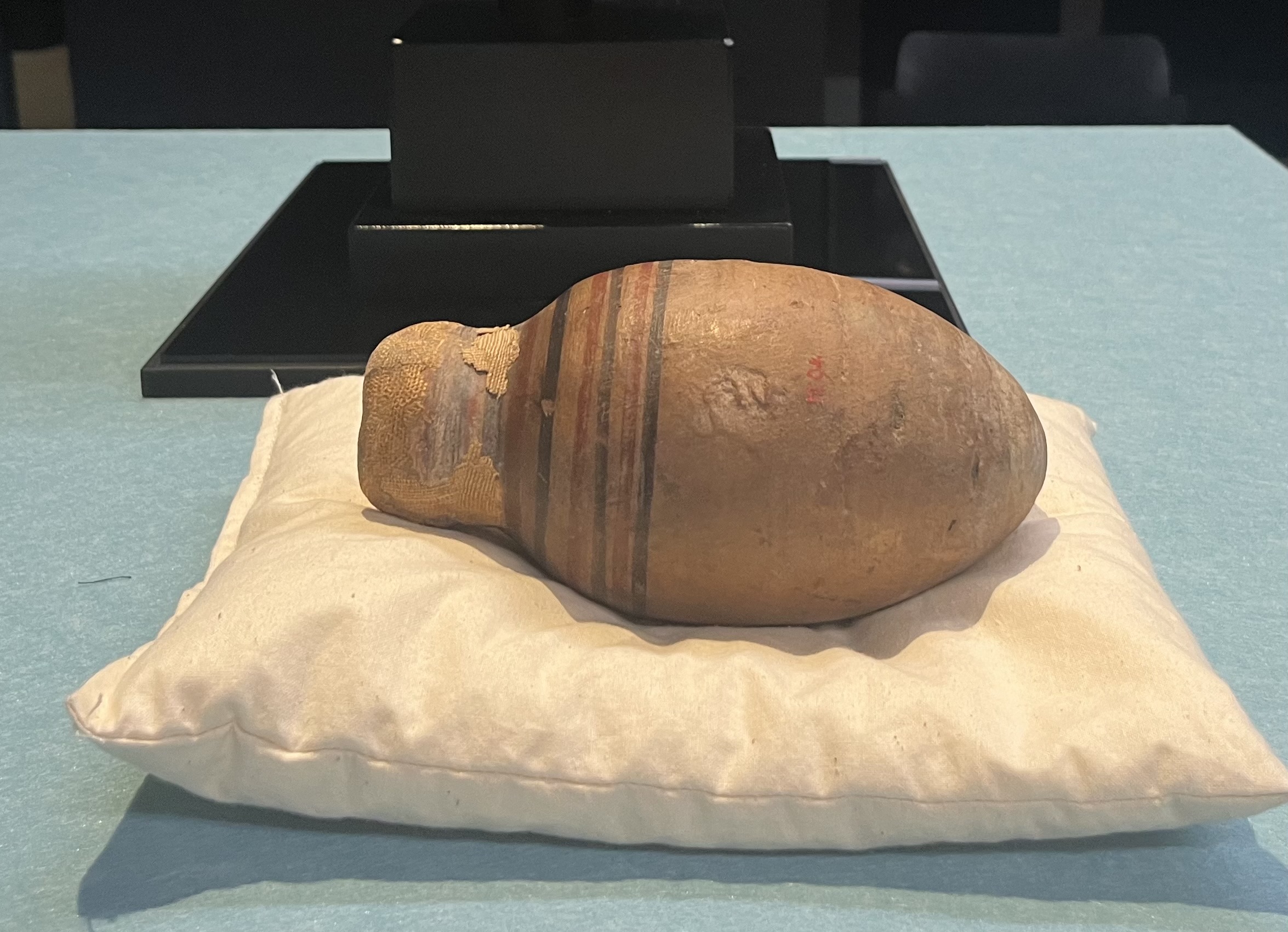
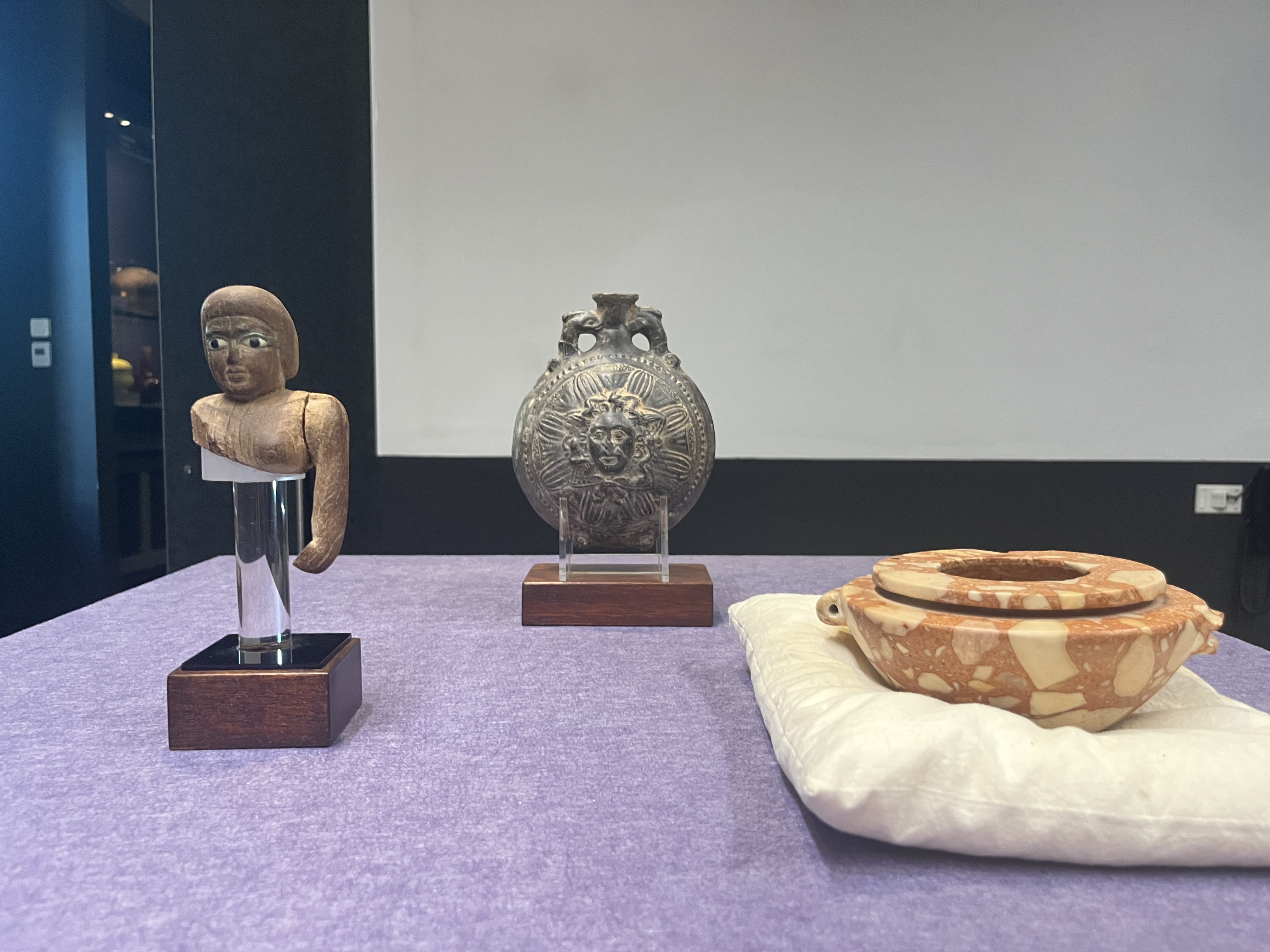
Objects selected for students’ analysis were the key resources for this activity; additional resources also included 3D prints and photographs of these objects.
Activity Sequence
- Week Two
-
Explore and interpret objects
Learn how to question and interpret artefacts. Photograph, describe and discuss objects with peers.
- Week Two to Five
-
Develop and independent analysis
Write about a selected object while developing analysis skills in tutorials and cultural and historical understanding through lectures and readings. Use photographs or 3D models where available.
- Week Five
-
Observe again and submit
Make final close observations in tutorials. Submit a written analysis combining first-hand observations, limited scholarly research and comparison with at least one other relevant ancient object.
- Week Seven
-
Receive written feedback
Receive feedback on the independent analysis.
- Week Nine
-
Compare interpretations in groups
Discuss individual interpretations and combine artefact studies for the Week Tweleve presentation.
- Weeks Nine to Twelve
-
Prepare a combined analysis
Meet outside class or communicate asynchronously to create a digital visual aid and group presentation.
- Week Twelve
-
Present and contextualise findings
Present to the tutorial, explaining what the group learned about its object and how it fits into a broader context.
Reflection
As part of the group presentation, students are asked to reflect on how they formed their own interpretations and what they learned from being exposed to other students’ investigations of the same objects. This reflective component could be further extended by including a reflective assessment on students’ engagement in collective artefact analysis.
Insights
Post-activity survey containing quantitative and qualitative responses shows that the majority of students were highly enthusiastic about both the object-based learning and collaborative aspects of the activity. There was strong agreement that ‘interacting with the artefacts in collaboration with other students’ and ‘discussing variations between own interpretation and other students’ interpretations of the same artefact’ were engaging aspects of the activity. Students were motivated by the authentic experience of interacting with objects and the ‘excitement of sharing what they learned’, which they identified as allowing them to develop deeper and more complex understandings.
Becky Clifton shared the following reflection about the activity and what students gained from it:
For me, one of the greatest benefits of this extended activity design was that students who had put significant effort into their own independent artefact analyses were empowered to share what they had found with one another and learn from their peers in return. Rather than stopping the conversation at precisely the point when students had the most to say and moving from one independent assessment to the next, students were able to continue to build on their understanding and extend and solidify their learning through collaboration with others.
Contribute
Tell us if you have tried this design or something similar.
Click here to share your design
References
Barton, G., & Ryan, M. (2013). Multimodal approaches to reflective teaching and assessment in higher education. Higher Education Research & Development, 33(3), 409–424.
Kador, T., Hannan, L., Nyhan, J., Terras, M., Chatterjee, H., & Carnall, M. (2018). Object-based learning and research-based education: Case studies from the UCL curricula. In: J.P. Davies, & N. Pachler (Eds.) Teaching and Learning in Higher Education: perspectives from UCL (pp. 157-176). UCL IoE Press.
Kukhareva, M., Lawrence, A., & Koulle, K. (2020) Layers of interaction: Object-based learning driving individual and collaborative active enquiry. In S. Pratt-Adams. U. Richter, & M. Warnes (Eds) Innovations in active learning in higher education. A.R.U Anglia Ruskin University.
Thogersen, J., Simpson, A., Hammond, G., Janiszewski, L., & Guerry, E. (2018). Creating curriculum connections: A university museum object-based learning project. Education for Information, 34, 113-120.