About
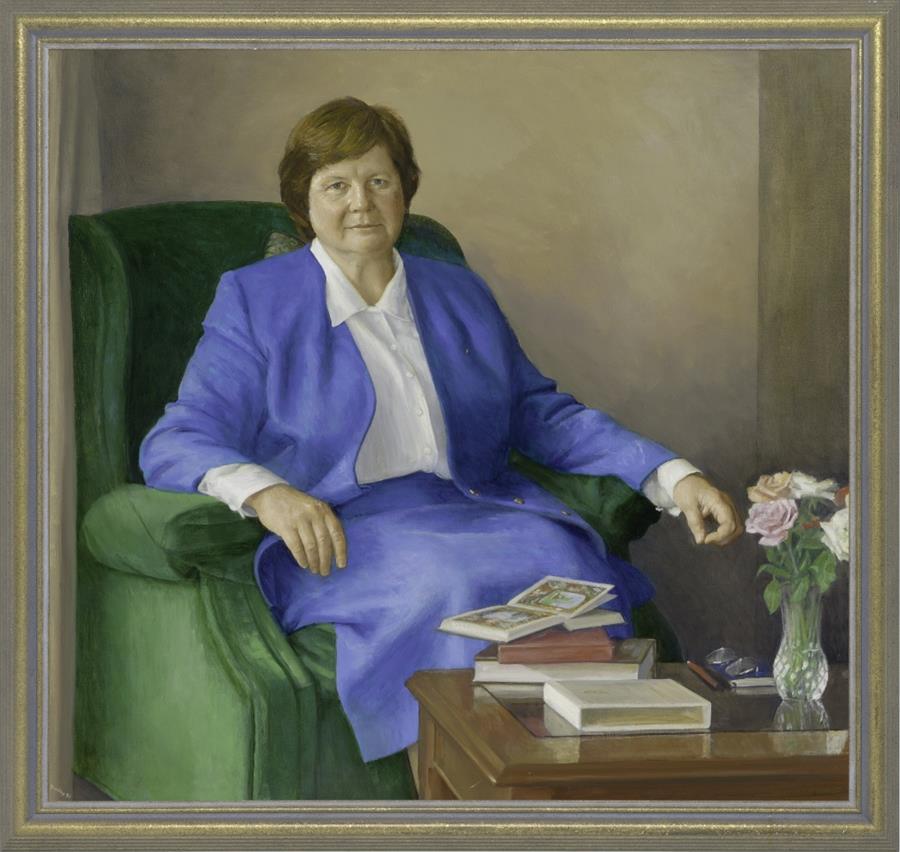
In the final month of the Illuminating Minds exhibition, this two-part event reflects on the legacy of Professor Emerita Margaret Manion IBVM AO FAHA (1935 - 2024). A collection of papers from scholars, curators, friends and associates will highlight key aspects of Margaret's contribution to the study of medieval manuscripts and to the broader intellectual and artistic life of the University/Museums and other cultural institutions. The symposium will conclude with a performance at Newman College Chapel of music inspired by and in honour of Margaret.
Registration
The symposium is free, but registration is essential.
Location
Public Lecture Theatre, Old Arts Building, The University of Melbourne
Symposium programme overview
Part One – Academic Papers and Reminiscences
9.00am – 4.30pm, Public Lecture Theatre, Old Arts Building, The University of Melbourne
Introduction and Acknowledgement of Country: 9.00am – 9.15am
Session 1: Margaret Manion Within and Beyond the University. 9.15 - 10.45am
Dr Alison Inglis AM, (Honorary Fellow, Art History and Art Curatorship, University of Melbourne, Emeritus Trustee, NGV)
Professor Margaret Manion: Within the University and Beyond
This paper will provide a brief survey of the breadth and diversity of Margaret Manion’s career, starting with her early life as a Loreto Sister and then considering her many decades as a teacher, an internationally recognised authority of medieval art, and an influential leader in Australia’s cultural sector. This presentation will draw upon the four themes - teaching, scholarship, trailblazing, and art history - that underpinned the University’s exhibition, Illuminating Minds, celebrating Margaret Manion’s life and work.
Professor Bernard Muir (Honorary Fellow, Art History and Art Curatorship, University of Melbourne)
Working with Margaret Manion: How to Light a Fire
Margaret Manion and I taught the history of the medieval book together for over three decades. Margaret specialised in the analysis of the art and execution of the miniatures in illuminated manuscripts with special emphasis on Insular Gospel Books, fifteenth and early sixteenth-century Books of Hours and other more formal liturgical manuscript genres. Latterly, we collaborated on the teaching of the postgraduate subject 'The Art of the Book'. We published two collections of scholarly essays on the medieval manuscript book and after her retirement I produced a festschrift in her honour. We each had individual strengths and different approaches in our teaching and publishing. What appeared to be a straightforward collaboration to outsiders was occasionally fraught with tension as we attempted to achieve a balanced analysis of manuscripts that represented our individual approaches and understandings. This brief analysis explores details of our working relationship and how we achieved harmony in teaching, research and publishing.
Dr Gerard Vaughan AM (Honorary Fellow, Art History and Art Curatorship, University of Melbourne; former Director of NGV and former Director of NGA)
Margaret Manion and the National Gallery of Victoria
This paper will focus on Margaret Manion’s close connections with the NGV, which remained central to both her academic career as teacher and medieval and Renaissance specialist, and to her broader community-based activities beyond the University. Margaret served for many years as a Trustee of the NGV, and as a member of the Felton Bequests Committee. The NGV’s relatively small, but distinguished, MSS collection, including her beloved Wharncliffe Hours, was always a special focus and enthusiasm.
Shane Carmody (Former Director, Collections and Access, State Library of Victoria)
Imagining the Medieval: Margaret Manion at the State Library of Victoria
In this paper Shane Carmody will reflect on his experience of working closely with Margaret Manion to deliver the exhibition The Medieval Imagination: Illuminated Manuscripts from Cambridge, Australia and New Zealand at the State Library of Victoria in 2008. This remains the most successful exhibition held by the Library and its legacy of scholarship endures. Shane will give an insider’s account of its creation, and the crucial role played by Margaret Manion, together with an assessment of its enduring impact.
Morning Tea: 10.45 - 11.15am
Session 2: Margaret Manion’s former students on her legacy and their research: 11.15am - 12.45pm
Jessica Majcen (PhD candidate, University of Melbourne)
Maître François’ Living Dead: The Personification of Death
Images of Death stalk the pages of late medieval manuscripts. From the first Bite of the Apple to the Office of the Dead, the figure of death appears as vivid reminders to the viewer of their own mortality and the reciprocal relationship between the living and the dead in late medieval culture. Maître François, one of the leading Parisian illuminators in the third quarter of the 15th century, worked across devotional and so-called secular works, painting several striking images of the Personification of Death. These images of death indicate the use of previously established iconographic models, as well as the artist’s own innovation and experimentation in presenting complex or abstract ideas relating to mortality and salvation. This paper will discuss images of death from two of Maître François’s best-known works, a two-volume French translation of St Augustine’s City of God (c. 1469-73; Paris, BnF Ms. Fr. 18-19), and the Wharncliffe Hours (c. 1475-80; Melbourne, NGV, Ms. Felton 1). By comparing how the artist approached illustrating a theological work versus that of a devotional work, we will explore the form, function and audiences for these works, and how they fit within the broader context of death imagery produced in the 15th century.
Dr Anna Welch (Principal Collection Curator, History of the Book, State Library of Victoria)
Understanding an underdrawing: The decorative program of the Wharncliffe Hours
The Wharncliffe Hours (c. 1475-1480) is one of the treasures of the National Gallery of Victoria and held a special place in the life and career of Margaret Manion, as the subject of her exceptional 1962 Master of Fine Arts thesis, published as a monograph in 1972. The relationship between the programs of the central miniatures and the bas-de-page scenes puzzled Margaret and has continued to puzzle many of us ever since, since the scenes depicted in each series appear incongruent: why is the Visitation accompanied by a depiction of hand-to-hand combat? Through analysis of a previously undiscussed underdrawing on f. 76v which demonstrates a change in the order of the bas-de-page scenes (including that below the Visitation), I will explore this relationship and consider the thinking and motivations of the artists involved, as well as the reception of the imagery for early readers.
Dr Hilary Maddocks (Honorary Fellow, Art History and Art Curatorship, University of Melbourne; Researcher, Philatelic, Australia Post)
The Wharncliffe Hours, Margaret Manion and Postage Stamps
The Wharncliffe Hours is the illuminated manuscript most associated with Margaret Manion. Today one of the treasures of the National Gallery of Victoria, it was acquired through Christie’s in 1920 with funds from the Felton Bequest. This paper will discuss Margaret’s important contribution in bringing the Wharncliffe Hours and other illuminated manuscripts in Australian collections to national and international attention. Through Margaret’s lasting advocacy, nearly every Australian has seen an illuminated manuscript; no less than five books of hours, including the Wharncliffe Hours, have appeared on Christmas postage stamps over the years, the most recent in 2024.
Libby Melzer (Head of Collection Care, State Library Victoria)
Parchment as an analytical resource: the analysis of two glossed Bible books
This paper presents research aiming to better understand the materiality of parchment used in a group of medieval manuscripts held at the State Library of Victoria. Parchment in medieval manuscripts survives in substantial quantities and is often exceptionally well preserved, forming a valuable archaeological resource to understand the resources, practices, and priorities of the communities that produced these books. The study applied emerging analytical techniques to “fingerprint” the protein structures of individual parchment leaves. Combined with the mapping of anatomical features, this approach enabled the development of detailed profiles indicating the species, age, and number of animals used in the production of each manuscript. These methods are demonstrated here through an examination of two early thirteenth‑century glossed Bible books: the Epistles of Saint Paul, produced in Central Italy, and a copy of Leviticus, produced in Paris.
Lunch: 12.45 – 1.45 pm
Session 3: Margaret Manion’s colleagues on her legacy and their research: 1.45 - 3.15pm
Dr Judith Collard (Honorary Fellow, Art History and Art Curatorship, University of Melbourne)
St Cuthbert’s Coffin: an exploration of its reception
The carved coffin of St Cuthbert was created in the seventh century to house the incorrupt body of the saint. Carried by the monks, it travelled from Lindisfarne to Chester-le-Street to Durham to escape the Viking incursions. It still survives in a fragmentary state in Durham Cathedral. The coffin has been examined and described several times: its translation to the newly built Norman cathedral at Durham, when the tomb was excavated by James Raine in 1827 and even by Meyer Schapiro in his article on Romanesque aesthetics. I am interested in how the textual sources and the coffin itself have been approached, revealing the different roles they have played, from hagiographical accounts of veneration to objective evidence in reconstruction for archaeological and antiquarian writings. I argue that these later readings often reveal more about contemporary issues than the objects they purport to discuss.
Dr Louise Marshall (Honorary Senior Lecturer, Department of Art History, University of Sydney)
Sebastian’s Arrows: Seeking Help Against the Plague in Fourteenth-century Italy
As a tribute to Margaret Manion’s deep understanding of medieval Christian imagery, my paper offers a case study of one group of religious images at a moment of adaption and change. It will focus on the depiction of St Sebastian in Italian painting in the half century after the Black Death. With plague now a regular reoccurrence, representations of Sebastian at the heavenly court, interceding with God and his mother on behalf of his devotees, proliferated on altarpieces, votive frescoes and small scale tabernacles for personal devotions. However, beyond identification and cataloguing, these images have been little discussed. Mesmerised by the spectacle of exposed flesh and wounded male beauty made famous by later Renaissance painters such as Botticelli and Mantegna, art historians have shown scant interest in fourteenth-century portrayals of the clothed and petitioning saint, a guise generally dismissed as generic, old-fashioned and uninspiring. By contrast, I argue for fourteenth-century artists’ ingenuity and inventiveness in reworking visual conventions—particularly the saint’s traditional attribute of the arrow—to meet the needs of worshippers seeking heavenly assistance against the ever-present threat of plague.
Dr Tarek Makhlouf (Lecturer, Arabic Studies, University of Melbourne)
Reading Outside the Box: Paratextual Misadventures in Arabic Manuscripts
This paper examines the Arabic manuscripts in the University of Melbourne’s collection by focusing on their paratexts: marginal annotations, ownership notes, colophons, and other interventions that resist neat codicological mapping. These materials reveal how the manuscripts were handled, studied, and circulated, often exposing unexpected layers of use that complicate straightforward histories of production and transmission. Through close analysis of selected codices, the paper shows how students, scholars, and custodians left behind traces that reshape our understanding of each manuscript’s journey. The study suggests that centring elements otherwise considered peripheral opens a more dynamic model of Arabic book culture, one that foregrounds readerly agency, shifting knowledge ecologies, and the layered afterlives of texts. I will also introduce a project and program for the study of Arabic-script book cultures in Australia.
Dr Ursula Betka (Independent Scholar)
Artistic Practice and the Medieval Mind
I acknowledge my indebtedness to Margaret Manion as a scholarly mentor who enabled a deeper understanding of the medieval mind. This paper explores aspects of my recent book, “Techniques of Painting and Gilding in late Medieval and early Renaissance Italy”. Cennino Cennini’s late-fourteenth treatise, Il Libro dell’Arte, provides a foundation for the study of the painter’s workshop methods, along with the tools and materials for the creation of the Altarpiece. Medieval notions of beauty are discernible in the choices of both materials and production, manifested in the sequential nature of the painting process, the preparation of the wood support and the making of colours from nature and alchemy.
Afternoon Tea: 3.15 – 3:45pm
Session 4: Celebrating the Legacy of Margaret Manion: 3.45 - 5.15pm
The session will commence with the presentation of a video of reflections on Margaret Manion’s legacy. This will be followed by a series of personal reminiscences by Margaret’s former friends, colleagues and students, including Jill Fenwick, Professor Roger Benjamin; Dr Bronwyn Stocks; Dr Callum Reid, and Professor Steve Vizard.
Final Remarks: 5.15 - 5.30pm
Part Two – Musical Performance
6.00 – 7.00pm, Chapel of the Holy Spirit, Newman College, Carlton.
Performers:
- Gary Ekkel and Schola Cantorum of Melbourne;
- Stephen Grant and e21
Acknowledgements
The symposium is supported by the Australian Institute of Art History.
Contact
For more information about the symposium please contact:
Dr Callum Reid, Faculty of Arts
Email: callum.reid@unimelb.edu.au