Visiting Scholar Program
Visiting Fellow 2024: Dr Jeremy Simons
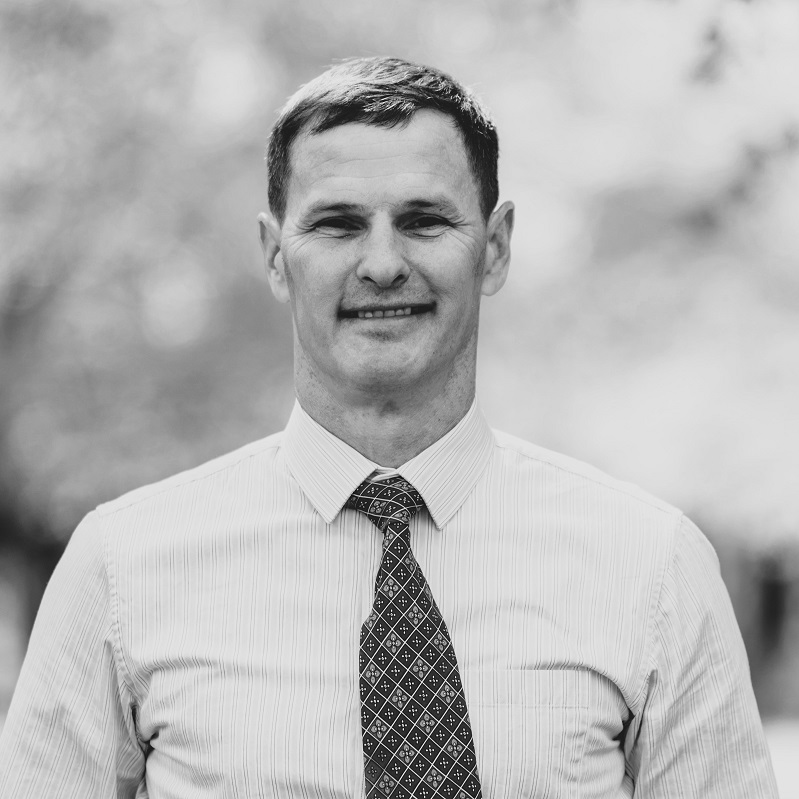
Above: Dr Jeremy Simons
The Initiative was delighted to host Dr Jeremy Simons as a visiting scholar in November 2024.
Jeremy is a senior research fellow at the Te Ngāpara Centre for Restorative Practice (Victoria University Wellington) with over 20 years of experience as an educator, organiser, and community-oriented researcher. His current scholarship and research support restorative initiatives in education, justice sectors, and community contexts. Born and raised in the Philippines, he is curious about how culture interacts with restorative justice, peacebuilding, and community development.
Prior to moving to New Zealand, he spent 8 years in the southern Philippines as a trainer and accompanier alongside Indigenous, Muslim, and Christian dialogue experts. As part of a collaboration between community organisers, parents, and school leaders, he helped develop one of the first district-wide school-based restorative justice programs in Denver Public School in the early 2000’s. He has facilitated victim-offender reconciliation programming, worked as a prison chaplain and jail outreach volunteer, and supports grassroots peace and transitional justice efforts.
During his residency, Jeremy had the opportunity to join a trans-disciplinary symposium and had productive conversations with members of the Initiative''s team. Of the experience, he has reflected:
"The IfPB's multi-level yet grounded approach linking official DFAT actors and prorams to support peacebuilding is inspiring and illustrative. It was particularly valuable to learn more about the initiative's work in Bougainville (building official capacity for postwar conflict transformation and development) and Myanmar (supporting and networking with National Unity Government people) – two nations often overlooked in the landscape of global peace and conflict studies.
A particularly fruitful outcome to these interactions was a visioning discussion with Dr Helen Bishop exploring potential avenues of cooperation around Indigenous and allied efforts to strengthen First Nations' peacemaking capacities and resist colonialism, with one form of this being a regional indigenous peacebuilding conference to be held in the coming year or so. We identified three key pathways for Indigenous peacemakers to have transformative roles and impacts both in their local communities, as well as across the national and regional landscape. These involve enabling, educating, and linking First National mediators, particularly Indigenous youth, with Helen emphasising the integral connection between indigenous peacemaking, atrocity prevention, and First Nations living self-determination.
I therefore look forward to future collaborations between the Initiative for Peacebuilding and Te Ngāpara Centre for Restorative Practice, grounded in our respective skillsets, that strengthen our expertise and synergise the complementary missions of our organisations toward peacebuilding and restorative justice."
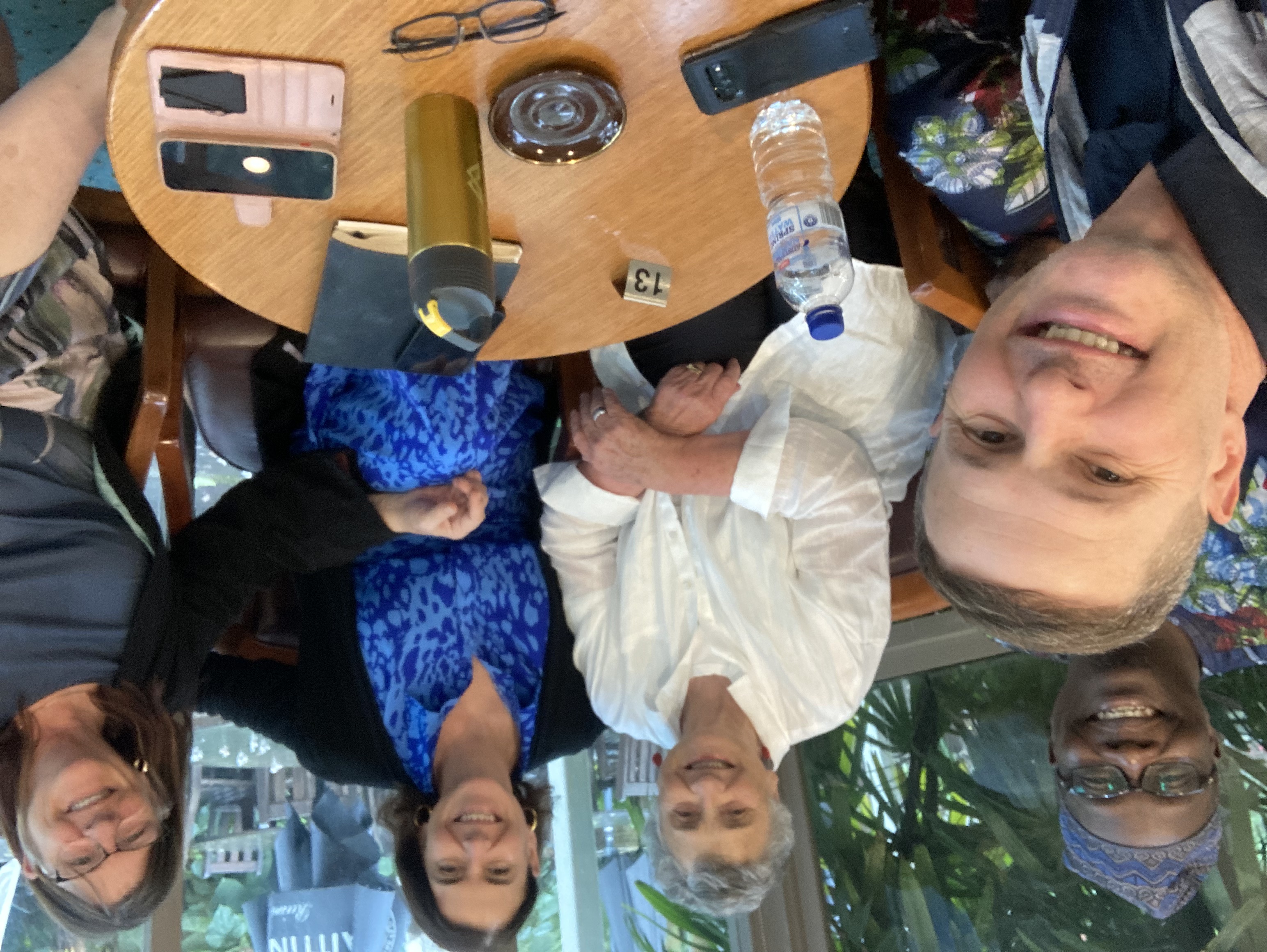
Above: Dr Jeremy Simons with Dr Wale Adeboye, Denise Nichols, Dr Tania Miletic and Dr Helen Bishop
Past Vising Fellows
Dr Helen Bishop was the Initiative for Peacebuilding's Indigenous Scholar in Residence in October 2022 at the SSPS. Helen was able to reflect, write, discuss and connect with a range of academics within the School such as through the Initiative for Peacebuilding, the Australian Centre and she was particularly encouraged by the wonderful conversation she had with Professor Sana Nakata.
So much of the value came through threads of thoughts and conversation we were able to deepen and the conducive space and community the School residency provided. Some of our SSPS students had the opportunity to meet with Helen also. Helen was a much appreciated and powerful panelist on the SSPS Masters in Development Studies and Initiative for Peacebuilding Student Seminar and Networking Event on Development, Conflict and Peacebuilding on the 14th October. Helen’s research and writing focused on improving the NT’s Aboriginal Justice agreement. In addition, Helen made a great contribution to the ARC LP Round 2 2022 proposal submitted focusing on Indigenous approaches to peacebuilding in South East Asia and Oceania.
A few days after Helen returned to the NT, she shared the following reflection:
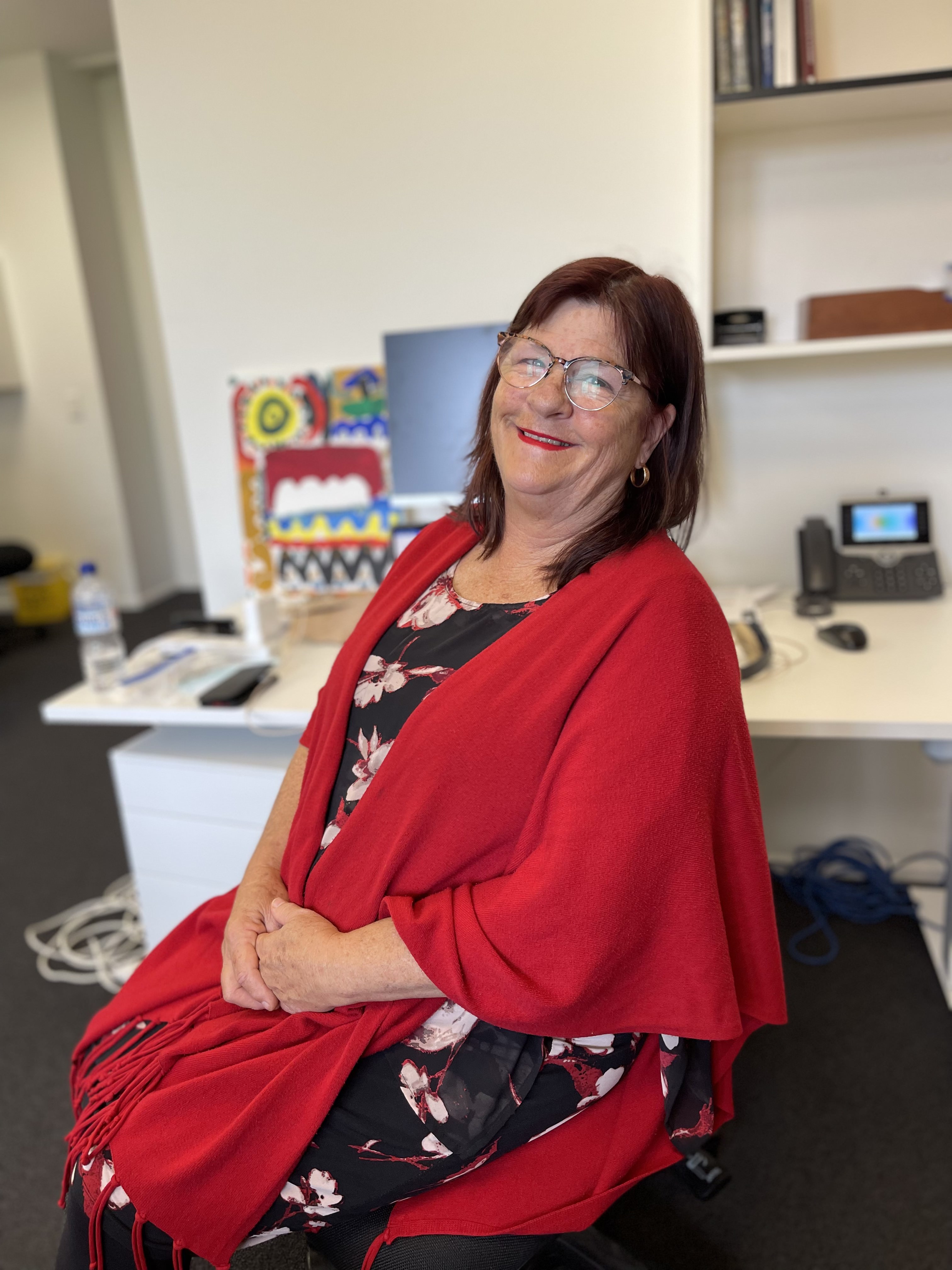
Above: Helen in residence at the Initiative for Peacebuilding
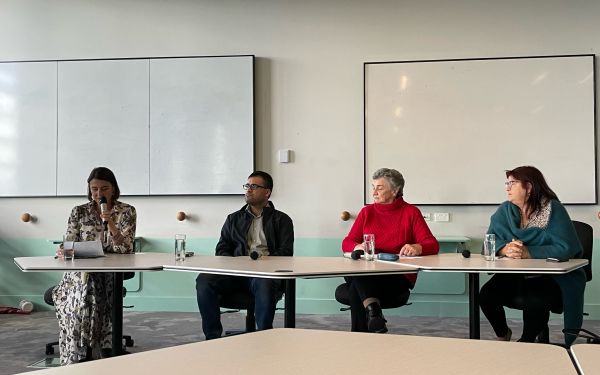
Above: Dr Tania Miletic, Dr Mujib Abid, Denise Nichols and Helen Bishop