Roundtable discussion: with DFAT Fellowship Program analysts
This briefing reports on a roundtable discussion on democracy, federalism and conflict in Myanmar with two officials from the Canberra and Yangon offices of the Department of Foreign Affairs and Trade and four Myanmar civil society delegates.
Ed Goldring and Tamas Wells from the School of Political and Social Sciences, Myanmar students (Pyae Phyo Maung, Soe Htet, Thinzar Myo Aung, Pan Hsu, Tay Zar) and Myanmar expert Matt Schissler also participated.
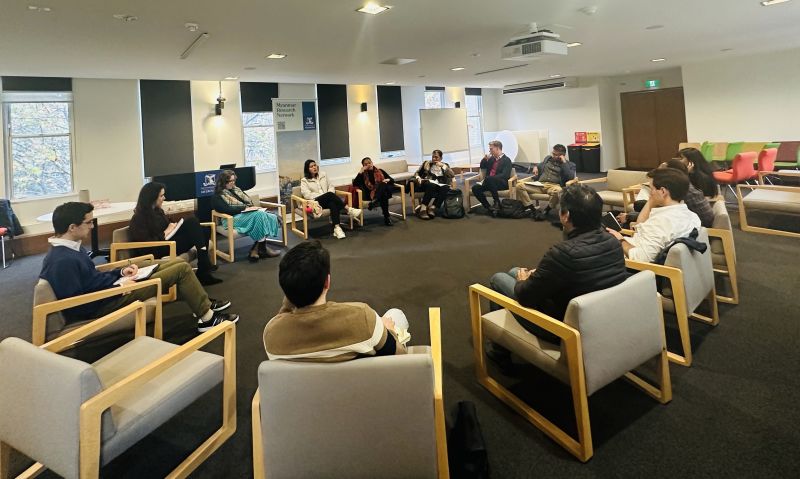
The ongoing Myanmar revolution has captured global attention as citizens continue to protest against the military junta. However, experts have raised questions about whether all political stakeholders share a common vision beyond the immediate goal of removing the military regime.
The roundtable discussion began by addressing the challenges faced during the Myanmar revolution. Drawing from their close working relationship with current revolutionary leaders, one participant highlighted that the former ruling party, the National League for Democracy (NLD), remains hesitant to share power with minority groups. This entrenched one-party system complicates dialogue and negotiation with other Ethnic Armed Organizations. The lack of inclusivity also poses a barrier to forming a united front against the military junta.
Additionally, the roundtable discussion explored polarization among Myanmar’s people—a consequence of the military’s trajectory versus that of the revolutionaries. This polarization forces individuals within communities to take sides, further fracturing the nation. Moreover, the emphasis on Burmese identity and sovereignty has hindered collaborative efforts. To navigate these challenges successfully, the delegates suggested that the current revolution must prioritize diversity and inclusivity. Building solidarity among diverse groups remains an ongoing struggle.
Note: This briefing report is based on expert discussions held on June 6, 2023.
Civil Society Delegates
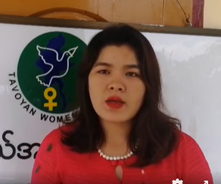
| Nu Nu Hlaing is the general secretary of the Tavoyan Women’s Union (TWU). She first joined the TWU in 2007 when she was 15. At the time, the TWU was based in Thailand due to Myanmar’s military rule. Since then, Nu Nu Hlaing has grown into a seasoned activist, working with migrant workers at the Thai-Myanmar border and women experiencing gender-based violence. In 2015, the TWU relocated from Thailand to Myanmar. Prior to the coup, the TWU was based in the city of Dawei, the capital city of Tanintharyi Region. Nu Nu Hlaing and other TWU members had to close their office and escaped to Thailand following the military coup. Tavoyan Women’s Union is one of the 12 members of the Women’s League of Burma (WLB), a member of the NUCC. Their work focuses on breaking down the political, social and economic barriers that women face in a patriarchal society. They aim to increase women’s participation, provide training to combat GBV and discrimination, and advocate for gender equality. |
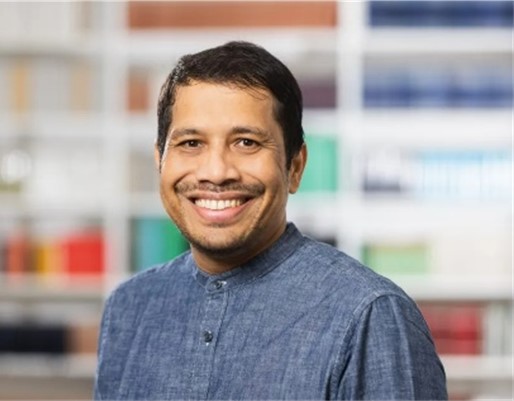 - Dr. Nyi Nyi Kyaw Research Chair on Forced Displacement in Southeast Asia, Chiang Mai University | Dr. Nyi Nyi Kyaw is working as Research Chair on Forced Displacement in Southeast Asia, under Chiang Mai University’s Regional Center for Social Science and Sustainable Development. He was an honorary fellow at the Peter McMullin Centre on Statelessness at the University of Melbourne. After obtaining his PhD in international and political studies from the University of New South Wales, he was a postdoctoral research fellow and assistant professor (adjunct) at the National University of Singapore in 2016–18 and 2020, respectively. He was affiliated with the ISEAS–Yusof Ishak Institute in Singapore as a visiting fellow from June 2019 until December 2020. He has written book chapters covering diverse topics such as citizenship, nationalism, and constitutional change in Myanmar. |
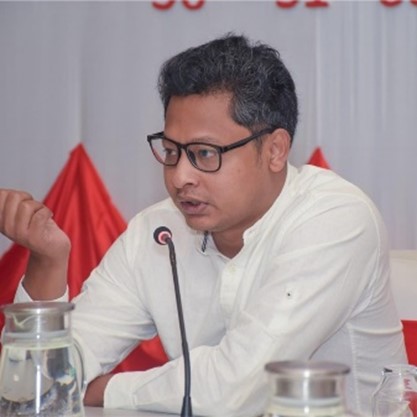 - Aung Ko Ko Co- founder & Executive Director, MOSAIC Myanmar | Aung Ko Ko is the co-founder and executive director of Mosaic Myanmar, a local civil society organisation promoting diversity and inclusion. He received a master's degree in Conflict Resolution and Coexistence from Brandeis University, United States. He has years of experience in peacebuilding and social justice. His last opinion piece can be read here. Aung Ko Ko and Mosaic Myanmar team virtually presented their report – Understanding the Frontline: Views, Positions and Aspirations of Pro-Democracy Actors from the Myanmar Heartlands. Mosaic Myanmar received Australian funding, under our partnership with the International Foundation for Electoral Systems (IFES). |
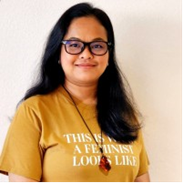 - Ying Lao Noan Vo Director, Salween Institute for Public Policy | Ying Lao is Director of the Salween Institute for Public Policy, a Myanmar think tank with a focus on Myanmar’s ethnic minorities. Born and raised in Shan State, Ying Lao has extensive experience in civic engagement and has actively taken part in numerous political and human rights campaigns. She was a member of Federal Constitution Drafting and Coordinating Committee (Burma) as a representative of Shan Women's Action Network and Women’s League of Burma. In 2004-2005, she served as a coordinator for Joint Action Committee on Basic Principles for a Future Federal Constitution (Burma). Ying Lao holds a Bachelor of Science in Public Affairs with a major in Public Policy Analysis and a minor in Legal Studies and a Master of Public Administration from the School of Public and Environmental Affairs (SPEA), Indiana University Bloomington. She is fluent in Shan, Burmese, Thai and English. |