Two featured projects
Learning from the Arts of East Asia
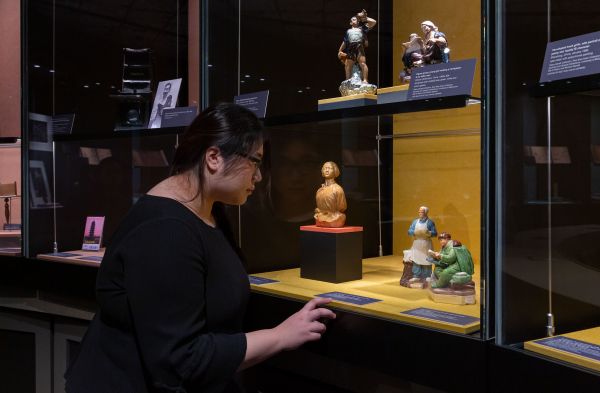
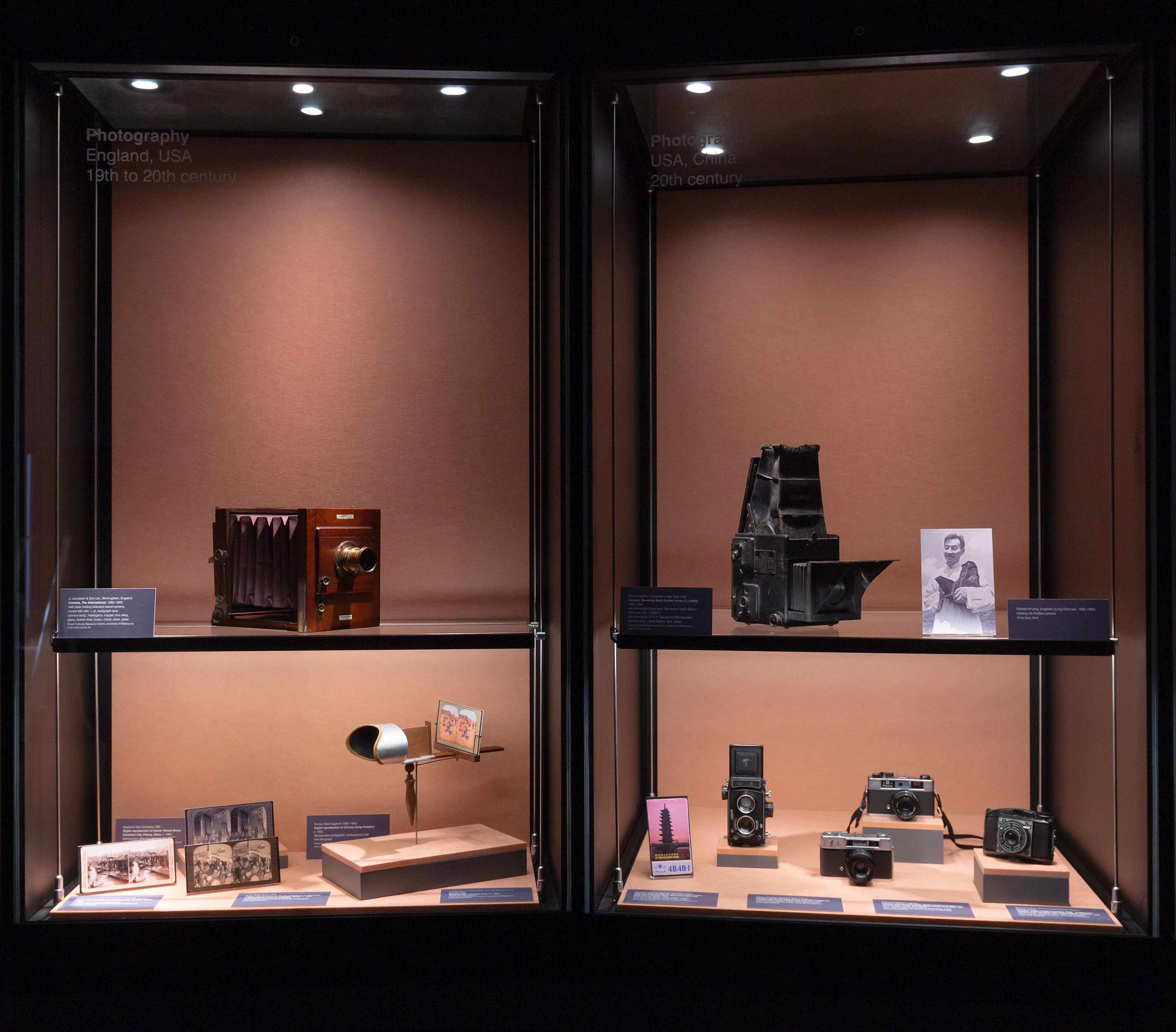
Students enrolled in Modern and Contemporary Chinese Art AHIS20022 in 2022 and Photography in China AHIS30025 in 2023, along with Honours students in the art history program in the School of Culture and Communication worked as part of the curatorial team on the development of a suite of cabinets in the OBL laboratory. Theme labels written by students can be accessed internally by students and staff via QR codes on Padlet.
Teaching and learning in the program centres on the arts and visual cultures of China, Japan and Korea and their global connections, including with Australia. The program is supported by object-based learning.
The items displayed in these showcases have been selected from the university’s cultural collections: the University of Melbourne Art Collection, Grainger Museum Collection, Archives, and Special Collections including the Rare East Asian Collection and Rare Print Collection, and the Visual Cultures Resource Centre Collection. These and other objects are examined and handled by students in classes including Arts of East Asia AHIS20021, Modern and Contemporary Chinese Art AHIS20022, Virtual Worlds in Japanese Art AHIS30024, Photography in China AHIS30025 and The Print Room AHIS90004.
News
Artificial Artefacts: Heritage in the Digital Age
The University of Melbourne holds over 30 cultural collections, many of which are used in the classroom to support discipline-led knowledge. A number of collections hold objects and materials copied from original objects for hands-on practical engagement. These materials have many terms and may be referred to as facsimiles, reproductions, copies, replicas, surrogates, duplicates, imprints, versions, imitations or representations. This is a long-held teaching and learning tradition dating back centuries, and which continues to thrive today. There are excellent examples of these teaching collections on display in the cabinets on each level of the Arts West building.
In the display on level 2 of the circulation corridors, original artefacts are presented beside digitised 3D models produced as surrogates with the use of photogrammetric modelling of the original objects. Colour 3D plastic replicas are printed with Fused Deposition Modelling and HP Multi-Jet Fusion printers using the digital 3D models stored in the Faculty of Arts 3D Gallery.
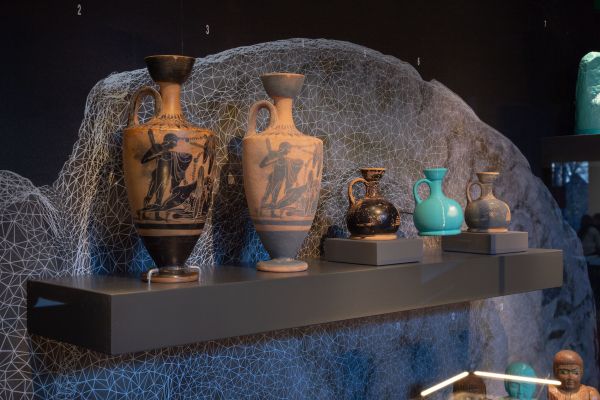
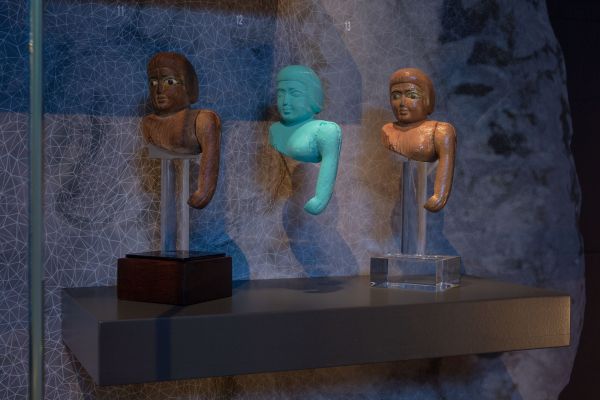
Source material held in the Classics and Archaeology Collection on display with 3D print surrogates.Photographs by: Christian Capurro
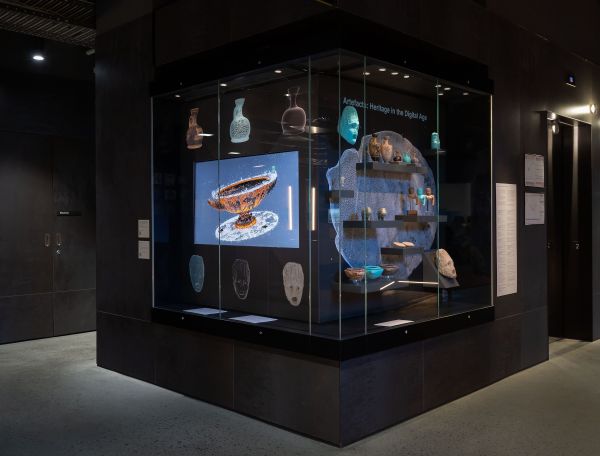
Artificial Artefacts: Heritage in the Digital Age cabinet on level 2 of the Arts West building. Photograph by: Christian Capurro
3D Printing
Animated 3D Models
View 3D surrogates of University of Melbourne collections in the Faculty of Arts 3D Gallery