Australian art research by Dr Catherine Nunn sheds new light on artists abroad
Dr Catherine Nunn studied the art materials used by Australian artists living in France from 1884-1914. She showed how materials reflect social and cultural dynamics of transnational artistic communities relating to gender, mobility, place and networks. Her findings extend and enhance our knowledge and understanding of Australian art during this period.
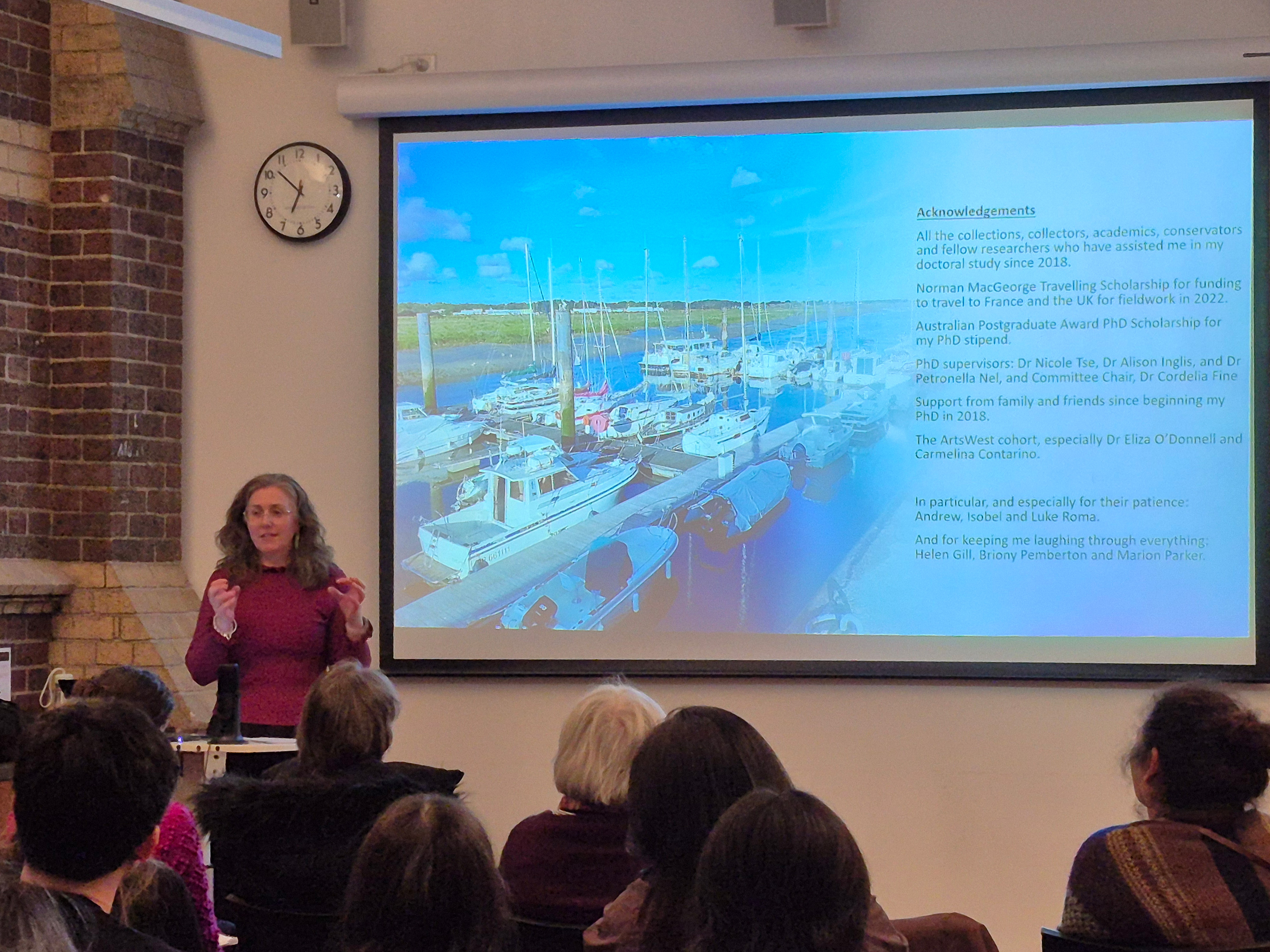
Image: Dr Catherine Nunn.
A newly completed PhD by art conservator and researcher Catherine Nunn is offering fresh insight into how Australian artists working overseas navigated the practical realities of art‑making during a pivotal period in art history.
Catherine Nunn has successfully completed a doctoral thesis examining the materials used by Australian artists living and working in France and French‑controlled North Africa between 1884 and 1914, a time when many artists travelled abroad to study in the ateliers of Paris and paint in rural and international settings.
My PhD highlights the value of conservation research to extend knowledge and understanding of Australian art during the late 19th and early 20th century. I really appreciated the opportunity to undertake deep, focused research at the Cripps Institute for Cultural Conservation through consulting archives and examining artworks.
Synthesising complex data and evidence into a cohesive argument for my thesis really developed my critical thinking and persuasive writing skills,” said Dr Nunn.
I will use these skills in my future publications, including presenting a co-authored paper at the upcoming ICOM-CC in Oslo, and I will also apply them in my business as an independent painting conservator.
While the techniques and materials of French Impressionists have been widely studied, Dr Nunn’s research addresses a long‑overlooked gap by focusing on how foreign artists, including Australians, sourced, adapted and used materials while living as expatriates.
The research explores artistic practice in Paris, the northern French painting centre of Étaples, and Tangier in Morocco, highlighting how place, mobility and cultural context shaped creative decisions.
The PhD takes an interdisciplinary approach, drawing on material culture studies, archival research and technical analysis of paintings.
Dr Nunn examined a wide range of historical sources, from artists’ correspondence and colourmen archives to travel guidebooks and exhibition catalogues, alongside close analysis of representative artworks from the period. Digital mapping and network visualisation tools were also used to reveal patterns in artists’ movements, material supply networks and working practices.
Five key themes underpin the research, including material acquisition, transnational connections, place, mobility, and gender. Together, these themes demonstrate how artists’ materials reflect the social, cultural and environmental realities of working abroad, and how those realities became embedded in the physical artworks themselves.
By applying the concept of object biography, tracing artworks from the acquisition of materials through creation, ageing and conservation, the research highlights the layered meanings carried by paintings over time. The study underscores the value of combining conservation science with art history to deepen understanding of artistic practice, cultural exchange and the human stories behind artworks.
Catherine Nunn plans to apply the skills developed during the PhD to future research and publications, as well as professional practice as an independent painting conservator.
Dr Catherine Nunn was supervised by: