Cutting-edge technology revealed hidden layers in Sidney Nolan’s iconic Kelly paintings
One of Australia’s most iconic artistic series, six of Sidney Nolan’s Ned Kelly paintings, was examined using advanced imaging technologies, in a new collaborative project featuring Dr Paula Dredge, paintings conservator at the Robert Cripps Institute for Cultural Conservation.
The project brought together the Canberra Museum and Gallery, Sydney Analytical at the University of Sydney, Celia Cramer Conservation, and Dr Dredge. The team used cutting-edge equipment, including an infrared reflectography camera and a portable X-ray fluorescence instrument, to probe beneath the visible paint layers.
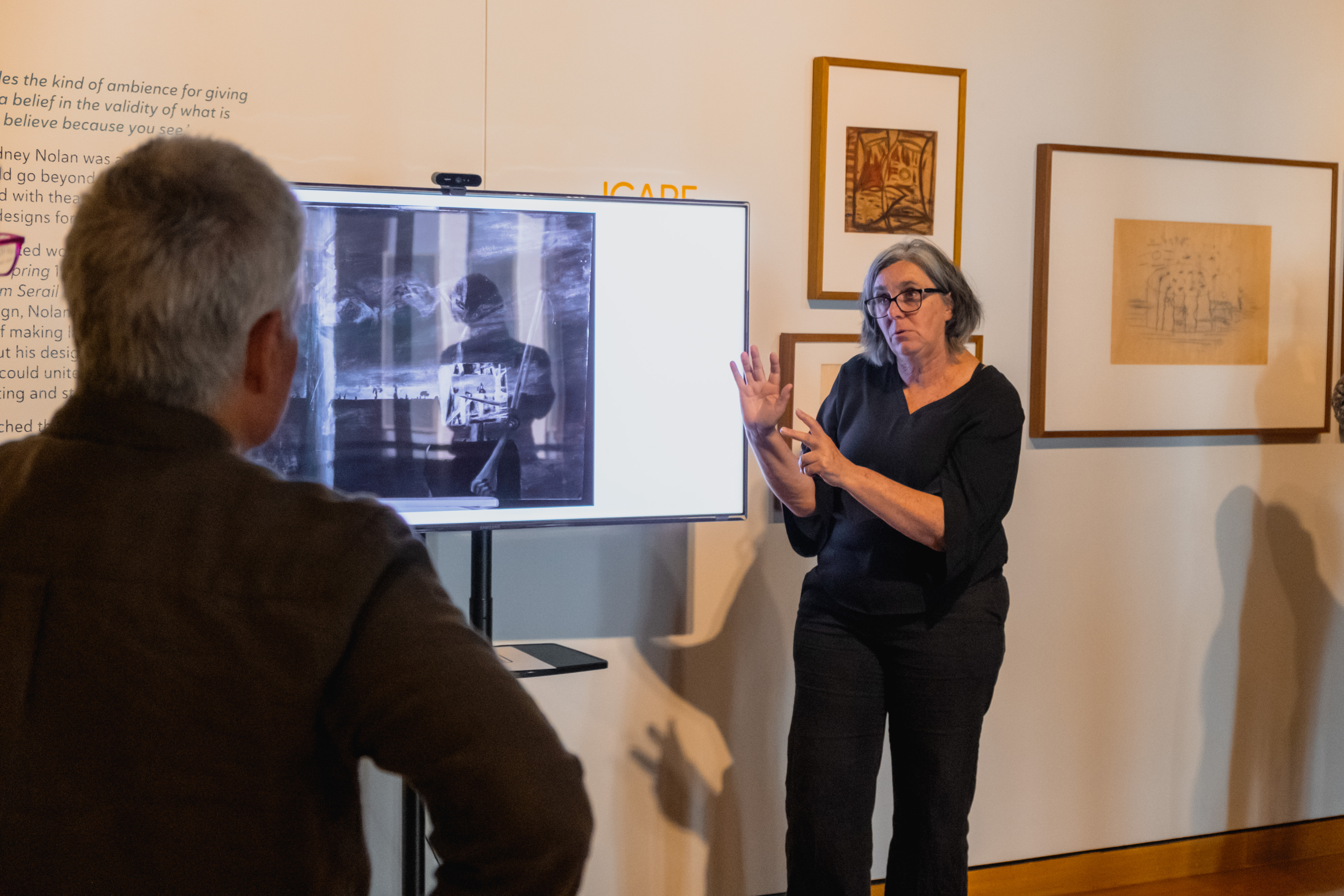 Nolan Unmasked. Image: Dominic Northcott, Canberra Museum and Gallery, 2025.
“These works include some of Nolan’s most significant early Kelly paintings,” Dr Dredge said.
By visualising the hidden stages of their creation, we can uncover new insights into Nolan’s creativity and his process of making and meaning.
The investigation focused on paintings Nolan produced between 1945 and 1946 while working at the home of John and Sunday Reed, now Heide Museum of Modern Art.
At the time, Nolan himself was an outlaw, having gone absent without leave from the Australian Army.
The artist later reflected on the intensely personal nature of the Kelly works, telling critic Elwyn Lynn in 1984: “Really the Kelly paintings are secretly about myself. You would be surprised if I told you."
This is not the first time Dr Dredge’s research has revealed new dimensions to Nolan’s practice.
In 2016, she collaborated with Heide curator Kendrah Morgan and Australian Synchrotron scientist Dr Daryl Howard to examine the 1945 painting Ned Kelly: “Nobody knows anything about my case but myself."
X-ray fluorescence mapping revealed a fully painted head beneath the famous black helmet – possibly a self-portrait – a discovery that made front-page news in The Age and Sydney Morning Herald in 2017.
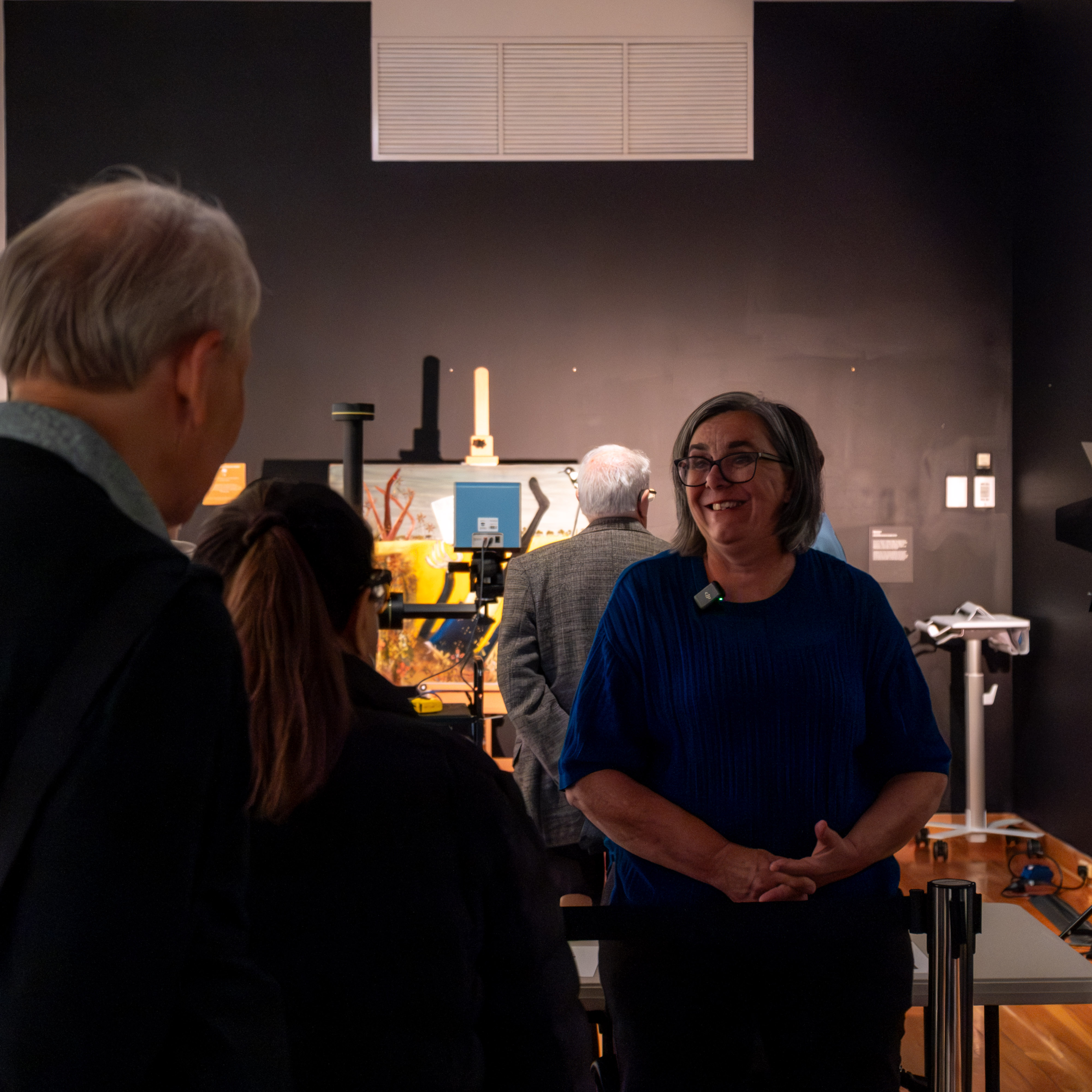 Dr Paula Dredge atNolan Unmasked. Image: Dominic Northcott, Canberra Museum and Gallery, 2025.
Dr Dredge’s longstanding scholarship on Nolan began with her PhD at the Grimwade Centre for Cultural Materials Conservation, University of Melbourne, undertaken between 2009 and 2013 with support from an Australian Research Council Industry Linkage Project grant.
Her research into Nolan’s use of house paint as an artist’s medium drew on materials left in his Sydney studio, as well as case studies from the Art Gallery of NSW and Heide.
In 2018, with support from the Gordon Darling Foundation and the Art Gallery of NSW, she undertook a research residency at the Sidney Nolan Trust in Wales.
The culmination of her doctoral and international research was the 2020 publication of Sidney Nolan: The Artist’s Materials, by the Getty Conservation Institute, which placed Nolan among a small group of 20th-century artists celebrated for their experimental approaches to materials.
Through harnessing state-of-the-art imaging instruments, Dr Dredge and her collaborators hope to shed new light on Nolan’s practice between 1945-1946. But as she notes, the results may only deepen the intrigue.
Nolan himself was fascinated by science and innovation. He would have been intrigued by the idea of applying these technologies to his work. What we discover may well change how we understand the artist’s process – or it may simply add another layer to the mystery.
This project was made possible through the support of the Robert Cripps Institute for Cultural Conservation, University of Melbourne; Sydney Analytical, a core research facility of the University of Sydney; Celia Cramer Conservation, the ACT government; and the Commonwealth government