From risk to resilience: sharing expertise to support Taiwanese heritage recovery
Following the devastating floods caused by Typhoon Krathon, researchers from the Robert Cripps Institute for Cultural Conservation travelled to Taiwan to help museum professionals strengthen disaster preparedness and conservation skills, supporting the long-term recovery of cultural heritage.
From risk to resilience: sharing expertise to support Taiwanese heritage recovery
In the aftermath of Typhoon Krathon, which caused significant flooding and damage across Taiwan in October 2024, heritage professionals are working not only to restore affected collections but also to strengthen resilience against future disasters.
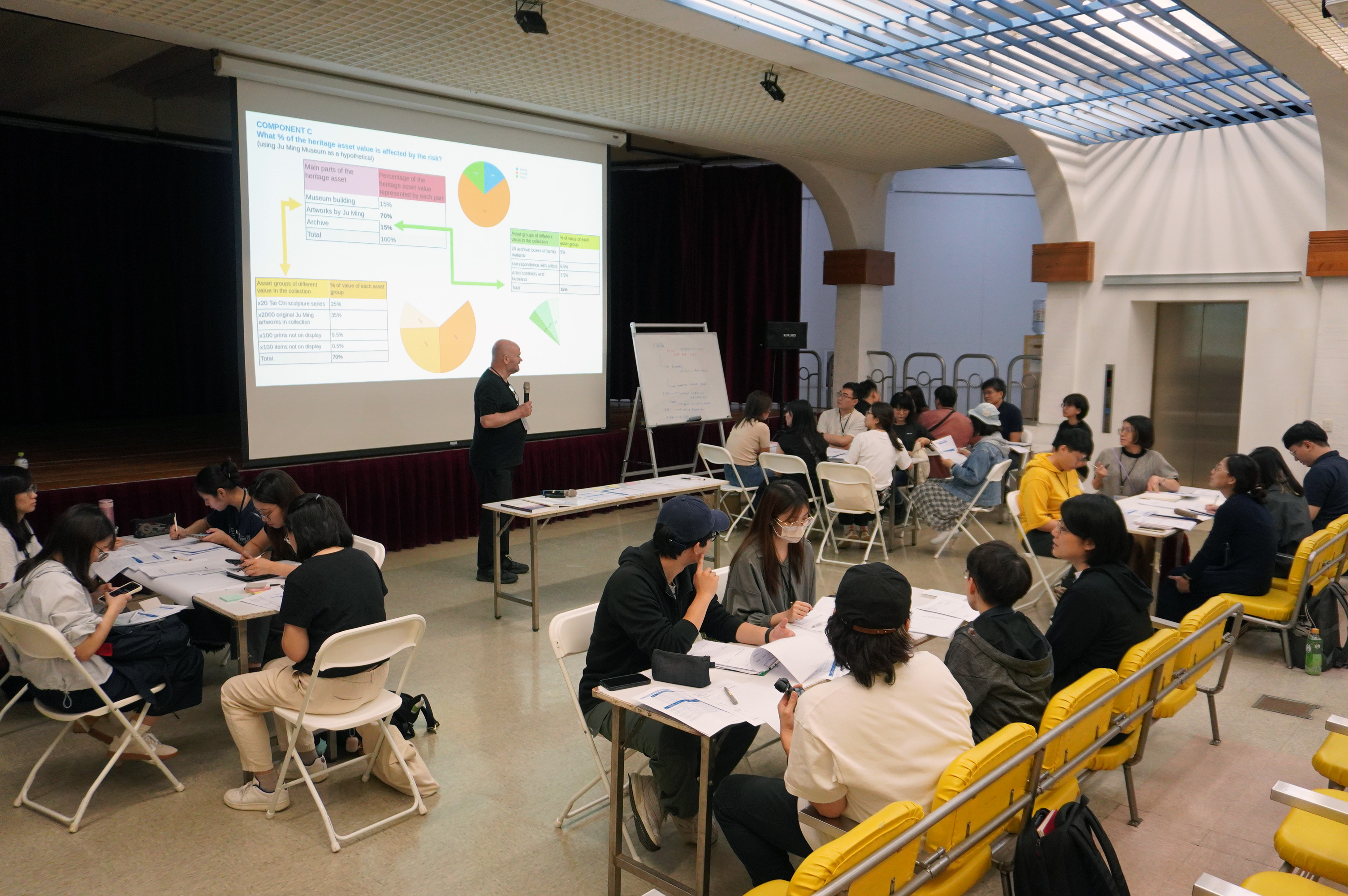
As part of the recovery effort, Dr Jonathan Kemp and PhD candidate Hohi Ikeda from the Cripps Institute travelled to Taiwan in June 2026 to deliver a series of specialist workshops at the Juming Museum, helping museum professionals, conservators and students build practical skills in disaster preparedness and stone conservation.
Representatives of the Juming Museum said Dr Jonathan Kemp and PhD candidate Hohi Ikeda brought not only valuable conservation techniques and practical experience, but also through these workshops, created a platform for international knowledge exchange and professional dialogue.
As a museum in Taiwan with a strong focus on the collection and conservation of outdoor sculpture, Juming Museum greatly values the opportunity to learn from both instructors, while also sharing our own practical experience in outdoor sculpture conservation and disaster preparedness. We believe this collaboration marks an important starting point for a long-term partnership and lays a solid foundation for broader international conservation collaboration and knowledge exchange in the future.
For Dr Kemp, the workshops demonstrate how international collaboration can help heritage institutions prepare for increasingly complex environmental challenges.
"Disasters can have devastating impacts on cultural heritage, but they also create opportunities to share knowledge and build stronger professional networks," he said.
"By working together, we can help museums move from recovery towards resilience."
The Juming Museum, dedicated to the work of renowned Taiwanese sculptor Ju Ming (1938–2023), was severely impacted by the typhoon. Floodwaters damaged numerous artworks and museum facilities, including the conservation studio.
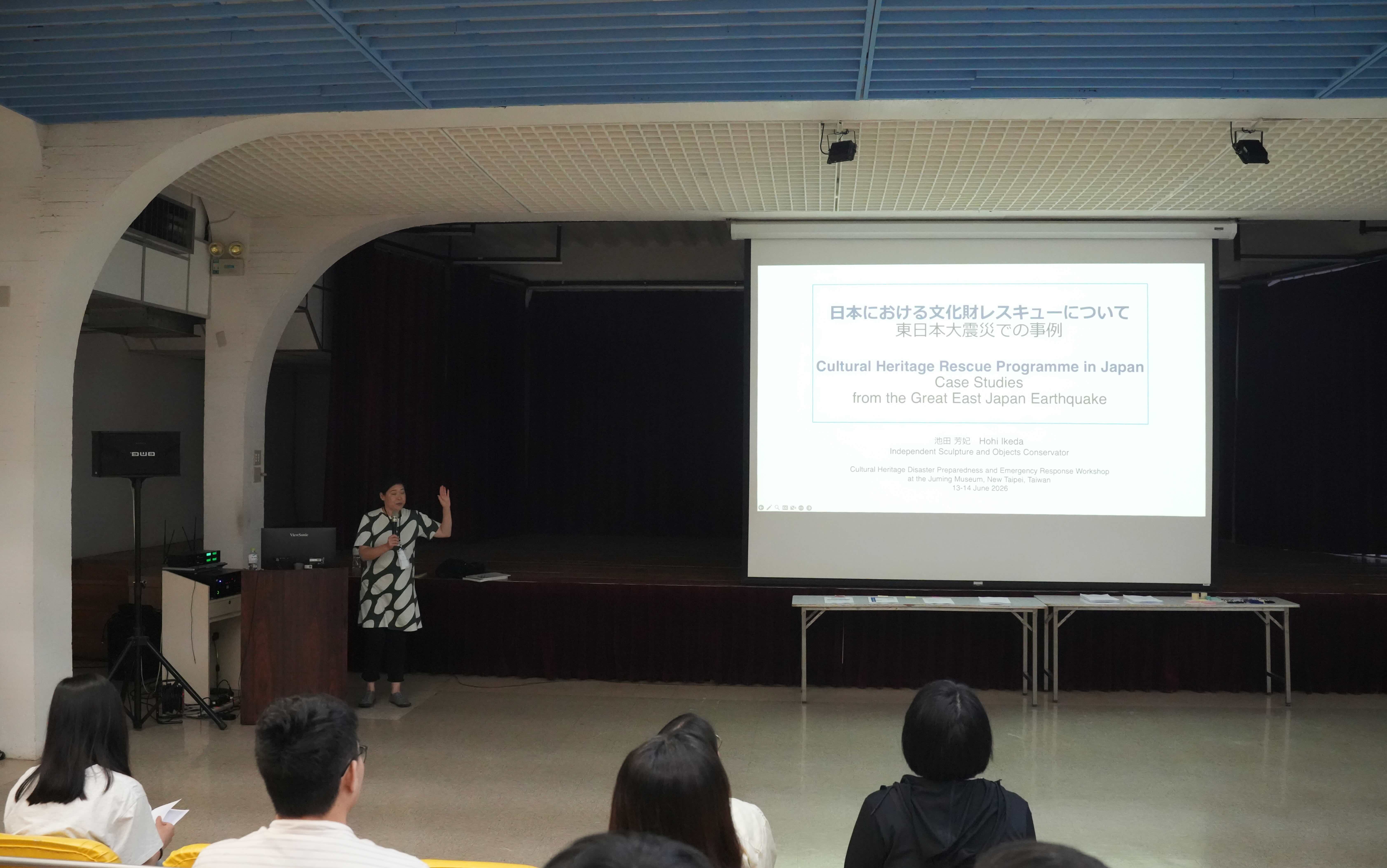
Image: Ms Hohi Ikeda delivering risk lecture.
Since then, museum staff have repaired 50 indoor and 86 outdoor sculptures, supported by funding from the Taiwanese government to restore the collection and strengthen the institution's recovery capacity.
The June workshops formed part of a broader recovery program coordinated by the museum. The invitation reflected a longstanding relationship between the Juming Museum and Dr Kemp and Ms Ikeda, built through their previous conservation training workshops at the Museum before coming to Australia, and now entering a new phase through the Cripps Institute.
Learning to assess risk before disaster strikes
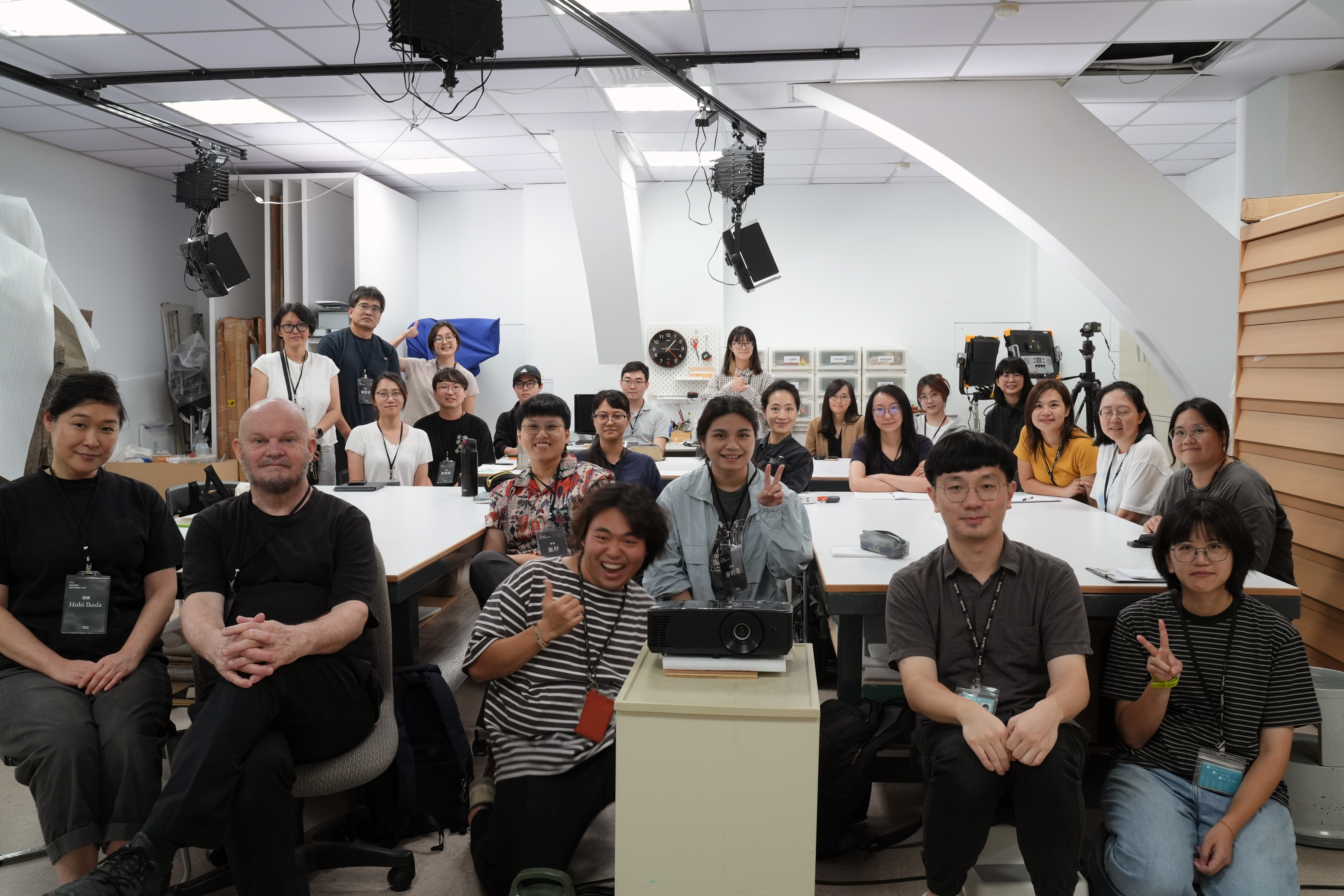
The first workshop, Disaster Preparedness: Risk Assessment, brought together 26 participants from museums, universities and conservation organisations across Taiwan.
Dr Kemp and Ms Ikeda designed the workshop around practical exercises, enabling participants to conduct risk assessments within three museum spaces: two galleries and the conservation studio that had been damaged during the floods.
Participants reported that the practical nature of the workshop significantly improved their understanding of risk management and expressed interest in implementing similar assessments within their own institutions.
The workshop attracted a diverse audience, including representatives from the Juming Museum, National Palace Museum, National Museum of History, New Taipei City Art Museum and several university conservation programs.
 Building stone conservation skills
The second workshop focused on stone conservation. Twenty-two participants took part in intensive hands-on training covering structural repairs, colour-matched lime mortar fills, stone consolidation using alkoxysilanes and steam-cleaning techniques.
The workshop provided valuable exposure to a material and conservation discipline rarely encountered in formal training programs in Taiwan.
The program also laid the groundwork for future collaboration. Dr Kemp and Ms Ikeda will return to Taiwan in October 2026 to deliver keynote lectures and a workshop on contemporary outdoor sculpture conservation at Cheng Shiu University and the Kaohsiung Museum of Fine Arts.
Ms Ikeda said the two workshops were very fruitful and enjoyable.
“Participants were willing to learn knowledge and skills new to them and I was also keen to know particular issues and tasks occuring in museums in Taiwan, a country located in the tropical region.”
I have been connecting with conservation colleagues and friends from the Juming Museum and other organisations in Taiwan since 2017 and hope this professional relationship will grow into a bigger circle of conservators in the Asia-Pacific.
Strengthening international conservation networks
The Robert Cripps Institute and its Taiwanese partners are developing a broader initiative focused on skills exchange and collaborative professional development, with future grant applications in progress.
As the Juming Museum continues its restoration efforts, the partnership highlights the important role that conservation expertise, collaboration and preparedness play in safeguarding cultural heritage for future generations.