Magna Carta conservation project wins AICCM conservation project of the year
A landmark collaboration between Grimwade Conservation Services (GCS) at the Robert Cripps Institute for Cultural Conservation, and the Art Collections team at the Department of Parliamentary Services have been honoured with the AICCM Conservation Project of the Year Award for 2025.
The award recognises the eight-year effort to conserve and return to display Australia’s 1297 Magna Carta. It is one of only four from 1297 known to survive and one of only 25 Magna Carta known to survive from the 13thcentury worldwide. The Magna Carta is celebrated as a cornerstone of parliamentary democracy.
Through meticulous analysis and interdisciplinary collaboration, the team revealed new insights into the document's history and materiality.
Head of Conservation at GCS Vanessa Kowalski, said: “cultural sensitivity and collaboration were paramount throughout this nationally significant project.”
We recognised the Magna Carta’s importance not just as a historical document, but as a living embodiment of democratic ideals that resonate across cultures.
“The project combined cutting-edge science, advanced scientific research, and international collaboration.”
The Magna Carta was acquired by the Australian Government in 1952.
On arrival in Australia, it was entrusted to the Commonwealth Scientific and Industrial Research Organisation (CSIRO) to develop an anoxic display case – a case with reduced oxygen exposure to reduce related deterioration – that was a major technical achievement for the period.
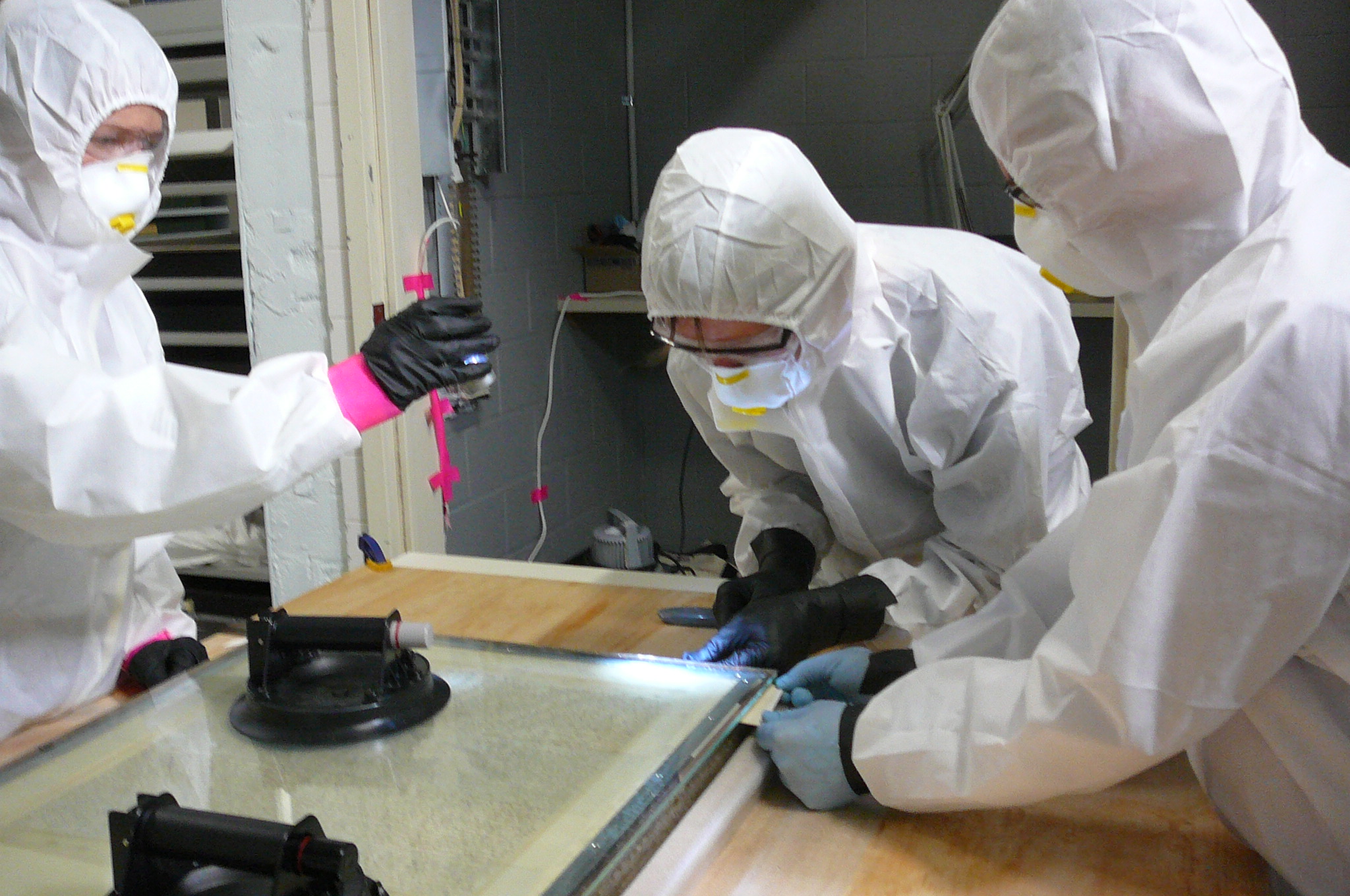
The project began in 2016 when conservators from the GCS and the Department of Parliamentary Services’ Art Collections team undertook the complex task of opening the CSIRO-built anoxic case in which the Magna Carta had been sealed for more than 50 years.

With no removal mechanism and lost schematics, the team reverse-engineered the 1960s case and, with Victoria University Polytechnic, designed a custom precision tool — the Magna Cutter — to safely release the document.
Once unsealed, the Magna Carta underwent detailed documentation and analysis.
Using visible and ultraviolet imaging, reflectance transformation imaging, 3D scanning and advanced mass spectrometry, researchers identified the parchment as sheepskin and the cords as fine silk dyed with historic colourants.
Collaborations with CSIRO’s Materials Characterisation Group and textile conservator Marion Parker led to the development of new micro-sample techniques for dye analysis — extending Australia’s conservation science capability.
“Caring for the Magna Carta required a multitude of analytical techniques,” the Grimwade team said.
“We gained invaluable insights into the document’s materials and manufacture through rigorous scientific analysis.”
The conservation work culminated in the design of a new state-of-the-art preservation and display case fabricated by Italian firm Goppion. The dual-case system, developed with the Parliament House Art Collections and Design Integrity teams, maintains temperature, humidity, and light stability to achieve a thousand-year preservation target while allowing safe public viewing in the Members’ Hall of Parliament House.
The project drew on a global network of Magna Carta custodians, including the British Library, the US National Archives, and the cathedrals of Lincoln, Salisbury and Durham. Collaborations extended to the University of York, University College London, the University of Melbourne’s TracCEES Platform, and Microfade Australia, reflecting a spirit of cross-disciplinary and international exchange.
“Receiving national recognition from our colleagues in the conservation field is an immense honour,” the Grimwade Centre team said. “It validates the professionalism and commitment to excellence that our team brought to this landmark project and inspires us to continue raising the bar through innovative, ethical, and collaborative practice.”
The new display of the Magna Carta was officially unveiled in December 2024 and celebrated at Parliament House in February 2025 by the President of the Senate, the Hon. Sue Lines, and the Speaker of the House of Representatives, the Hon. Milton Dick..
Professor Robyn Sloggett, Director of the Cripps Institute for Cultural Conservation said:
Our team’s award-winning project shows what’s possible when conservation is guided by cultural health and collaboration. It’s about more than technical excellence — it’s about care, respect, and ensuring that the objects we treat continue to hold meaning for the communities they belong to. This is the heart of our approach at Cripps.