Examining the communication needs and challenges of personal care attendants (PCAs)
An OET grant research study examining (PCAs) working with elderly in residential aged-care or providing in-home services.
2021-2022
In Australia, as in many other western countries, the aged care labour force is heavily dependent on migrants, the vast majority of these coming from culturally and linguistically diverse (CALD) backgrounds.
Project: A research study examining the communication needs and challenges of personal care attendants (PCAs) working with the elderly in residential aged-care settings or providing in-home services.
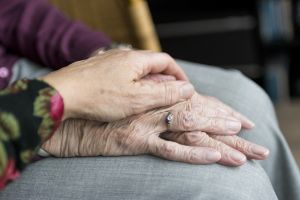
With an aging population, the number of Australians living in residential aged care facilities or those requiring in-home services is likely to increase substantially over the coming years. As a result, the workforce attending to the elderly will also need to grow. In Australia, as in many other western countries, the aged care labour force is heavily dependent on migrants, the vast majority of these coming from culturally and linguistically diverse (CALD) backgrounds.
Personal care attendants (PCAs), as the name suggests, spend more hours than any other professions working with residents in aged care facilities. Their day-to-day tasks differ from those of nurses in that they are employed to assist with the personal care and daily activities of those living in aged care settings or receiving in-home care. PCAs differ from nurses in that the profession is not regulated – there is no professional registration authority assessing qualification or language proficiency. PCAs generally study a Certificate III (although this is not mandatory) before being able to enter the workforce.
A recent Royal Commission in Australia (Royal Commission into Aged Care Quality and Safety, 2021) showed that there were concerns about the language proficiency and communication skills of PCAs. As a result, the Royal Commission recommended that regulation of personal care workers is introduced, with a national registration scheme, minimum qualification requirements and minimum levels of English language proficiency (among other requirements) (Royal Commission into Aged Care Quality and Safety, 2021, p. 126).
The Occupational English Test is well-placed to develop a language proficiency test for PCAs, already offering testing modules for twelve health professions. To develop a test for PCAs, however, a detailed domain analysis is required to underpin the validity of such an instrument (Knoch & Macqueen, 2020). There is a limited literature on the communication demands of PCAs – this domain has received much less attention compared to other professions, such as nurses and doctors. The communicative tasks and demands are likely to be somewhat related to that of nurses, but will differ in key aspects. To gain a deeper understanding of PCA’s daily communication tasks and possible communicative challenges encountered by CALD PCAs, this research proposes a multi-method project.
The project aims are as follows:
- Gain an understanding of the daily communication tasks of PCAs
- Gain insights into the communication challenges faced by CALD PCAs in the Australian workforce
- Identify the communicative events that are particular barriers to successful communication with colleagues, other health professionals, residents and family.
- Explore which particular difficulties may lead to risks to care and adverse outcomes
- Create, based on the findings of the domain analysis, a design blue-print for an OET module for PCAs.