Capturing History: A glimpse into 20th-century China through the ‘Learning from the Arts of East Asia’ exhibition
Behind the curation of the 'Learning from the Arts of East Asia' exhibition in Arts West's Object-based Learning labs is a combined effort of both staff and students, which also launched the new Photography in China (AHIS30025) subject. Today, the display enriches student learning and stands as a testament of our commitment and passion to preserve culture and history.
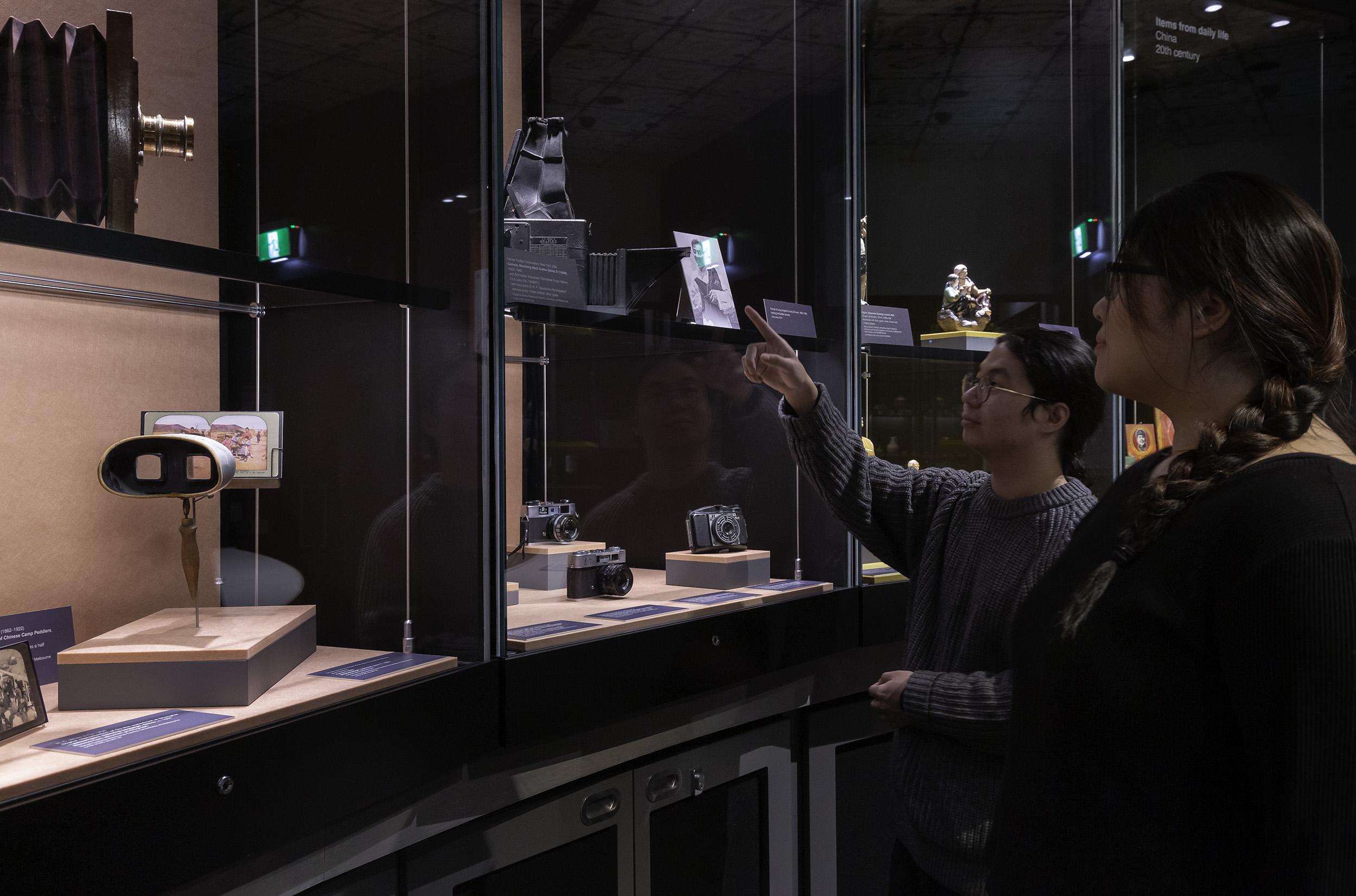
Students viewing the cameras in the OBL lab. Photo by: Christian Capurro
Soft, wispy clouds. A shoe. A blur of black and white. Gentle grass. These were some of the images captured on vintage cameras by students enrolled in the newly introduced subject, Photography in China (AHIS30025). During one of their excursions to South Lawn in the University of Melbourne's Parkville Campus, they embarked on a journey that, although may initially appear unremarkable, is deeply rooted in history. Every button pressed and fragment of life captured by these students carries us back to the past, to the very origins of these vintage cameras.
Photography in China (AHIS30025) was a collaborative effort led by Professor Claire Roberts of the School of Culture and Communication (SCC), in conjunction with Jane Brown, manager of the Visual Cultures Resource Centre (VCRC), and Honours student Lydia Mardirian. This initiative not only facilitated the opportunity for an intimate encounter with history, as described earlier, but it also played a pivotal role in inspiring the curation of the 'Learning from the Arts of East Asia' exhibition. This exhibition is housed within Arts West's Object-based Learning (OBL) labs and was further enriched by recent acquisitions of vintage cameras and the Garrett Collection Cultural Revolution material.
Titania Yuhan Huang, a research assistant within the SCC and a current Art History Honours student, played an important role conducting research and assisting with the purchase of types of cameras that had been used in the subject and later incorporated into the display.

Cameras and a viewing device on display. Photo by: Christian Capurro
In pursuit of providing students with hands-on experience in the history of 20th-century Chinese photography and through the Head of School Teaching and Learning Initiative Grant for the VCRC in the SCC, Titania sourced and acquired a selection of 20th-century Chinese film cameras directly from China. She collaborated with Professor Roberts and Jane Brown as well as catalogued, translated and organised the early 20th-century Chinese vernacular photographs within the resource centre system.
Titania encountered several obstacles during her involvement in this project, which spanned over a year.
"Some cameras, like the Xingfu 幸福 camera, which was one of the first 120 film cameras ever manufactured in China, was a rare find. Production of this item was limited during that era, and my first encounter with an existing one in the online Chinese market in May 2022 had a deliberately scratched front face and was in poor condition," she recollected.
"This damage may have been intentional, possibly due to the camera's historical significance or because it was considered a symbol of bourgeois luxury during the Cultural Revolution. Consequently, I had to keep a vigilant eye out for another Xingfu camera in better working condition," she said.
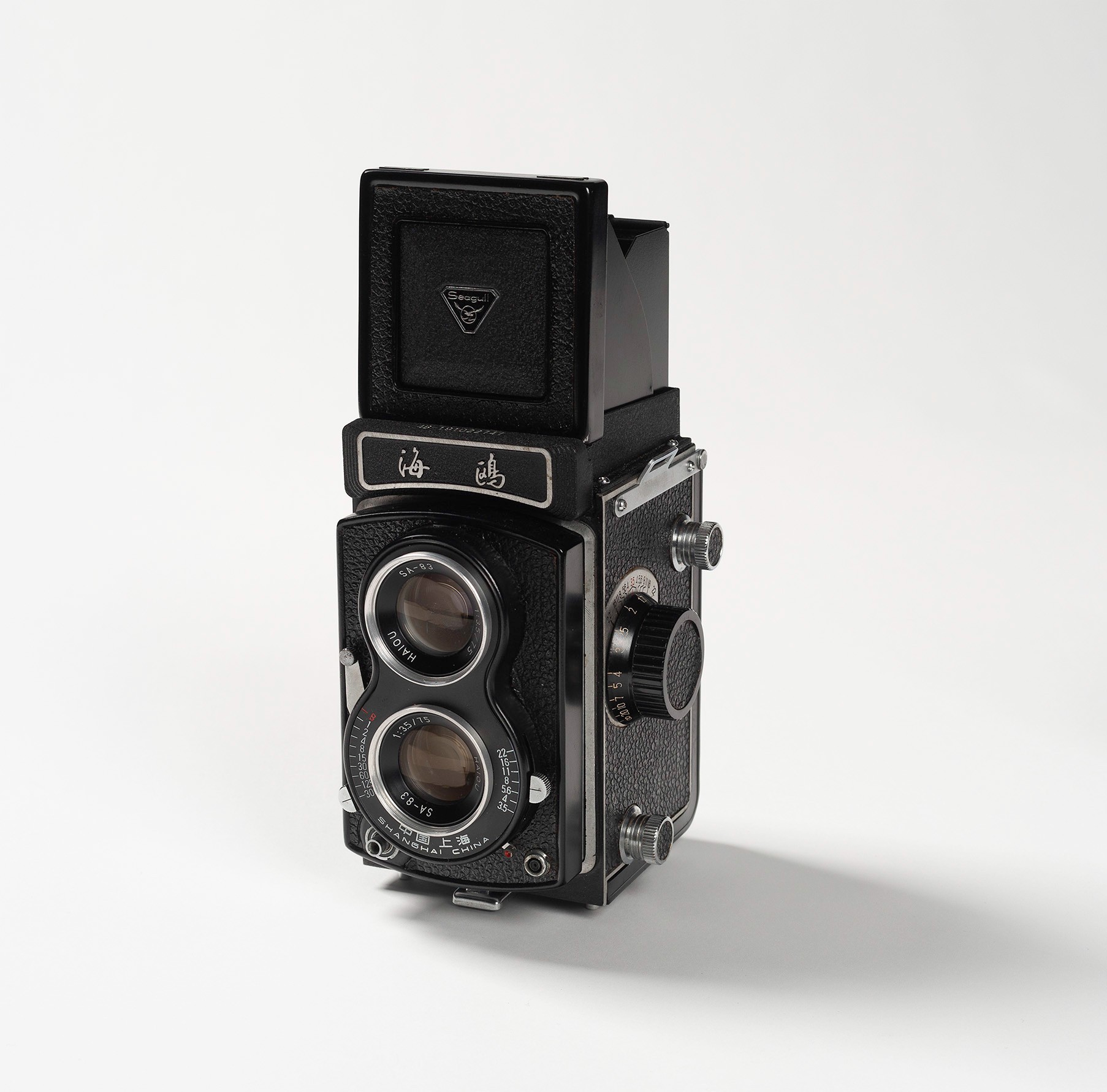
Seagull camera acquired for the Visual Cultures Resource Centre collection. Photo by: Christian Capurro
Titania noted that this intricate game of waiting and relentless research played a pivotal role throughout the project. When asked to reflect on the key takeaways from this project, Titania shared, "My role as a research assistant opened my eyes to valuable skills for future curatorial and collection management projects and roles. I learned how to approach object acquisition with cultural sensitivity and gained first-hand experience in collection and project management, including sourcing, negotiation, budgeting, and logistics planning."
Titania described the unique opportunity to contribute to the University of Melbourne’s collection as a "remarkable journey".
"I vividly recall witnessing the passion of the individuals in China who entrusted us with their cherished collection of cameras. Just a few decades ago, these sellers were young individuals who proudly wore these vintage cameras around their necks to capture moments. Now, their passion has been gracefully passed down to our classroom, and as I demonstrated these cameras to students, I couldn't help but notice the same enthusiasm reflected on their faces."
While reflecting on the project, Jane Brown said, "Photography is a complex field with many different processes, the cameras helped bridge the complexity. Most of our students have learned photography through their phones. It was a challenge for them to work with a completely different style of camera."
"As someone with a background in professional photography, it was a joy for me to see the students’ interest and appreciation when we got the films developed and printed. The anticipation of how the photographs would turn out was interesting for the students to understand – as that lack of immediacy is so different when using old cameras with film."
As the 'Learning from the Arts of East Asia' exhibition stands proudly in Arts West’s OBL labs, it is more than a collection of artefacts; it is a testament of our commitment and passion to preserve culture and history.
The OBL labs provide hands-on learning experiences for students across a range of disciplines, including history, literature, museum studies and ancient world studies. Students are encouraged to build on their analytical skills and work in a team to deepen their engagement with the subject matter.