Charlotte Macdonald awarded the 2026 Ernest Scott Prize

The Faculty of Arts at the University of Melbourne is pleased to announce Charlotte Macdonald as the winner of the 2026 Ernest Scott Prize.
Awarded annually, the Ernest Scott Prize for History recognises a book based on original research judged to make the most distinguished contribution to the history of Australia or New Zealand, or colonisation.
The 2026 prize was judged by Associate Professor Miranda Johnson, University of Otago and Professor Christina Twomey, Monash University, who selected the winner from 56 publications.
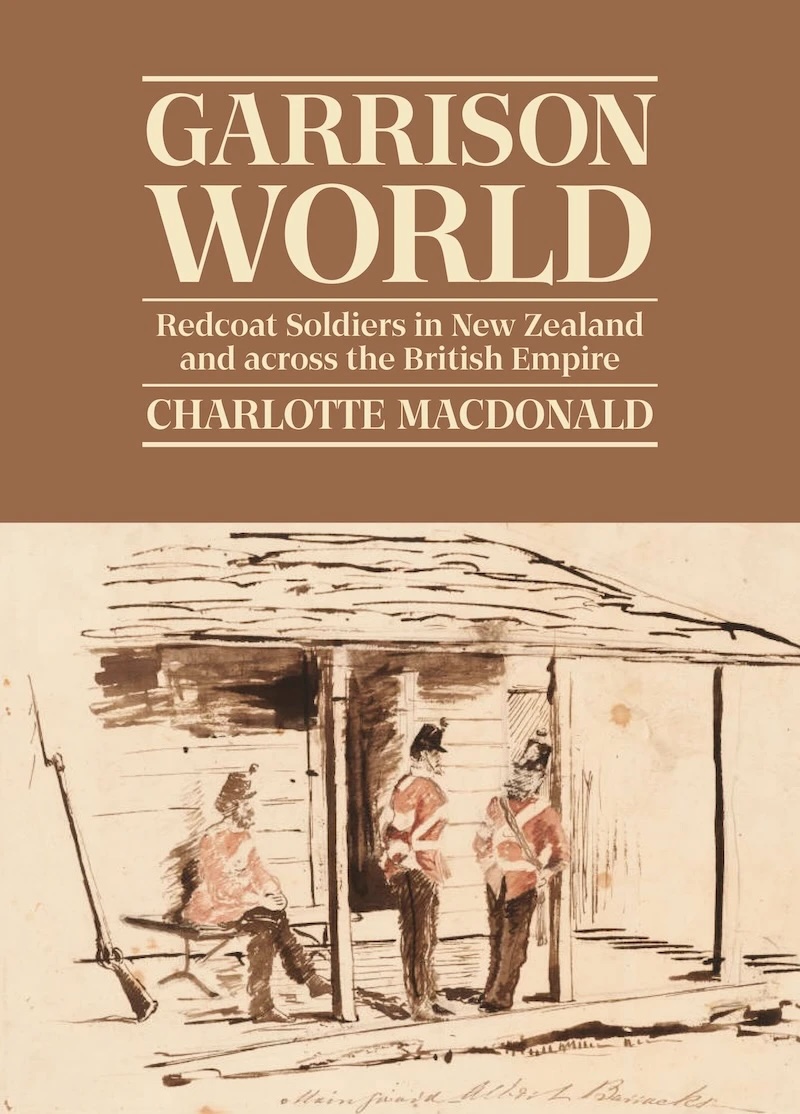
In awarding the prize to Charlotte for her book, Garrison World: Redcoat Soldiers in New Zealand and across the British Empire (Wellington: Bridget Williams Books, 2025), the judges said:
"The singular achievement of Charlotte Macdonald’s Garrison World is its reframing of the history of colonial Aotearoa New Zealand by focusing on historical actors hiding in plain sight: British redcoat soldiers and bluejacket sailors. Situating New Zealand in the wider history of the nineteenth century British empire, the focus on empire’s foot-soldiers creates new ways of looking beyond the battlefield to the place of the garrison in building colonial communities.
“For Macdonald, the garrison was at once a group of people, a place or station, and an activity. From this perspective, she reimagines New Zealand as a garrison colony and shows how a permanent presence of soldiers in the formative years between 1840 and 1870 shaped the country’s economy, politics, society and culture.
“The book’s originality, apart from its sensitive rendering of a group more often maligned, erased or caricatured than understood, is to bring together the scholarship on soldiering and war, and histories of settlement, and in doing so, to transform them both.
“In Garrison World, the crucial role of imperial soldiers in both war and peace in establishing the ascendency of settler society and Pākehā civilian government comes alive in vivid prose, rich illustrations, through compelling characters and an unwavering account of what was at stake for Māori people.”
In accepting the prize, Charlotte said:
"Winning the Ernest Scott Prize is a huge thrill. Knowing the strength and creativity of the historical community across Australia and New Zealand, it is a great honour to be recognised by my colleagues.
“At a time when History is paradoxically, under siege in our knowledge institutions, yet ever more prominent in public life, the recognition that the Prize gives to historical work is especially welcome. As a part of the history of colonisation, Garrison World addresses the formative dynamics which shaped societies across the British empire including what became Australia and New Zealand. Those histories remain ones we are reckoning with today.
“My thanks to the judges, and to the University of Melbourne for running the Prize; to the publishers Bridget Williams Books for their care in creating the book and maintaining a vigorous program as an independent publisher; to the Marsden Fund for financial support (alas no longer funding research in the Humanities or Social Sciences); and to the many generous colleagues in History, archives, libraries and museums who assisted in the research.”
Shortlisted books (alphabetical order by author)
Emeritus Professor Erik Olssen, The Origins of an Experimental Society: New Zealand 1769-1860 (Auckland University Press, 2025)
Professor Martin Thomas, Clever Men: How Worlds Collided on the Scientific Expedition to Arnhem Land of 1948 (Allen & Unwin, 2025)