Cortona lamp mystery one step closer to being solved
Shrouded in mystery since its discovery in central Italy in 1840, the Cortona oil lamp has revealed more insights into its origin, with researchers suggesting the artifact has links to an ancient Dionysian cult.
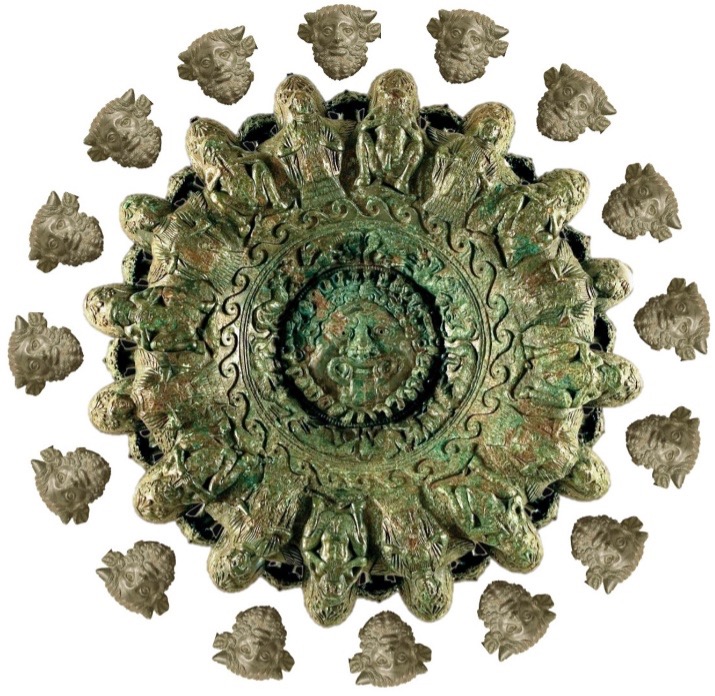
Pictured: Cortona oil lamp
The oil hanging lamp was found in an isolated ditch near the Tuscan town of Cortona along with an inscribed bronze plaque, but PhD student Ronak Alburz and Associate Professor Gijs Willem Tol believe the artefact is far older than previously thought.
While the object originates from the Etruscan civilization of Archaic Etruria - where it was made and what it was made for - has been the subject of debate for decades as there’s very little to compare it to.
Following a thorough re-examination, university researchers claim the lamp's 16 bull-horned figures were initially mistaken as the Greek river god Acheloos.
The pair says literary sources and new iconographic evidence indicates the symbols represent the Dionysian thiasus, the ecstatic retinue of the Greek god of wine and pleasure.
The research paper was published in De Gruyter’s Etruscan and Italic Studies.
Alburz said "the lamp was probably an object associated with the mystery cult of Dionysus. Its decoration represents the Dionysian thiasus, perhaps engaged in a cultic performance in the cosmos of the mysteries in celebration of Dionysus.”