Cultural Policy by Numbers
As the new Labor Government begins to re-think Australia’s cultural policy, it’s important that they do more than just cover the cracks.
By Associate Professor Jo Caust
One of many challenges for the arts and cultural sector in Australia over the past 8 years of the Federal Coalition Government, has been the lack of any coherent policy.
The newly elected Federal Labor Government has promised to remedy this by re-creating its cultural policy announced under Julia Gillard’s Government and delivered by then-Arts Minister, Simon Crean, in March 2013. This policy was called Creative Australia and sadly took 6 years to appear after the first election of the Labor Government in 2007.
This time round though, the new Labor Government is determined to move more quickly. Tony Burke announced on his appointment as Arts Minister that,
Burke has said that he would like to see the policy in place by the end of 2022. To achieve this, the government is adopting a consultative process with 2 main channels for feedback. One is a series of town hall meetings across the country, while the other is to make a submission using the Cultural Policy Template.
The issue with the Cultural Policy Template though, is that it's quite prescriptive in both its form and expectations. The responder must work within the confines of the Template and ensure that the content is no more than three pages long, which includes the form’s already existing content. This formulaic approach is no doubt informed by a desire to deliver the policy before the end of the year. The simplicity of the form, while reductive, will make it an easy task for bureaucrats to sift through feedback submissions.
Minister Burke has said that,
“A National Cultural Policy should draw on as many voices as possible.”
The challenge though, is that when most of the content is already prescribed, the amount of possible additional input is limited. The template document is already two pages long. The three-page limit to a submission, means the maximum amount of individual content possible is around 250 words or one A4 page. In addition, the participant must only use the template sections and respond to specific issues and questions that are already outlined on the form.
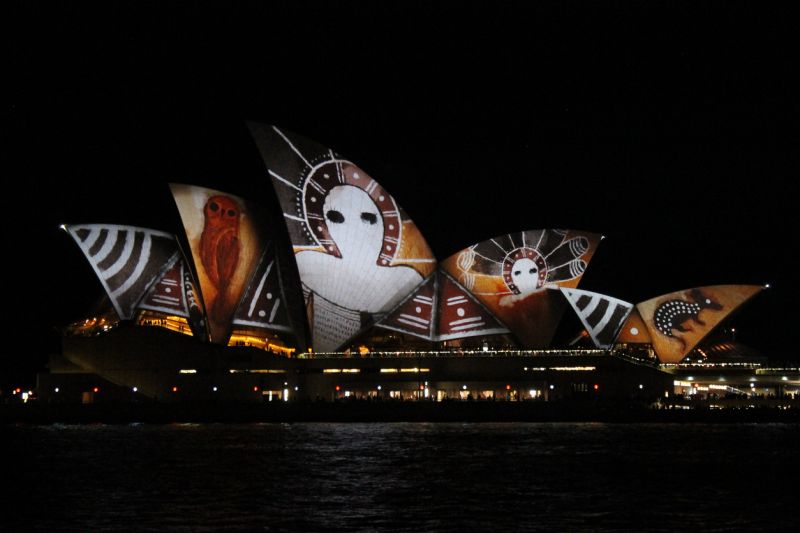
Core to the new policy is the establishment of what is framed as 5 pillars. These have been adapted from the original goals of the Creative Australia documents. The pillars are:
- First Nations
- A Place for Every Story
- The Centrality of the Artist
- Strong Institutions
- Reaching the Audience
While these pillars seem rather abrupt, their lengthier meaning is available to read as the five goals in the earlier Creative Australia policy. However, the language used in the form seems more like ‘management speak’ and does little to offer any meaningful concepts or ideas.
On the 2nd August, Minister Burke announced that he had appointed five small advisory panels who would advise on each pillar. While some of the members of these panels are well regarded, experienced and knowledgeable, others are relatively new on the scene.
There is no question that a national cultural policy is an important issue. It has much broader implications than an arts policy. It is heartening too that the new Labor Government wants to address the issue and do it in a timely manner.

Further, the arts community wants to see a positive way forward, particularly given the devastating impacts of the pandemic to the sector, as well as the conscious, destructive neglect of the sector by the Coalition government over the past decade.
Everyone in the arts and cultural sector is impatient for change.
The sector has endured tremendous hardship with the loss of many companies and activities, through cuts and underfunding. The sector needs more funding and resources urgently. It also needs a serious rethink about how the current systems are structured and delivered.
There is a huge opportunity here for the Labor Government to address the serious and urgent issues that exist. It would be devastating though, if an easy route is chosen, one that only covers the cracks without underpinning the foundations.
Let’s hope that despite a somewhat superficial approach to cultural policy consultation, the new Government gets serious about ways of uplifting and celebrating the sector.
Applications to submit feedback on the National Cultural Policy close August 22nd.