How ‘Counting and Cracking’ masters the art of trilingual live performance
‘Counting and Cracking,’ the multi-award-winning three-act play written and directed by S. Shakthidharan and Eamon Flack explores the lives of a Sri Lankan-Australian family across four generations. The inclusion of five different languages is no easy task during a live performance, writes Dr Charitha Dissanayake.
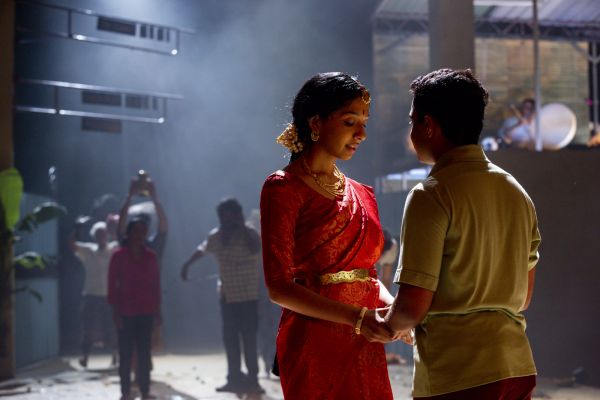
Pictured: A scene from the Belvoir St Theatre and Kurinji Co-Production 'Counting and Cracking'
The Australian play, Counting and Cracking creatively employs five different languages into its script, including English, Sinhala, Tamil, Arabic, and Yolngu Matha. Primarily, three languages (English, Tamil, and Sinhala) are spoken simultaneously, so the narrative needs to adopt similar language techniques to effectively convey character and meaning.
The script needs to accommodate the diversity of the audience, ensuring they do not miss any part of the play, while the actors must grasp linguistic nuances to maintain the pace and rhythm of the drama while reacting to each other. As the action unfolds live on stage, the actors seamlessly blend the languages into a cohesive whole.
S. Shakthidharan, the writer of Counting and Cracking, remarked, “Asian languages are quite musical and passionate, which was on my mind at a craft level. There is a way of speaking Tamil and Sinhala by Sri Lankans that is like dancing.
"The same words in Tamil or Sinhalese can mean ten different things depending on how they are said”.
Nipuni Sharadha, a performer in Counting and Cracking said: “As performers, we must wait until other performers end the translations. My lines were translated into English by an actor called Ahi. But she was not just translating my lines, rather she was interpreting my act and translating what I said in Sinhala into English, which is almost like two actors performing one character simultaneously.
“We did not understand the process at the beginning because it was a unique technique that I had to learn and follow. It was hard to understand but after some time, through the grip or the chemistry between the translator and the actor, we could manage it".
Nadie Kammallaweera, one of the lead performers who employs this multilingual technique, explains: “From a migrant perspective, we all have faced an identity crisis and questioned ourselves about who we really are. Using a mother tongue or a fluent language feels genuine and has such a dramatic impact when it comes to representing diverse groups onstage".
While the playwright may use different storytelling techniques, the audience's reaction ultimately determines its success.
“We can sense where the Tamil or Sinhala speakers are in the audience; they understand the lines before everyone else does and they respond…they'll laugh, or they'll be shocked...we appreciate the different communities that make up the audience every night in the theatre,” Shakthidharan said.
Counting and Cracking is a Belvoir St Theatre and Kurinji Co-Production presented by University of Melbourne Arts and Culture at the Union Theatre from 31 May – 23 June in partnership with RISING Festival. For more information and to buy tickets, visit the website.
You can access 20% off premium and VIP tickets to Counting and Cracking using the code UOMARTS20 by 11.59pm AEST Friday 31 May.
Playwright S. Shakthidharan will appear in conversation alongside chef Manoli De Silva, journalist Bhakthi Puvanenthiran and comedian Suren Jayemanne in Cultural Catalysts: Creativity in the Sri Lankan Diaspora presented with the Wheeler Centre. To book tickets, visit the Wheeler Centre website.
By Dr Charitha Dissanayake
Teacher, School of Culture and Communication, Faculty of Arts, University of Melbourne.