"We should not get used to war": Displaced Ukraine photography exhibition captures the country's devastation
A photography exhibition which reveals Ukrainian experiences of struggle, upheaval and survival will open on 16 October in the Arts West building at the University of Melbourne.
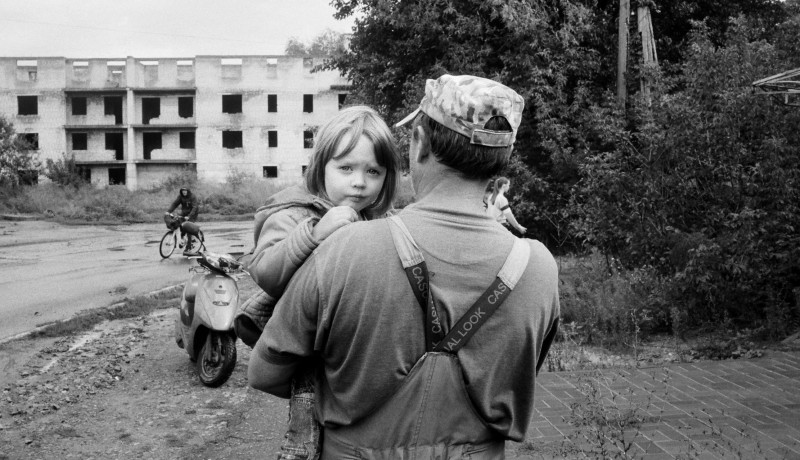
Victoria Ivleva. Izium, September 2022. A girl and her dad waiting for humanitarian help.
Displaced Ukraine curator Mayya Simonova says she created the exhibition to “draw attention to the monstrous war unleashed by Russia against Ukraine, to support Ukraine and to support displaced Ukrainians living in Australia”.
The exhibition features 53 works from eight photographers, including photographers from Australia, Ukraine, and Russia.
Volodymyr Ogloblin and Olena Dolzhenko’s joint photography project Kharkiv before and after tells the story of devastation of Kharkiv, one of the first cities to be bombed when the war began. This collection of photographs juxtaposes vibrant, lively pre-war images with photographs of burned-out buildings, rubble and ash, highlighting the devastation the war has brought to the city of Kharkiv and its people.

Olena Dolzhenko. Photo project “Kharkiv before and after…”.
The exhibition also includes works by Kostyantin Sova, founder of the Kyiv School of Photography. The school has been closed since the beginning of the war, but Sova, his colleagues and his students continue to document the world around them.
“They are fighting for the liberation of Ukraine, but instead of weapons in their hands, they have photo cameras”, says Ms Simonova. “Thanks to the courage of these people, now we can see what happened to Bucha, Irpin, Gostomel, Borodyanka and other Ukrainian cities and towns”.

Kostyantin Sova. Andriivka village, April 2022.
Ms Simonova says the black and white photographs by Russian political activist and photographer Victoria Ivleva are particularly compelling. Ivleva is an award-winning photographer who took a series of famous images from within the destroyed Chernobyl nuclear reactor in 1991. She has built a career reporting from political hot spots and war-ravaged zones, from the disintegrating USSR of the late 1980s to the Rwandan genocide in the 1990s. An outspoken supporter of Ukraine for many years, Ivleva moved to Ukraine soon after the invasion of Russian troops, where she volunteers – and documents the war.

Victoria Ivleva. Bucha, Kyiv district, April 2022. Exhumation.
Ms Simonova, who is also a contributing photographer to the exhibition, is exhibiting a series of four portraits of Ukrainians who have been displaced by the war and are now living in Victoria. The portraits sit alongside stories sent in by her subjects. They recount the ways the war forced itself into their lives: explosions, rumbling guns, battling crowds to board heaving trains and leaving cherished family members behind to fight. They talk of fear, helplessness and despair.
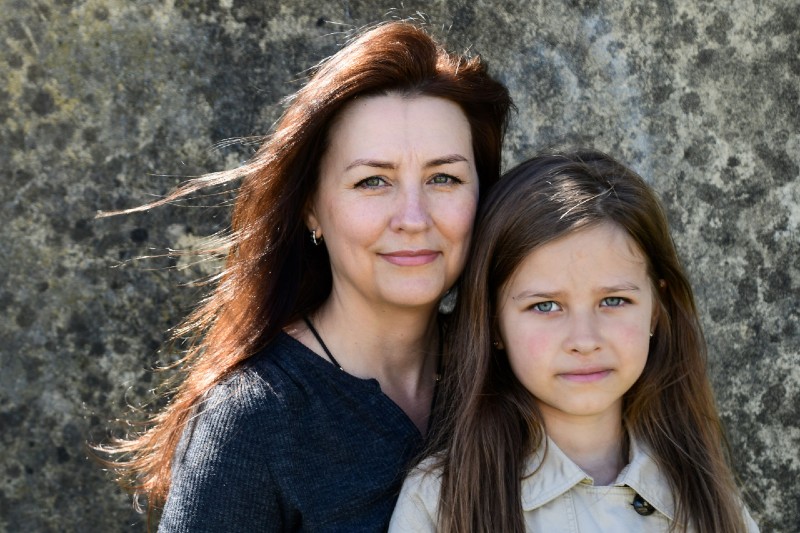
Mayya Simonova. Ella and Dasha, Melbourne, September 2022. Ella fled Cherkasskaya-Lozova village near Kharkiv with her daughter Dasha, soon after bombing began. She left behind her husband and 18-year-old son.
Ms Simonova says that when the war started, she felt she had to do “something useful, something that could help people at least a little.” The Displaced Ukraine exhibition is the result.
Now, she hopes that the exhibition will also encourage more people to do what they can.
“I want people to feel pain, involvement, empathy. I want everyone to think about what they can do to help. We should not get used to war. It continues, it kills, and it breaks people’s destinies every day,” says Ms Simonova.
Displaced Ukraine is showing from 16-20 October in the Arts West foyer at the University of Melbourne. Entry is free.