Team
Meet the research team
The DeathTech Research Team is a group of anthropologists, social scientists and human-computer interaction specialists based at the University of Melbourne and the University of Oxford. The team have been studying questions at the intersection of death, technology, and society for more than a decade.
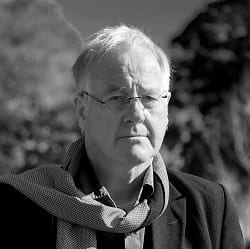
Michael Arnold
Professorial Fellow, History and Philosophy of Science, The University of Melbourne
Michael is a Professorial Fellow at the School of Historical and Philosophical Studies, The University of Melbourne. Michael’s on-going research activities lie at the intersection of contemporary technologies and daily life, including studies of mediated memorials, innovative methods of body disposal and other technologies associated with death. Michael is also interested in philosophical approaches to technologies, in particular, Heidegger, Actor Network Theory, and Object-Oriented Ontology. Michael has been a Chief Investigator on many research projects and has co-authored several research books and over 150 other research publications.
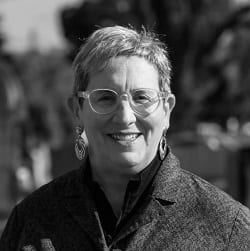
Tamara Kohn
Professor of Anthropology, School of Social and Political Science, The University of Melbourne
Tamara Kohn’s current research focuses on creative practice, death studies, mobility and leisure, methods and ethics, and the anthropology of the body and senses, based on fieldwork in the US, Japan and Australia.
Find an expert・ORCID・Academia・Google scholar・ Linkedin ・Twitter
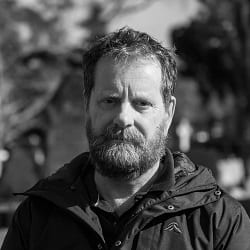
Martin Gibbs
Professor, School of Computing and Information Systems, The University of Melbourne
Martin Gibbs is a member of the Human-Computer Interaction research group. Martin is currently investigating how people use a variety of interactive technologies, such as video games, community networks and mobile phones, for convivial and sociable purposes in a diverse situations (intimate strong-tie relationships, local neighbourhoods, work-based occupational communities, online computer games).
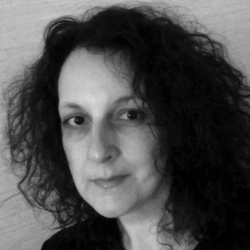
Elizabeth Hallam
Professor of Anthropology, Oxford University
Elizabeth Hallam’s research and publications focus on the anthropology of the body; death and dying; material and visual cultures; human anatomy; three-dimensional models, especially in medical education; making and design; mixed-media sculpture; history and anthropology; experimental research with images and texts; fieldwork, archive and museum-based research in the UK, along with collaborative and multi-sited research in Australia.
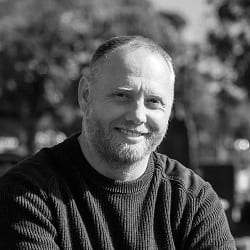
Bjørn Nansen
Associate Professor, Human-Computer Interaction Group, School of Computing and Information Systems, The University of Melbourne
Bjørn Nansen’s research investigates digital technologies, interfaces, platforms, and data in family life. He takes a human-centred approach to understanding the social impacts of digital technologies, and has expertise across a range of qualitative and participatory methods. His current projects focus on children’s mobile data tracking applications, and customisation in digital memorialisation.
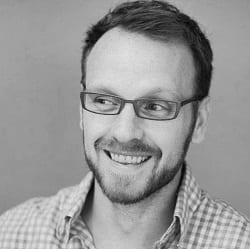
Jed R. Brubaker
Associate Professor of Information Science, University of Colorado Boulder
Jed Brubaker’s research the intersection of technology and mortality. Using empirical, community-based, and design methods, his current research focuses on end-of-life planning, management of post-mortem data and accounts, and digital legacy and storytelling.
Find an expert・ORCID・Google Scholar・Twitter

Hannah Gould
Hannah Gould, Senior Lecturer in Buddhist Studies, The University of Melbourne
Hannah Gould is a socio-cultural anthropologist working in the areas of death, religion, and technology. Her research is focused on how the deceased are memorialised and materialised in everyday life, with a regional focus on North-East Asia.

Dr Georgina Robinson
Research Fellow, The University of Melbourne
Dr Georgina Robinson is a social scientific researcher with expertise in the interdisciplinary field of Death Studies, following degree training in the study of religion. Her research largely employs a mixed-methods approach, drawing principally from sociology, anthropology and STS. Her research has predominantly focused on four key areas: methods of body disposal and their popular acceptability; the impact of Covid-19 upon the management of crematoria; the transformation of death and funerary practices in the digital age; and public education of funerary choices and their costs. Georgina joined DeathTech as Postdoctoral Research Fellow on the DIY Commemoration of the Dead Project.
Industry research partners

Deb Ganderton (Vale)
The Greater Metropolitan Cemeteries Trust
Deb Ganderton (vale) was the CEO of The Greater Metropolitan Cemeteries Trust (GMCT) from 2019 to 2022, and a leading figure in the Australian deathcare industry. GMCT manages 19 cemeteries and memorial parks across Melbourne, with two brand new sites under development on Melbourne’s urban fringe. GMCT’s 650 hectares of heritage parklands are visited by almost two million people each year.
Research collaborators
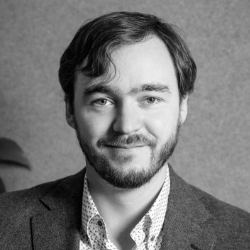
Fraser Allison
Research Fellow, School of Computing and Information Systems, The University of Melbourne
Fraser Allison is a research fellow in the Human-Computer Interaction research group. He studies the design and user experience of technologies for leisure and commemoration, with a focus on natural user interfaces, complex user experiences and the ways in which people draw meaning from technologically mediated activities.

Samuel Holleran
Postdoctoral Research Fellow in Urban Design, RMIT University
Samuel Holleran is a researcher and writer. He has worked as an artist and educator with design firms, universities, and not-for-profits in the U.S., Australia, and Europe. He completed his PhD on the “civic space of the cemetery” with the Death Tech Research Team in 2024. He is currently a Postdoctoral Research Fellow in Urban Design at RMIT University in Melbourne.
Graduate Researchers
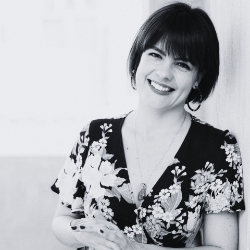
Cindy Stocken
PhD Student, Anthropology, School of Social and Political Studies, The University of Melbourne
Cindy’s PhD builds on her previous research exploring ritual creativity amongst alternative deathcare workers, and is focused on living funerals and similar rituals emerging globally. She is particularly interested in the choices that we make around marking bereavement, who is involved in these choices, what creative work ensues and how participants in newly created or collaged-together rituals respond to them.
Stephanie Longmuir
PhD Student, School of Social and Political Studies, The University of Melbourne
Stephanie Longmuir is a ceremony specialist and deathcare educator. A skilled facilitator, speaker, and writer, she has pioneered conversations around death and dying as founder of myendnotes.com and the Dying to Tell podcast. Stephanie is a regular contributor to Memento Mori and has presented at industry conferences in Australia and the USA. In 2025, she joined the DeathTech team and began a PhD at the University of Melbourne, researching how the rise in direct cremations is reshaping the practices and experiences of families and funeral service providers.
Symon Braun Freck
PhD Student, School of Computing and Information Systems, The University of Melbourne
Symon is a certified thanatologist and death-care researcher pursuing a PhD in Engineering, specializing in DIY memorials and thanatechnology. Drawing on a background in Thanatology and Visual Anthropology, Symon investigates how care, culture, and technology intersect to support personalized, home-based end-of-life practices. Symon’s research and practice focus on expanding autonomy and accessibility in death care through alternative burial methods, community education, and tech-supported end-of-life tools.
Kate Normand
PhD Student, Anthropology, School of Social and Political Studies, The University of Melbourne
Kate is a qualitative researcher and death educator with a background in social work, psychology, and thanatology. She uses video games as a backdrop to educate about death, dying, grief, and loss. Kate’s research examines death rituals and memorialisation of the dead in online video game communities, specifically investigating how these types of online rituals impact bereavement. She is also interested in pet loss: how humans memorialise and grieve their animal family members.