'as still as the lid of a box’: Writing about the Face of the Dying in Literary Texts
4th Floor Linkway, John Medley Building, University of Melbourne.
MapShare via
'as still as the lid of a box’: Writing about the Face of the Dying in Literary Texts
Prof Stephanie Trigg (University of Melbourne)
- Wednesday 5 August, 1.00-2:30pm
- 4th Floor Linkway, John Medley Building, University of Melbourne
Abstract
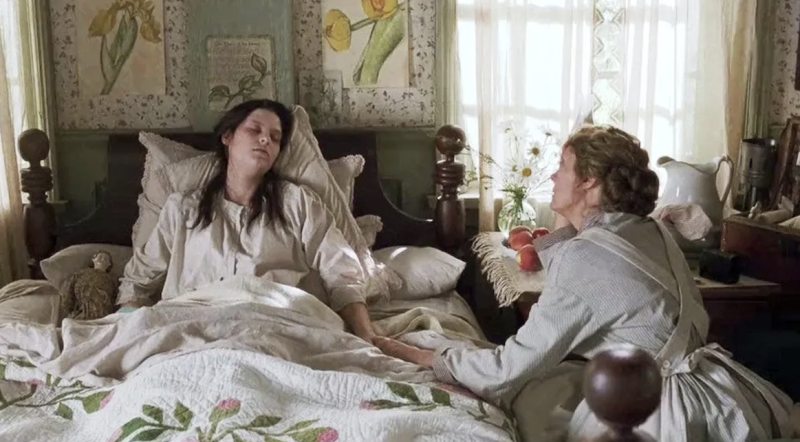
This paper brings together two sections of a book in progress, Telling Faces, co-authored with Joe Hughes. This book ranges freely over two millennia of writing about the face, though with an uneven concentration on the novel form. In these two sections we focus on the some of the representational, formal, symbolic, cognitive, mnemonic, and affective issues that arise in encounters with the dead and dying face in literary texts. The paper will attempt to draw out some methodological threads that hold our diverse examples together, ranging from the Chanson de Roland and the visions of Julian of Norwich, through examples from Louisa May Alcott, Samuel Richardson, Leo Tolstoy, Henry James, Sylvia Plath, and others. It is our sincere hope that this paper will provoke audience recollections of other dying faces from their own reading that we might also discuss.
Stephanie Trigg

Stephanie Trigg is Redmond Barry Distinguished Professor of English Literature at the University of Melbourne, where she specialises in late medieval literature and medievalism. Recent books include two volumes co-written with Thomas A. Prendergast: Affective Medievalism: Love, Abjection, and Discontent (Manchester UP); and Thirty Great Myths about Chaucer (Wiley). She also writes about modern literature; her most recent essay in that field is "The Face of the Australian Girl in Miles Franklin’s My Brilliant Career (1901) and Christina Stead’s For Love Alone (1944),’" Journal of World Literature,11.1 (2026): 52–71.special issue on ‘The Face in/as World Literature’, ed. Anca Parvulescu and Tyne Sumner. With her colleague Joe Hughes, she is writing a monograph that draws on research from the ARC Discovery Project, “Literature and the Face: A Critical History."