Belief in Evidence and the Nineteenth-Century Novel
4th Floor Linkway, John Medley Building, University of Melbourne.
MapShare via
Distant Reading and the Cartographic Limits of Australian Realism
Fiannuala Morgan (University of Melbourne)
- Wednesday 20 May, 4.00-5:30pm
- 4th Floor Linkway, John Medley Building, University of Melbourne
Abstract
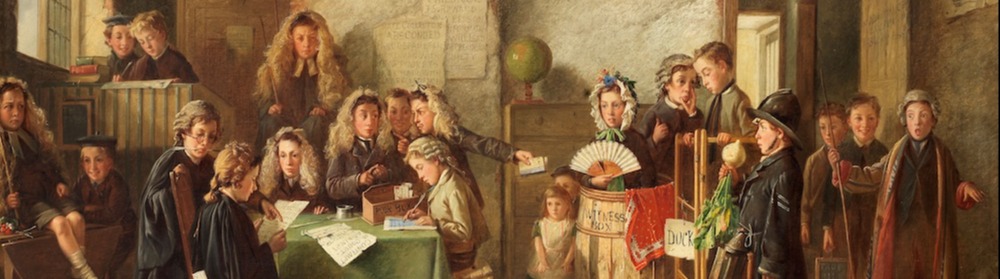
What makes us believe anything told to us by another person? This old problem, fundamental to a jury-trial system, newly animated legal writing and changes in evidence law in Britain in the eighteenth and nineteenth centuries. We could think of this period as a kind of “age of evidence”; as evidentiary ideas from philosophical quarters affected evidence-thinking in legal circles, this thinking then slipped into culture more broadly, where it became entangled with the emerging protocols of realist narrative. Novels of the nineteenth century like Mary Shelley’s Frankenstein (1818) and George Eliot’s Middlemarch (1871-72) both relied on and complicated this understanding of the relationship between belief and evidence.
Geoff Baker
Geoffrey Baker is Associate Professor of English at the National University of Singapore, where he teaches classes on nineteenth- and twentieth-century literature. He has published Belief in Evidence in the Nineteenth-Century Novel (Law and Literature series, Oxford UP, 2026), The Aesthetics of Clarity and Confusion: Literature and Engagement since Nietzsche and the Naturalists (Palgrave, 2017), and Realism’s Empire: Empiricism and Enchantment in the Nineteenth-Century Novel (2009).