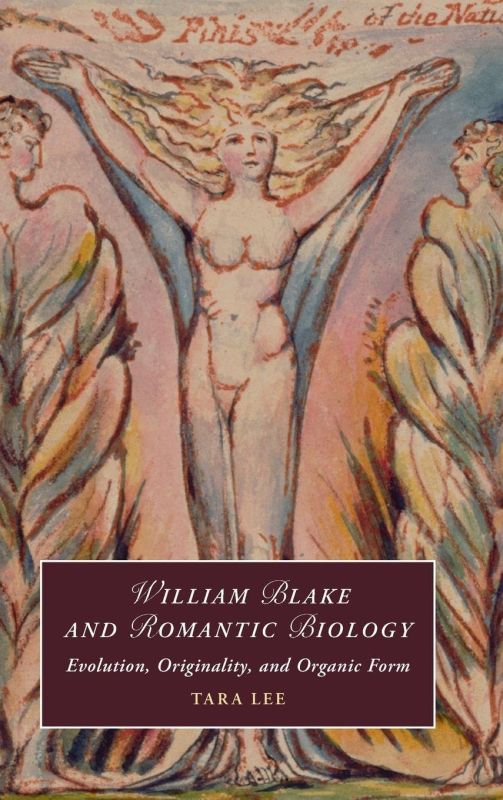
William Blake and Romantic Biology: Evolution, Originality, and Organic Form
4th Floor Linkway, John Medley Building, University of Melbourne.
MapShare via
William Blake and Romantic Biology: Evolution, Originality, and Organic Form
Tara Lee (The University of Hong Kong)
- Wednesday 7 October, 1:15-2:30pm
- 4th Floor Linkway, John Medley Building, University of Melbourne
Abstract
In William Blake and Romantic Biology, Tara Lee shows how Blake’s illuminated books were shaped by Romantic-era debates about the self-organizing nature of living form. Situating Blake within a range of scientific, theological, political, and aesthetic discourses about the nature of life itself, Lee shows how Blake’s biological myth was held in tension between the mobility of vital matter and openness of evolutionary change on the one hand, and the resilience of preformed identities and flexibility of virtual structures on the other. Ultimately, William Blake and Romantic Biology invites scholars to reconceptualise Romantic-period definitions of vitality and consider the implications this might have on our understandings of Romantic poetics and aesthetic thought more generally.
Tara Lee