The Critical Ethnography Lab (CiEL) studies the future of ethnography. We support socially impactful research and experiment with multiple ways of learning, knowing, and experiencing the world.
Ethnography is a cluster of qualitative research methods which prioritises the understanding of phenomena in-situ. Ethnographers work closely with participants to understand practices, challenges, aspirations, and spend time contextualising their observation within larger socio-cultural processes.
Increasingly, businesses, governments and not-for-profits are discovering the benefits of ethnographic methods for understanding culture and behaviour, for forecasting trends, and for optimising quantitative research (both in terms of survey design and in the interpretation of results).
The rich and often unusual insights produced by ethnography bring clarity to scattered data points and complexity, and, when done correctly, provide actionable and scalable results and recommendations.
Our Research
CiEL supports research projects that explore the future of ethnography, and integrate student researchers, University of Melbourne staff, and external partners.
Our research is organised in three streams, Distributed Intelligence, Sustainability, and (In) Justice/Equality. Streams constitute an infrastructure to begin, experiment, and grow research projects and teams.
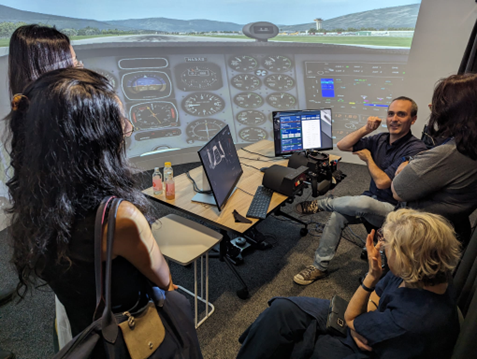
AI in Aviation: Digital Flight Assistants
How is AI transforming the Aviation Industry? How do pilots, dispatchers, controllers, or cabin crews relate to automate technologies? And can we design AI systems to help, rather than replace, humans? The project invites participants on a co-design journey, where they can experiment with GPTs, train an AI model or fly our flight simulator. The challenges that emerge create a space to understand the fragility of AI systems and their socio-economic impact. Currently, we are building a virtual instructor to support trainee pilots and studying whether AI solutions can help foster increased psychological safety on the airplane.
Distributed Intelligence Stream // Researchers: Fabio Mattioli, Joe Brailsford

Andromeda
How do we build rapport with companion robots? And how do they change the workflow in an organization? In this project we will conduct an ethnography of how humans (workers, engineers, users) relate to robots, build empathy with them, and look at the structural issues that affect those relationships.
AI in Action// Researchers: Fabio Mattioli

Sustainability in Hospitals
How can we help hospitals become more sustainable? In collaboration with medical institutions and other partners, this project looks at the reduction of singe use objects in the Parkville precinct. In 2024, we plan on starting with coffee cups. Through participant observation in cafes, co-design sessions with nurses, doctors, and patients, we aim at producing change models that maps and transforms the value chain of coffee consumption in hospitals.
Sustainability Stream // Researchers: Fabio Mattioli, Erin Fitz Henry, Meiling Zhou

Perceptions of Nature
How are millennials perceiving Nature – and how do they associate value to enterprises who promote biodiversity and sustainability in commercial projects? With our partners, we plan on using co-design and ethnographic methodologies to map attitudes towards and connection with nature and biodiversity. The project combines ethnographic and quantitative methodologies to develop a change model for caring for biodiversity and natural systems, with commercial partners such as banks. It also tries to understand how nature is commercialized in pop culture through lyrics and imagery of Taylor Swift.
Sustainability Stream // Researchers: Rachel Morgain, Cynthia Sear

Justice in the Metaverse
How should virtual spaces be designed to enable conflict resolution? What happens to the experience of justice when judges and other participants see and interact with each other as avatars in Web3 spaces? In this project, we interrogate the opportunities and limitations of immersive virtual court technology. Through an experiential and phenomenological ethnography of metaverse spaces, we aim at developing and testing a prototype for virtual courtrooms.
(In)Justice and Equality Stream // Researchers: Tatiana Dancy, Meredith Rossner, David Tait, Fabio Mattioli

Mapping housing finance inequality
How do Melbourne residents negotiate increasingly unaffordable mortgages? What kinds of emotional responses arise when trying to access or pay mortgage debt, and how does this shape peoples’ perceptions of the future? Drawing from participatory emotional mapping techniques, ethnography, and the construction of envisaged future scenarios, we will investigate the intersections between emotion, housing finance inequality and urban space in Melbourne. These data visualizations will reveal the lived effects of housing finance inequality.
(In)Justice and Equality Stream // Researchers: Rebekah Plueckhahn, Jeff Garmany, Fabio Mattioli
Completed Projects
Yarra Valley Water
How is the cost-of-living crisis impacting water access – and how can we design systems that mitigate the impact of financial hardship? In collaboration with our partners, we explored the lived experience of financial hardship and access to support in Melbourne's inner north. We jump started a series of co-design activities and traced the social life of financial bills.
Researchers: Cynthia Sear, John Cox, Cindy Stocken, Fatemeh Ebrahimi, Anna Kosovac
Sustainability in Hospitals
How can we help hospitals become more sustainable? In collaboration with medical institutions and other partners, this project looks at the reduction of singe use objects in the Parkville precinct. In 2024, we plan on starting with coffee cups. Through participant observation in cafes, co-design sessions with nurses, doctors, and patients, we aim at producing change models that maps and transforms the value chain of coffee consumption in hospitals.
Researchers: Fabio Mattioli, Erin Fitz Henry, Meiling Zhou
News and Events
Our People
Core Team

Dr Fabio Mattioli (Director) is a Senior Lecturer in Social Anthropology at the School of Social and Political Sciences and Associated Researcher at the Centre for Artificial Intelligence and Digital Ethics. His work focuses on the political and economic dimensions of AI, finance, and innovation.

Dr Cynthia Sear (Director, on leave 2024) specialises in the anthropology of personal finance, gambling, consumption, gender and capitalism and has over a decade of experience using ethnographic methods for consulting and applied settings.

Dr Joanne Byrne (Co-Director, 2024) is a digital anthropologist, interested in the complex interplay between technology and culture. Her work is situated in digital ethnography, cross-disciplinary social media analysis, and investigations into the use, construction, and meaning of digital spaces. Her research interests include: gender, digital social space and identifying methodological intersections between quantitative ‘Big Data’ projects and qualitative social research.

Dr. Jeff Garmany is Senior Lecturer in Latin American Studies and Program Director for the Master of Development Studies. His research focuses on inequality in urban settings.

Dr Rachel Morgain is an interdisciplinary environmental researcher with interests in biodiversity and climate change, the science-policy interface, nature-based climate solutions, ESG and biodiversity risk for business, knowledge brokering, research effectiveness, science communication, science and technology studies, Pacific studies, decolonising methodologies, gender, race and the practice and study of processes for building large research collaborations.

Dr Rebekah Plueckhahn is a lecturer in Anthropology at the School of Social and Political Sciences at the University of Melbourne. She is an anthropologist studying prefiguration, sociality and emerging ethics as people negotiate access to shifting urban infrastructures, housing finance and engage in emerging politics and performance.

Dr Erin Fitz-Henry is a Senior Lecturer in Anthropology, Discipline Chair of Anthropology and Development Studies, and Co-Convenor of the Politics and Policy stream of Melbourne Climate Futures.

Prof Meredith Rossner's research focuses on emotions, rituals, the built environment, and technology in justice practices. Past and current projects include investigations into the emotional dynamics of restorative justice, therapeutic courts, the role of courtroom design on access to justice, and the use of video technology in courts.

Ms Cindy Stocken is currently undertaking her PhD in Anthropology with a specific interest in ritual creativity, death studies and alternative funerary rituals (namely Living Funerals).

Dr John Cox is a Social Anthropologist and Development Studies specialist. John has more than twenty-five years’ experience in Pacific Islands countries working as a volunteer, NGO program manager, development consultant, researcher and educator.
Fellows and Junior Researchers
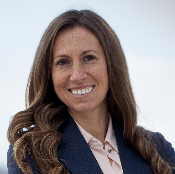
Dr Kimberly Perkins, an Honorary Fellow at the Critical Ethnography Lab, is a Boeing 787 airline pilot with experience spanning commercial and business aviation across six continents. Her doctoral research explores ways to enhance aviation safety by integrating interpersonal skills and behavioural science in human factors training. Her work aims to optimize risk mitigation and improve socio-processing capacity, reconceptualizing such training within the complex sociotechnical system of the flight deck.
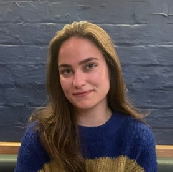
Nina Zepecan is a Junior Researcher at the Critical Ethnography Lab, with practical and theoretical experience in emerging tech sectors, international relations, and sustainable advocacy.
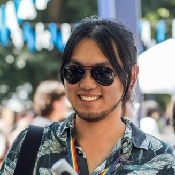
Ridge Pang is a Junior Researcher at the Critical Ethnography Lab, working closely with interdisciplinary teams to innovate novel ethnographic methodologies projects such as AI in Aviation and AI in Psychotherapy
Our Collaborators
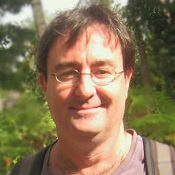
Dr Paul Green is Senior Lecturer in Anthropology in the School of Social and Political Sciences. He is currently involved in two longitudinal ethnographic projects based on the life experiences of later-life foreigners/retirees and digital nomads, respectively, in and beyond Southeast Asia.

Dr Hannah Gould is a cultural anthropologist studying death, Buddhism, and material culture in Australia and Asia. She holds the Melbourne Postdoctoral Fellowship, for the project "Mobile Mortality: Transnational Futures of Deathcare in the Asia Pacific". Dr Gould works with the DeathTech Research Team. Alongside academic research and publishing, Dr Gould creates public programs to advocate for more equitable systems of deathcare for all.

Prof Tamara Kohn’s research expertise is in humanistic anthropology, death studies, the anthropology of the body and senses, trans-cultural communities of practice, and methods and ethics in anthropology. She is Professor of Anthropology in the School of Social and Political Sciences and one of the founding members of the DeathTech Research Team.

Dr. Adrian Watts is Sessional Lecturer in Anthropology. He completed a thesis on social inequality and is interested in working on this angle.
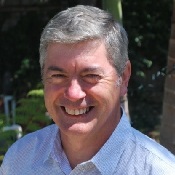
Peter Derrick is the General Technology Manager at AvSoft, an Australian Aviation Software service focused on developing and delivering innovative solutions for the evolving aviation industry.
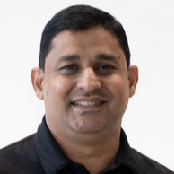
Waqar Hussain is a Senior Research Scientist at CSIRO's Data61, specializing in the ethical development and implementation of AI. He has expertise in auditing systems for fairness, trust, privacy, and security and develops frameworks to help organizations integrate ethical principles into AI for responsible and effective use.
Contact
At CiEL, we are keen on supporting innovative ethnographic thinking. Our key priorities are:
Supporting student-engaged research that promotes ethnographic experimentation
We offer seed funding, support the development or execution of grants, and organize events tailored to research questions or issues.
Building a pipeline of talent
We offer undergraduate volunteer opportunities (with small reimbursements); for-credit opportunities (e.g. Independent Subjects, Internships); student-focused workshops (such as our ongoing graduate student workshop - Ethnocurious); and PhD scholarships.
Building international networks
We support international workshops, student exchanges, and participation in joint writing and research projects with lab across the world.
Increasing the salience of ethnography for solving issues of social importance
We engage with industry, governments, and non-for-profits, taking ethnographic methods (and anthropologists) more spaces where important decisions are made.
If you are a student interested in getting involved, a staff member looking for support to develop innovative ethnographic ideas, or a partner interested in using ethnography, contact us at critical-ethnography@unimelb.edu.au