The History, Place and Future of the Imagination
Professor Richard Kearney will deliver his public lecture via Zoom on Wednesday 23 November, 2022.
Date and Time: Wednesday 23 November, 11.00am - 12.30pm (AEST)
Venue: via Zoom
Link: via Eventbrite Registration
'The History, Place and Future of the Imagination'
Richard Kearney’s work traverses the relationships between imagination, narrative, and embodiment in their myriad interconnected ways from the most loving and sacred to the most carnal and even cruel.
Professor Kearney’s public lecture will concentrate the fate of embodiment, touch and the contemporary imagination, especially in the face of our current digital age. He invites participates to discuss the issues raised with him during his public lecture.
This event is a continuation of the launch and panel talk on ‘Imagination’ held on 8 November, 2022
From a historical perspective, formulations of the imagination emerged from Plato, Aristotle, the neo-Platonic, Persian and Arabian traditions that have given shape to the way we understand ‘the imagination’. These formulations are the imagination as the conduit between the empirical, the body and cognition; the imagination as functionally necessary yet subordinate to cognition; the imagination as a reproducing ‘mirror’ reliant on external stimuli; the imagination produces images internally and is the source of play, love and eros, fiction and deception; the imagination as the place of protean activity, instincts, unconscious, irrationality and fantasy. These formulations have dominated our understanding and have relegated the imagination as the secondary position as reason’s ‘other’, and/or viewed it as primarily associated with the irrational, love, or aesthetic creativity.
There have been two primary figures who have swum against this tide and viewed the imagination as more extensive and primary than what these formulations might suggest. These figures are Immanuel Kant and Cornelius Castoriadis. It is an open question, however, whether the imagination is as creative as these thinkers might suggest, and indeed in the wake of contemporary culture, as Richard Kearney suggests in his recent work Touch, as well as his seminal earlier work The Wake of Imagination, it is in retreat. This is the topic of his public lecture.
Speaker
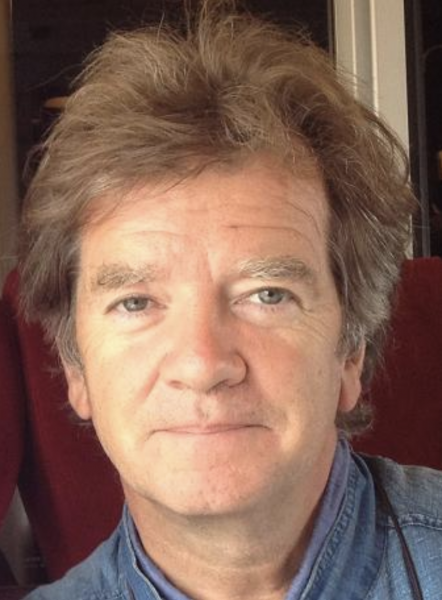
Professor Richard Kearney is Charles Seelig Chair of Philosophy at Boston College. His many publications include The Wake of Imagination (1988), Poetics of Imagining: Modern to Postmodern (1998), Strangers, Gods and Monsters (2002), On Stories (2002), Anatheism: Returning to God after God (2010), Debates in Continental Philosophy: Conversations with Contemporary Thinkers (2004), On Paul Ricoeur: The Owl of Minerva (2005), Navigations: Collected Irish Essays 1976–2006 (2007), Touch (2021), The Richard Kearney Reader (2021).