Ju Bavyka awarded Peter Blazey 2025 Fellowship
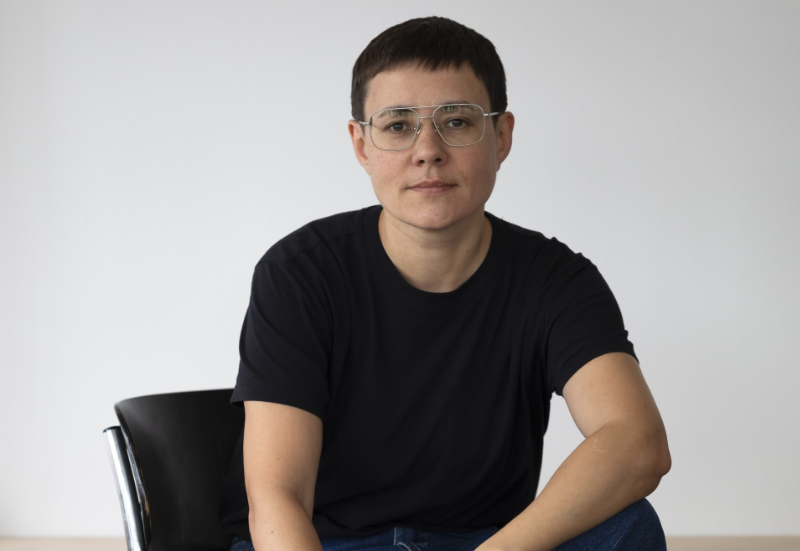
Pictured: Ju Bavyka, winner of the Peter Blazey Fellowship for 2025. Source: Maja Wirkus
The winner of the Peter Blazey Fellowship for 2025 is Ju Bavyka, who will use the Fellowship to work on their memoir, 'Just a Hand's Reach Away – Rukoi Podat'.
Bavyka is a writer, visual artist, museum worker and community organiser who writes from a queer migrant perspective.
"Since coming out as non-binary, I frequently travel back to my childhood and early teenage years to turn the compost of my memories and make slight adjustments to the image in the mirrors", they write in this vibrant and sophisticated reflection on choice and choicelessness, queer desire, migration and transition.
The panel recognise Bavyka as an emerging literary talent and welcome this developing manuscript by an author with lived experience of transition.
'Just a Hand's Reach Away – Rukoi Podat' promises to be a significant work of literary nonfiction dealing with precarity, otherness and the personal courage required to choose to change.
In accepting the award, Bavyka said: "I am deeply honoured to receive the 2025 Peter Blazey Fellowship. My career path has been far from linear, due to my family history and migration experiences. As such, my writing practice has emerged gradually. I am especially grateful that my multidisciplinary approach has been recognised as valid, and for the trust of the selection committee. More than just financial support, the Fellowship is a profound acknowledgement of my work, which is important to me.
"'Just a Hand's Reach Away – Rukoi Podat' will be my first book – an autobiographical exploration of intergenerational relationships, queer existence and the migrant experience, set against a backdrop of systemic political and societal change. It takes place across different settings, from early post-Soviet Kazakhstan to Germany and Australia, weaving personal narratives and broader cultural observations together. This is a significant project for me, and one that carries a sense of personal urgency. This Fellowship provides immense motivation for writing and offers crucial support during the process.
"I would like to express my deepest gratitude to the donor's family and the selection committee.
"I have always dreamed of pursuing a writing career alongside my visual arts practice and other activities. This Fellowship provides immense motivation to work on my book manuscript and offers crucial support during the writing process.
"Thank you again for this incredible opportunity".
Special commendations went to the following outstanding writers:
Mia-Francesca Jones for 'Midnight Sun'
Mia-Francesca Jones' work-in-progress, 'Midnight Sun', thoughtfully winds ecological impacts of light pollution with an autobiographical narrative of loss. She asks, "How do we find the light in grief? How do we find the light on a dying planet?" An incisive exploration of contemporary crises, 'Midnight Sun' promises to be a powerful and necessary contribution to Australian non-fiction.
David Owen Kelly for 'LEOPARD'
David Owen Kelly's memoir, 'LEOPARD', is a compelling study of former Sydney nightclub identity and queer columnist, Lance Leopard. Kelly describes himself as Leopard's "hanger-on, confidante and partner-in-crime", before their 40-year friendship faltered. The memoir incorporates an innovative assemblage of images, newspaper clippings, letters and social media posts to highlight the subject's cultural significance and influence, though more than this, 'LEOPARD' promises a searingly honest interpretation of a friendship between two gay men during tumultuous times.
Tiger Salmon for 'Scratch: Memoir of a Dyke Icon'
Tiger Salmon's work-in-progress, 'Scratch: Memoir of a Dyke Icon', is an inventive and energetic work of intersectional queer feminist history: part memoir and part playful excursion into the Australian Queer Archives to revisit the life and times of Australia's first lesbian sex-positive zine, 'Wicked Women' (launched in 1988). Salmon's double-biography expertly combines text and image to vividly reconstruct the queer experience of late-eighties and early-nineties inner-Sydney, revealing a radical "pocket of queer joy" against the larger canvas of the HIV/AIDS pandemic, widespread homophobia and street violence.
See the full list of citations and list of past winners on the Faculty of Arts website.