Emotions and the Letter: A History from Antiquity to the Present w/ Katie Barclay & Diana G. Barnes
Share via
Tuesday 2 December, 4:00pm-6:00pm
Clyde Hotel, 385 Cardigan Street
Carlton VIC 3053
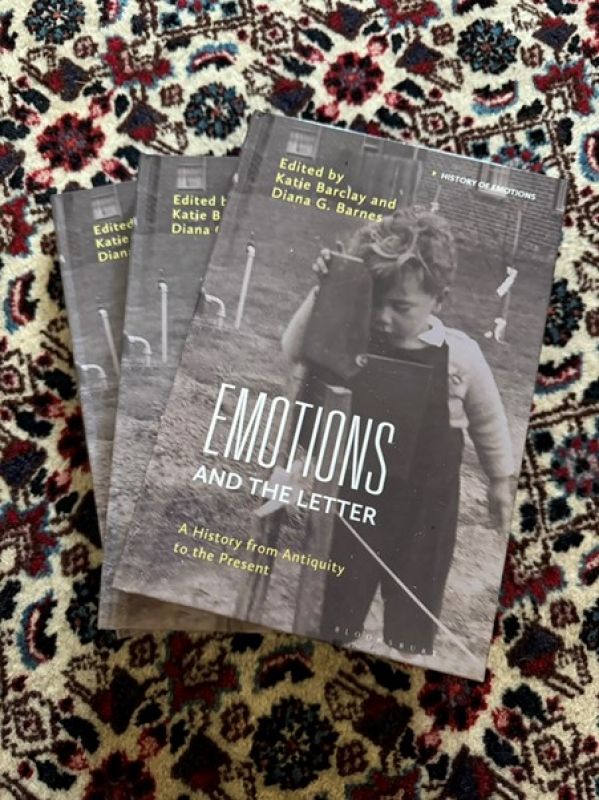
Join us for the launch of Katie Barclay & Diana G. Barnes, ed. Emotions and the Letter: A History from Antiquity to the Present (Bloomsbury 2025). We will hear from Katie and Diana, with responses to the book from Andrew Benjamin and Sarah C.E. Ross.
About the book:
From hate mail to suicide notes to begging letters, this book explores the relationship between letter writing and emotion through case studies from antiquity to the 21st century. It shows how the epistolary form has offered a wide range of ways to communicate private feelings, make public statements and offers a rich historical source to explore how people have performed emotions for a range of audiences.
Emotions and the Letter shows how this long-standing historical source can provide insights into a diversity of emotion traditions. Uses of the letter in different periods and its emotional potential reflect important interactions between individuals and society, private and public, aesthetics and authenticity. Applying approaches and methods from the history of emotions, literary studies and affect studies, this collection significantly advances our understanding of why letters remain a critical mode of communication and explores how to analyse letters for historical emotions research.
The book includes a critical introduction by Barclay and Barnes, and essays on difficult emotions in Cicero’s letters by Ruth Morello, Francis Bacon’s use of letters as emotional evidence by Alan Stewart, technologies of epistolary separation by James Daybell, letters of the dead in Josean Korea by Susan Broomhall, letters in fiction by Barnes, C18th suicide letters by Eric Parsiot and Ella Sbaraini, C18th Children’s letters and emotional formation by Barclay, C20th letters to heaven by Vesna Drapac, late C20th hate mail in the US by Prudence Flowers, and the epistolary films of Pedro Costa by Thomas Moran.