Festschrift: A Celebration of Alexis Wright

Share via
The University of Melbourne
8 August 2024
Level 4 Linkway, John Medley Building / Research Lounge, Arts West
Alexis Wright is one of the most important writers of her generation. Her ambitious, epic and uncompromising works have been credited with putting Aboriginal literature on the world map. Wright’s books have been translated into more than five languages and inspired significant levels of critical dialogue, as befits a world literary author. She has won every major literary prize in Australia and received numerous accolades from overseas. In 2021, her novel Carpentaria (2006) was placed on the French agrégation syllabus, a national civil exam for English teachers. The last Australian novel to receive such recognition was Patrick White’s Voss (1957).
This Festschrift brings together authors, scholars and critics to reflect on the diversity of form and sheer prowess of Alexis Wright’s work over a long and distinguished career. The colloquium of papers will tease out the complex, multilayered ways in which Wright’s literature operates, and place her work within the broader context of an Indigenous politics. It will also examine the importance of transnational exchange in Wright’s development as a highly experimental and fearless writer. Above all, this Festschrift celebrates a remarkable voice unparalleled in Australian literature.
Presented by the English and Theatre Studies Program.
PROGRAM
LEVEL 4 LINKWAY, JOHN MEDLEY BUILDING
9AM-9:15AM
Registration (Level 4 Linkway, John Medley Building)
9:15AM-9:30AM
Welcome to country & introduction
9:30AM-11AM
PANEL 1: WORLDLINESS AND SINGULARITY
Brenda Machosky, ‘The Voices of Alexis Wright: an allegorical phenomenon’
André Dao,‘“thousands of years modern”: Wright’s Opacities’
Stephen Muecke, ‘Wright’s Cosmography’
Chair: Denise Varney
11AM-11:30AM
Morning Tea
11:30AM-1PM
PANEL 2: SONG AND CHORUS
Ellen van Neerven, ‘The Poetic in Wright’s Prose’
Nick Jose, ‘Reading with Alexis Wright’
Ivor Indyk, ‘Reading for Rhythm’
Chair: Ruby Lowe
RESEARCH LOUNGE, ARTS WEST
1PM-2PM
Lunch
2PM-3:30PM
PANEL 3: SOVEREIGNTY AND LAW
Tony Hughes-d’Aeth, ‘Plains of Promise and Indigenous Jurisprudence’
Mary Graham, ‘The Infinite Range of Dreamings’
Jacqui Katona, TBA
Chair: Sandra Phillips
3:30PM-4PM
Break
4PM-5PM
PANEL 4: ALEXIS WRIGHT IN CONVERSATION WITH LYNDA NG
Alexis Wright, Lynda Ng
5PM-5:15PM
Concluding Remarks
ABSTRACTS
André Dao, “‘thousands of years modern’: Wright’s Opacities”
Poet and philosopher Édouard Glissant called ‘not merely [for] the right to difference but … the right to opacity’, which is not ‘enclosure within an impenetrable autarchy but subsistence within an irreducible singularity. Opacities can coexist and converge, weaving fabrics.’ In this paper, I attempt to read Alexis Wright’s work in the light of Glissant’s insistence on opacity over transparency. I do so by paying attention to the way Wright works with and through the tools with which the colonial state tries to render the lives of Aboriginal peoples transparent, namely, the English language, and the concepts of nation and modernity. An example of the opacities thus woven by Wright is the thinking of Cause Man Steel in Praiseworthy, who knows a modernity that is not the modernity of ‘New York, Hong Kong or Tokyo’. Instead, what he knows is that ‘the glory in this country was about enduring its sense of being thousands of years modern’.
Mary Graham, ‘The Infinite Range of Dreamings’
Western contemporary techno-sciences, rather than being taken as definitional of knowledge, rationality, or objectivity, should be treated as varieties of knowledge systems. But even though knowledge systems may differ in their epistemologies, methodologies, logics, cognitive structures, or socioeconomic contexts, a characteristic they all share is localness.
In other words, Place precedes Inquiry. Place defines and supersedes Inquiry. Place is a living thing again whether place is geographically located or an event in time. Place does not hamper, confuse or attenuate Inquiry, rather Place both enhances and clarifies Inquiry. Place underpins Inquiry but not ideologically so.
To the Aboriginal mindset phenomena are received and if there is an observation it is to "behold" or "regardez". The Law is both creator, informer and guide – the world reveals itself to us and to itself - we don't "discover" anything.
If change is the fundamental nature of reality or existence, as described by Heraclitus, then Place is the fundamental existential quantifier, that is to say, Place is a measuring device that informs us of 'where' we are at any time, therefore, at the same time, it's also informing us 'who' we are and why we are.
For the Indigenous, there is never a barrier between the mind and the Creative; the whole repertoire of what is possible continually presents or is expressed as an infinite range of Dreamings. What is possible is the transformative dynamic of growth and learning.
Wright demonstrates all the above beautifully.
For clarity and strait forwardness combined with moral and philosophical depth Alexis Wright must be considered a great writer.
Tony Hughes-d’Aeth, “Plains of Promise and Indigenous Jurisprudence”
In my talk I would like to consider Alexis Wright’s debut novel Plains of Promise as a legal novel. I am drawing on the critical field of literature and the law as it has emerged in the western academy but adapting this to the situation that transpires in Wright’s novel. At one level, the novel is a classical dramatization of the stolen generation, with Ivy (Koopundi) Andrews being removed from an inland mission and sent to a southern metropolis to be raised by a white family. That removal was authorised by settler law because Ivy was by statute a ward of the state. Yet in parallel to the settler law there is a secondary—one might say, primary—legal process that is conducted by the community on whose country the mission sits. Though it remains submerged in the narrative until its final moments, this investigation determines Ivy’s fate. Understanding this novel in legal terms underscores its grounding in Indigenous sovereignty. In Plains of Promise, the stolen generations story finds itself deftly encircled in the law of country.
Ivor Indyk, “Going with the Flow”
There are some writers you read for rhythm, poets most obviously, but also those prose writers for whom the much-vaunted attractions of ‘story’ are less important than the ‘beat’ of language, repetition and variation, rhythm, resonance and association. The appropriate attitude to this kind of writing is listening, to read the language in which it is written is to be attentive to its rhythm – not causality or narrative or plot, the workings of which cannot be heard – but the array of ground notes which are the basis of its continuity. By its nature, the beat of this prose is expansive, or lends itself to expansion, not only because its repetitions and resonances gather associations as they go, but because there is no necessity short of modulation or exhaustion that requires its ending.
Tommyhawk in exile beating a forty-four gallon drum in Praiseworthy is a literal example of the expansive way rhythm works in Alexis Wright’s writing – the beat of his drum travels across the continent and through people’s brains. It is a relentless pulse which magnifies people’s heartbeats, drives them crazy, a destructive beat therefore, but no less expansive for that. Earlier, his brother Aboriginal Sovereignty’s pacing around the detention centre in which he is being held offered another kind of rhythm. There are many kinds of rhythm in Wright’s work, they give the work its extraordinary scale.
Nick Jose, “Reading with Alexis Wright”
In her acceptance speech for the 2024 Stella Prize for her novel Praiseworthy, Alexis Wright spoke about the State Library of Victoria. She said ‘this library is greater than the sum of us. It holds and cares for the voices of all people in the world, without favour, without prejudice, without censorship. Let it remain so.’ Elsewhere she acknowledges another library, the ‘library land … ‘an almost unimaginable massive archive, cared for by its people through their spiritual connections to various parts of the physical landscape.’ Those two libraries—the library of Country and the library of world literature—are connected in Wright’s vision and in her creative practice. When she talks about her writing and where it comes from, she names the books and the writers she cares about. ‘The seeds for novels are small and have to be harvested carefully,’ she says. ‘I found I had to learn how to care for the seeds I was given.’
Those seeds include the work of other writers. Wright makes a point of mentioning particular writers who have been important for her. They include Latin American writers such as Carlos Fuentes and Eduardo Galeano, the French Caribbean author Patrick Chamoiseau, Palestinian poet Mahmoud Darwish and Hungarian novelist Laszlo Krasznahorkai. They include writers in Chinese such as Bei Dao and Wu Ming-yi, and Irish writers, Joyce and Heaney. To read with Alexis Wright is to read expansively and connectively, generating new possibilities from literature, just as her own writing does.
Brenda Machosky, “The Voices of Alexis Wright: an allegorical phenomenon”
In the fictionalized worlds of her novels and in her commentaries on reality, Alexis Wright has a lot more to say than words on pages. I will explore how the phenomenological structure of allegory supports the appearance of that which cannot appear in any other way: a way to resist interpretive gestures, a way to let the work stand. In this taking of place, in the space of language, of the literary (broadly conceived), some “thing” other appears in the mode of appearing: an allegorical phenomenon. If we can let this particular phenomenon appear, and resist recuperating it, appropriating it into what we know, or think we know, we can experience a kind of transcendence of Wright’s work while staying grounded in it. Through the phenomenon of Wright’s allegory, maybe a western mind can hear the voices it has long (and continuously) silenced. The voices are a cry – not a meaningless sound but an overly full provocation to think other than meaning.
Stephen Muecke, "Wright's Cosmography"
Alexis Wright composes Indigenous worlds with multiple living agencies, such as: “The earth murmured, the underground serpent, living in the underground river that was kilometers wide, responded with hostile growls. This was the old war of the ancestors making cyclones grow to use against one another” (Carpentaria ). The earth, the serpent, the ancestors, kilometers and cyclones: different ontological orders are put into relation here. What is radically different from the dominant ‘Western’ ontological order is that the cosmos created is multiply real, hence a particular kind of cosmography is being crafted.
It may be sufficient to describe this craft as words on a page, but I want to explore what it means ‘to bring a world into being’, in the sense of Étienne Souriau’s ‘instauration’, who insists that the work-to-be-made itself embarks on a risky journey of coming into being, with the author playing a part, for sure, but not being entirely responsible for how it turns out. There must be other agencies involved, which Wright herself acknowledges.
Wright’s gift to literary critics is not a pretext for ‘new reading’, but a new way to value the fictional mode of existence. It is not a domain (in an existing world) to be defended by its owner-representatives against seemingly more robust ontologies, but another viable world. Wright offers us the chance to say what really matters in creation: that disclosure is a problem, that enigmas have to be thought through, and that the critical writer might also be an instaurer.
Ellen van Neerven, “The Poetic in Wright’s Prose”
Aunty Alexis Wright’s significant body of work has radically altered the field of so-called Australian literature. In this presentation, I draw attention to the poetic and aural qualities in key texts as well as reflecting on the writerly influence Wright’s work has had on my own published writing. When reading the poetic in Alexis Wright’s prose, the influence of Waanyi language, of Waanyi Country, culture and time is highly evident. Alexis states her personal challenge as a writer ‘has always been to develop a literature more suited to the powerful, ancient cultural landscape of this country.’ Alexis Wright’s novels including Carpentaria (2006), The Swan Book (2013) and Praiseworthy (2023) have been praised for their poetic qualities while Wright is also acknowledged as an accomplished writer of poetry, with ‘Hey, Ancestor’, written in the lead-up to Invasion Day in 2018, republished several times. With poetic prose tied both to the specificity of Waanyi Country and from global influences, Wright evokes extensive pasts and prophesises future literatures.
SPEAKER BIOGRAPHIES
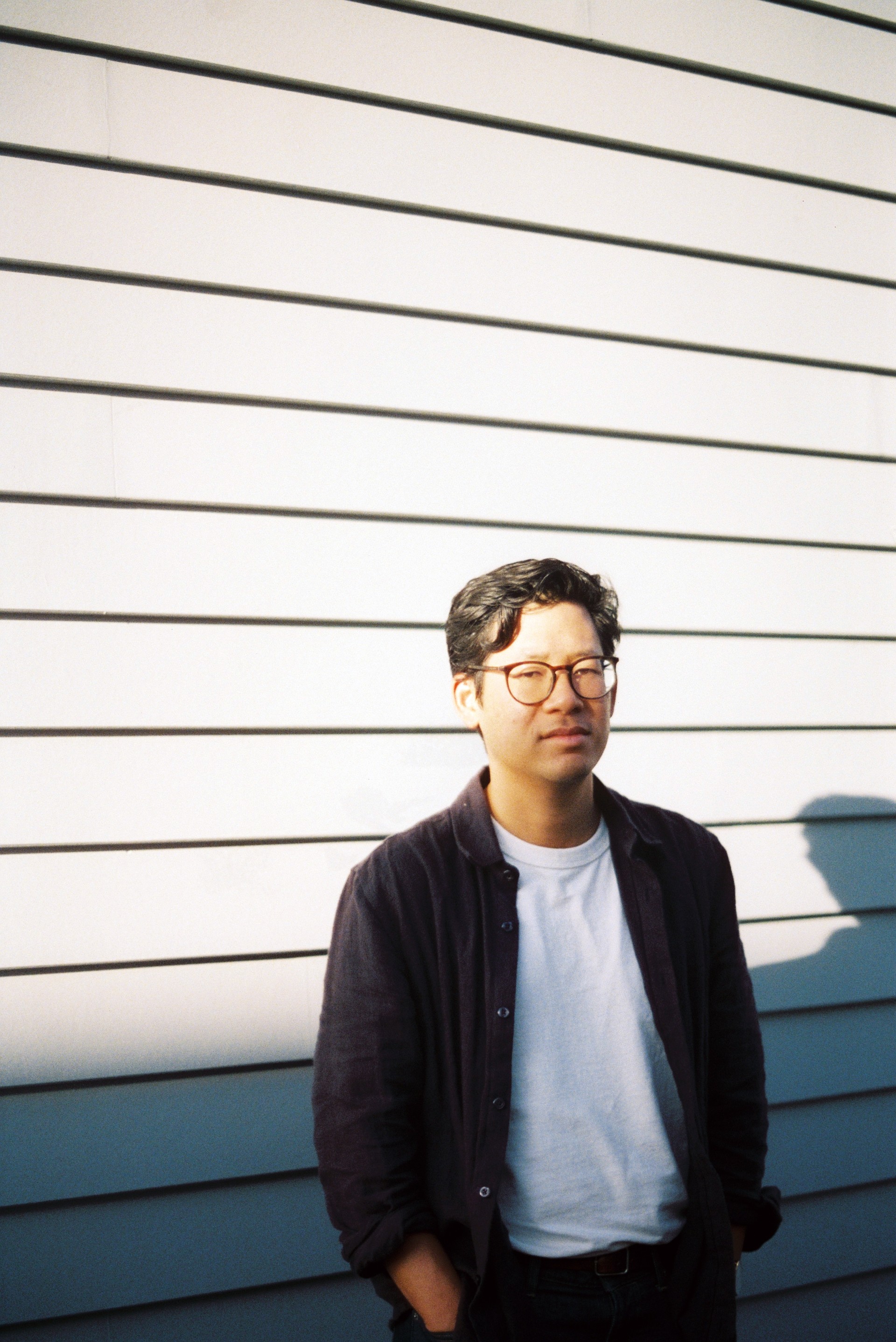
André Dao is an author and researcher from Naarm/Melbourne, Australia. His debut novel, Anam, won the NSW Premier’s Literary Award for New Writing, and was shortlisted for the Miles Franklin Literary Award. In 2024, he was named a Sydney Morning Herald Best Young Australian Novelist. André was awarded the 2024 Pascall Prize for Cultural Criticism for essays published in The Saturday Paper, Meanjin and Liminal. He is also the co-founder of Behind the Wire, the award-winning oral history project documenting the stories of the adults and children who have been detained by the Australian government after seeking asylum in Australia.

Mary Graham is a Yugambeh Kombu-merri (Gold Coast) person of her father’s clan and of the Waka Waka Clan through her mother. She is an Adjunct Associate Professor University of Queensland (UQ) and holds an Honorary Doctorate from the Queensland University of Technology (QUT). She has lectured on subjects in Aboriginal history, politics, and comparative philosophy at the University of Queensland and at other educational institutions around the country. She was the Administrator of the Aboriginal and Islander Child Care Agency (AICCA) during the 1970’s and has been on Boards and Committees of many Aboriginal organisations in Brisbane for many years since. She worked in Native Title area with the Foundation for Aboriginal and Islander Research Action (FAIRA) of Queensland.
Mary was a member of the first Council for Aboriginal Reconciliation. She also is a Casual Lecturer at the University of Queensland (UQ) in the School of Political Science and International Studies (POLSIS), and the Schools of Psychology and of Historical and Philosophical Inquiry. She was and still is also engaged in international research projects involving Australia nationally and internationally (UK.) She currently does research work with Institute of Urban Indigenous Health (IUIH), the leading Aboriginal health organisation in Brisbane. And with POLSIS and Philosophy (UQ). Although now retired, she has always and continues to work with her own traditional Yugambeh Community and Organisations on a wide variety of projects.

Tony Hughes-d’Aeth is the Chair of Australian Literature at the University of Western Australia and a Fellow of the Australian Academy of the Humanities. His books include Netlficks: Conceptual Television in the Streaming Era (UWAP, 2024), Like Nothing on this Earth: A Literary History of the Wheatbelt (UWAP, 2017), and Paper Nation: The Story of the Picturesque Atlas of Australasia (MUP, 2001). Tony is the Director of the Westerly Centre, which publishes Westerly Magazine, and is the Chair of the Publishing Board of UWA Publishing.

Ivor Indyk is director of the Giramondo Publishing Company, and an Emeritus Professor in the Writing and Society Research Centre at Western Sydney University. He was the founding editor of HEAT magazine (now in its third series), and co-founder of the Sydney Review of Books. He has written essays on many aspects of literature, art, architecture and literary publishing, and contributed to Australian literature as a critic, teacher, editor and publisher.

Nicholas Jose has published eight novels, three collections of short stories and non-fiction including an acclaimed memoir, Black Sheep: Journey to Borroloola. His most recent novel is The Idealist (Giramondo 2023). Antipodean China: Reflections on Literary Exchange, which he co-edited with Benjamin Madden, features a multi-chapter dialogue between Alexis Wright and Chinese Tibetan writer Alai.
Nicholas Jose was Cultural Counsellor at the Australian Embassy Beijing from 1987-1990 and Chair of Australian Studies at Harvard University. He is Adjunct Professor in the Writing and Society Research Centre, Western Sydney University and Emeritus Professor of English and Creative Writing at The University of Adelaide.
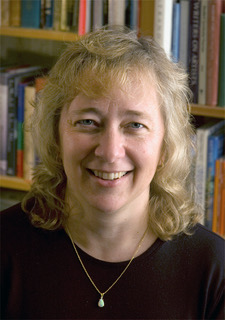
Brenda Machosky is Professor of English at the University of Hawai`i West O`ahu, and respectfully acknowledges the kānaka `ōiwi as the rightful owners of the unceded ‘aina (land) on which she lives and works. Brenda is editor of Antipodes: A Global Journal of Australia/New Zealand Studies and past president of the American Association for Australasian Literary Studies. Books include Structures of Appearing: Allegory and the Work of Literature (Fordham 2013) and the edited volume, Thinking Allegory Otherwise (Stanford 2010). Recent articles include “Alexis Wright’s Storytelling Novel and its ‘particular kind of knowledge’” and “Allegory and the Work of Dreaming/Law/Lore.” She is an invited contributor to the forthcoming Oxford Companion to Allegory.
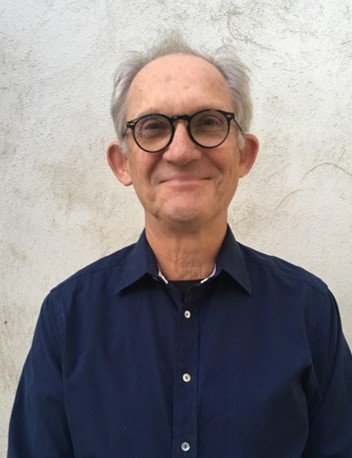
Stephen Muecke is a Fellow of the Australian Academy of the Humanities, Emeritus Professor at the University of New South Wales and Professor in the Nulungu Research Institute of the University of Notre Dame Australia. He recently published, with Paddy Roe, The Children’s Country: Creation of a Goolarabooloo Future in North-West Australia (2021).
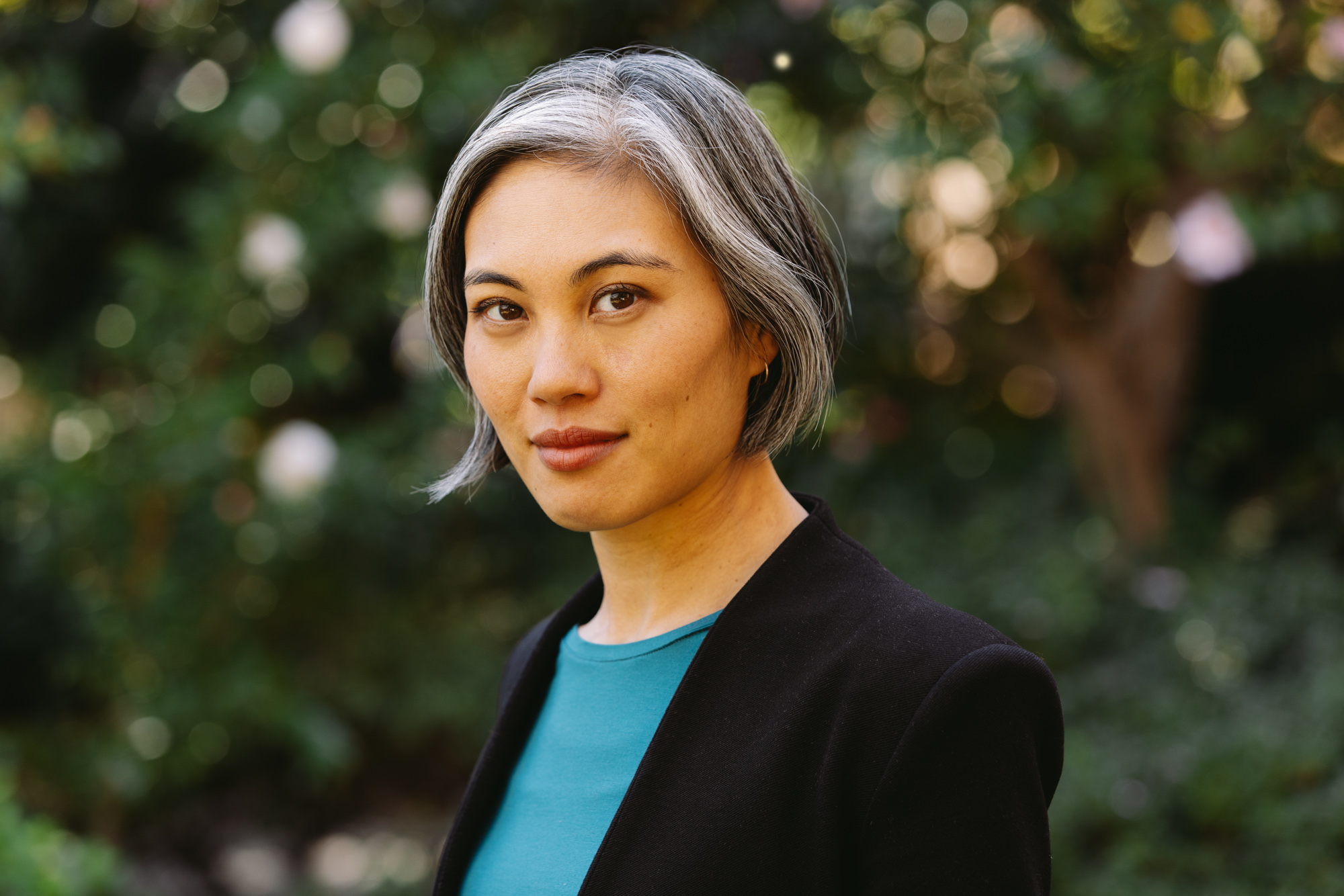
Lynda Ng is a Lecturer in English and Theatre Studies at the University of Melbourne. She is the editor of Indigenous Transnationalism: Alexis Wright’s Carpentaria (2018), the recipient of an ARC Discovery Grant for a collaborative project on J. M. Coetzee and was awarded the Margaret Church Memorial Prize for the best essay published in MFS: Modern Fiction Studies.
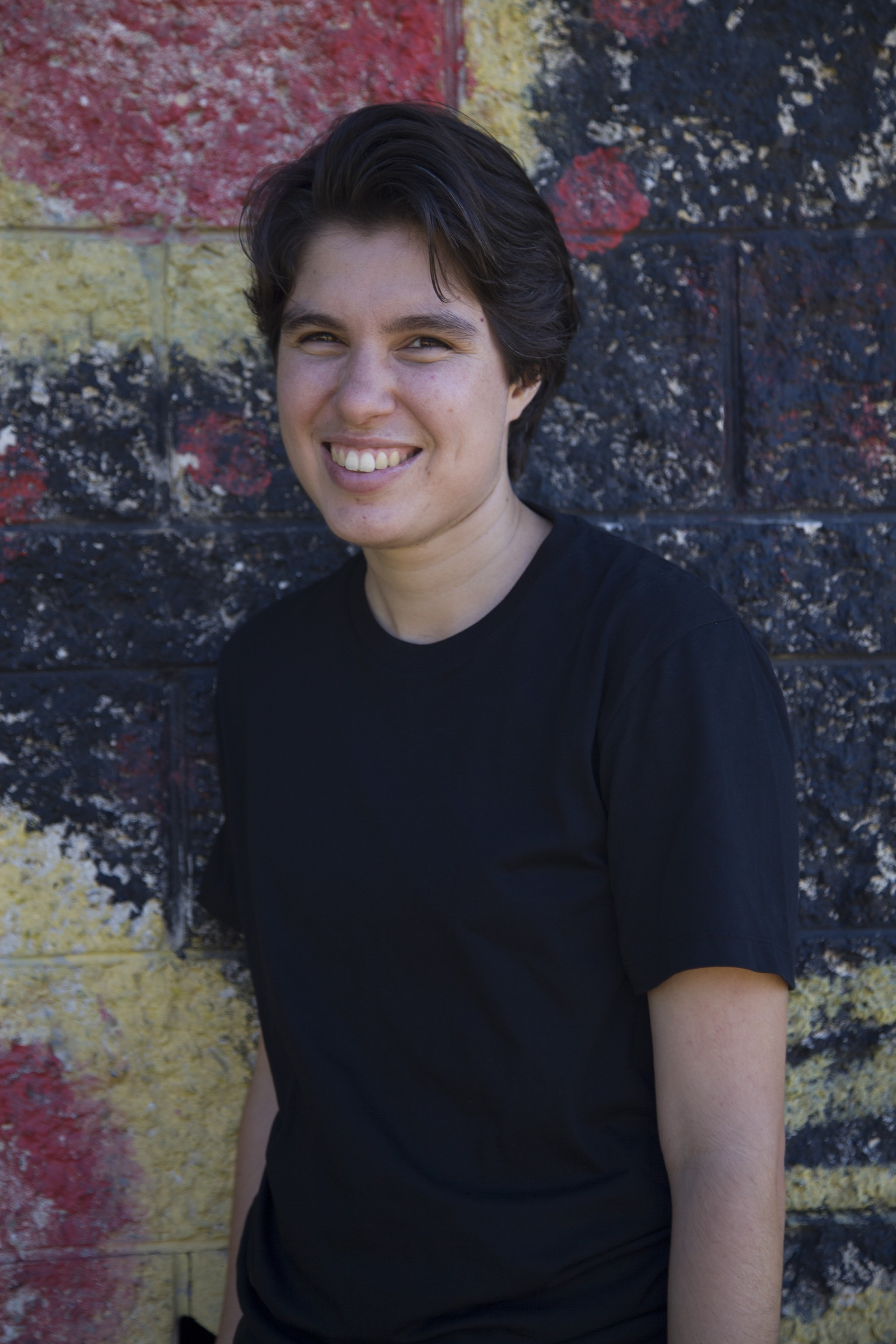
Ellen van Neerven is an award-winning writer, editor and literary activist of Mununjali and Dutch heritage. Ellen has authored two poetry collections, Comfort Food and Throat, one work of fiction, Heat and Light, and a work of creative non-fiction called Personal Score which received the 2024 Victorian Premiers Prize for non-fiction. Throat won three prizes at the 2021 NSW Premiers Literary Awards including Book of the Year, the Kenneth Slessor Prize and the Multicultural Award. Ellen lives on Yagera and Turrbal land.
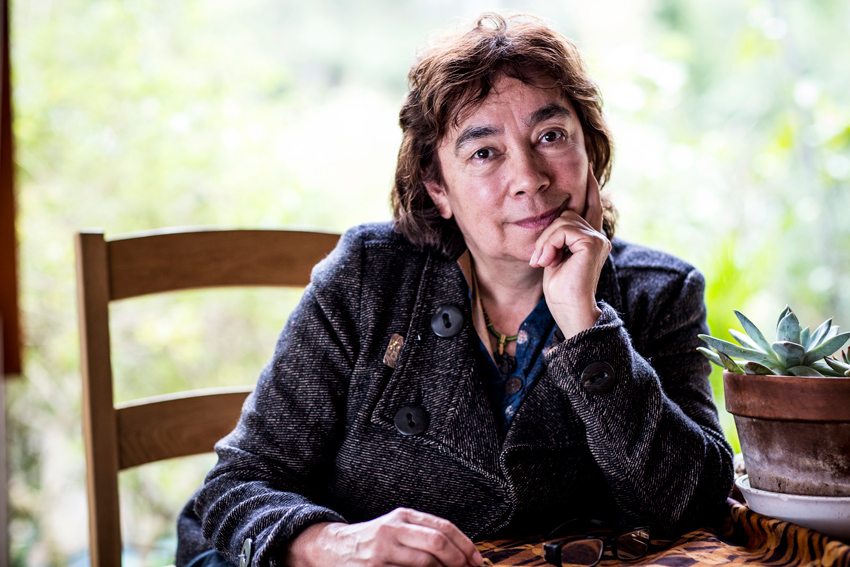
Alexis Wright is a member of the Waanyi nation of the southern highlands of the Gulf of Carpentaria. The author of the prize-winning novels Praiseworthy, Carpentaria and The Swan Book, Wright has published three works of non-fiction: Take Power, an oral history of the Central Land Council; Grog War, a study of alcohol abuse in the Northern Territory; and Tracker, an award-winning collective memoir of Aboriginal leader, Tracker Tilmouth. Wright has won a number of literary awards, including the Miles Franklin Literary Award for Carpentaria, as well as the James Tait Fiction Prize and the Queensland Literary Award for Praiseworthy. She is the first author to win the Stella Prize twice and the inaugural winner of the Creative Australia Award for Lifetime Achievement in Literature. From 2017-22 she held the position of Boisbouvier Chair in Australian Literature at the University of Melbourne.
ENQUIRIES
Please send your enquiries to Dr Lynda Ng via lynda.ng@unimelb.edu.au.
If you have any support requirements in order to participate fully, please contact us via scc-events@unimelb.edu.au.
Header Image Credit: Alexis with moon, 2024 by Amos Gebhardt.