History, Memory and Decolonial Futures Research Collective
The History, Memory and Decolonial Futures Research Collective advances and promotes multidisciplinary research on the social efforts to dismantle colonial and settler colonial power structures to create decolonial futures.
About
We examine how institutions deeply intertwined with colonialism - including museums, universities, and corporations - are confronting these histories. Simultaneously, we study how communities and individuals challenge ongoing forms of coloniality through decolonial practice in a range of mediums such as art, film, literature, performance, and more.
Our research collective is built around an existing network of scholars with a strong expertise in decolonial work in the contexts of Indonesia and the Netherlands. We are seeking to build new connections with scholars with expertise on the UK, Australia and beyond.
News and Events
Our Research
Decolonial Memory Activism
Research Program 1
This research program has a focus on comparisons of decolonial memory activism in the Asia Pacific and beyond.
Decolonial Methodologies
Research Program 2
This research program compiles key resources in this field and ongoing discussions across the collective. It draws from practices of decoloniality from artists, writers, film makers, performers, and others.
Decolonising Health and Wellbeing
Research Program 3
This research program focuses on understanding and healing from the historical and ongoing effects of colonization on individuals and communities. It explores a multitude of transformative practices that challenge and work to dismantle the persistent effects of colonialism.
Researcher Translation and Impact
We aim to significantly enhance the research translation and impact of all our work internationally through a podcast series and this website.
Research Training
The collective aims to attract a new cohort of national and international PhD students working in this cutting-edge field of decolonial studies. We will run workshops for existing PhD students with prominent national and international visitors.
Collective Members
We have a wide range of experts in our collective from the University of Melbourne, as well as from University of Sydney and the Australian National University. We also have valued international colleagues from Universitas Negeri Malang in Indonesia, and University of Amsterdam, VU Amsterdam, Utrecht University, University College Groningen, and Royal Netherlands Institute of Southeast Asian and Caribbean Studies in the Netherlands.
Research Leads and Co-Directors
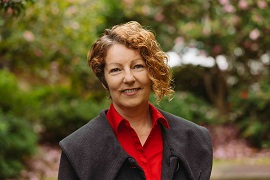
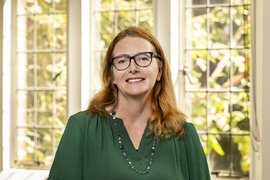
Collective Steering Committee Members
Prof Kate McGregor, A/Prof Ana Eclair, Prof Susie Protschky, Dr Lynda Ng, Dr Bronwyn Beech Jones, Dr Simon Farley and Chitrangi Kakoti.
Publications
Journal Articles
McClelland, G., Sakatani, N., and Oosaki, S. 2024. “Hidden Christian World Heritage on the Goto”, Yanai Initiative, UCLA/Waseda Universities Japan Past and Present.
McClelland, G,.2024 ‘“Whether my Body Breaks or the Plum Tree Withers": Iwanaga Maki, Social Welfare Pioneer, and the jūjikai Women's Religious Order’, Journal of Religious History, 1-20.
Wimbush, A, 2024. 'Reading the BUMIDOM along the Archival Grain', Bulletin of Francophone Postcolonial Studies, 14(1), 2-14.
Black, S., Kennedy, R., & Kent, L. 2024. "Memory, activism and the arts in Asia and the Pacific". Memory Studies, 17(3), 471-479
McGregor, K., and Dragojlovic, A. 2024. “Songs from Another Land: Decolonizing memories of colonialism and the nutmeg trade”, Memory Studies, 17(3), 599-612
Dragojlovic, A. and Samuels, A, 2023. "Silent Reverberations: Potentialities of Attuned Listening”, American Anthropologist, 125(4), 880-883
Dragojlovic, A. and C.L. Quinan, 2023. "Queering Memory: Toward re-membering otherwise", Memory Studies, 16(1), 3-11
Dragojlovic, A. & C.L. Quinan, 2023. ‘’Queering and Decolonising the Museums: ‘In the Presence of Absence’ exhibition", Memory Studies, 16(1), 161-165
Wimbush, A, 2023. 'The Windrush and the BUMIDOM': The Memorialization of Caribbean Migration', Memory Studies, 16(5), 1328-1342.
Wimbush, A. 2023. 'An Oral History of the BUMIDOM', Nottingham French Studies: Early Career Voices in French Studies, 62(3), 282-296.
McGregor, K., and Dragojlovic, A. 2022. '‘They Call Me Babu’: The Politics of Visibility and Gendered Memories of Dutch Colonialism in Indonesia', special issue on 'Mobilising Affect, Trauma, Memory: The Politics of Gendered Memory and Gendered Silence', Women's History Review, 31(6), 933-952
Books
Rethinking Histories of Indonesia: Experiencing, Resisting and Renegotiating Coloniality (ANU Press, 2025).
Co-edited by collective members Sadiah Boonstra, Bronwyn Anne Beech Jones, Katharine McGregor, Ken M.P. Setiawan and Abdul Wahid. Chapters by collective members Brigitta Isabella, Grace T. Leksana, Ravando, and Susie Protschky. Cover artwork by collective member Zico Albaiquni.
Dragojlovic, A. and Samuels, A, 2023. Tracing Silences: Towards an Anthropology of the Unspoken and Unspeakable. Routledge.
McGregor, K. 2023. Systemic Silencing: Activism, Memory, and Sexual Violence in Indonesia. University of Wisconsin Press.
Kim Watson, J. 2021. Cold War Reckonings: Authoritarianism and the Genres of Decolonization. Fordham University Press.
Book Chapters
Dragojlovic, A. (2021). Practising affect for haunted speakability: Triggering trauma through an interactive art project. History and Anthropology, 32(4), 426–441.
Kim Watson, J. 2023. "Diaspora and Detention: Behrouz Boochani, Manus Prison and Genres of the Borderscape." Diaspora and Literary Studies, ed. by Angela Naimou. Cambridge University Press.
Contact
- Email us contact or partner with us at the History, Memory and Decolonial Futures Research Collective
- decolonial-futures@unimelb.edu.au
Banner Image: Zico Albaiquni, University of Melbourne PhD Candidate, Mencari Arah menuju pengertian lukis sedia kala (In the search of lukis in the sense of what It used to be), VCA. This work is offers a critical decolonial reflection on "mooi indie," or the colonial influence in Indonesian art which includes the prioritisation of aesthetic beauty above all else. This perspective has led to the exoticisation of people, portraying them in a manner that suggests they are natural and untouched, detached from the harsh realities of colonial life. This depiction effectively sanitises and distorts the true social and historical context, reinforcing simplistic and idealised views of the past. (Licensed)