Why study or research cultural conservation studies?
In a rapidly changing world, conservation studies equips us with the knowledge and skills to protect our shared cultural heritage. From museum and private collections, to shipwrecks and archaeological sites, what we preserve today shapes how future generations understand identity, memory and place.
Cultural conservation is where art, heritage, and science come together to safeguard what matters. Through a mix of social and material science, studying conservation will open pathways for you to engage with philosophical, intellectual, scientific, and industry-based thinking and practice.
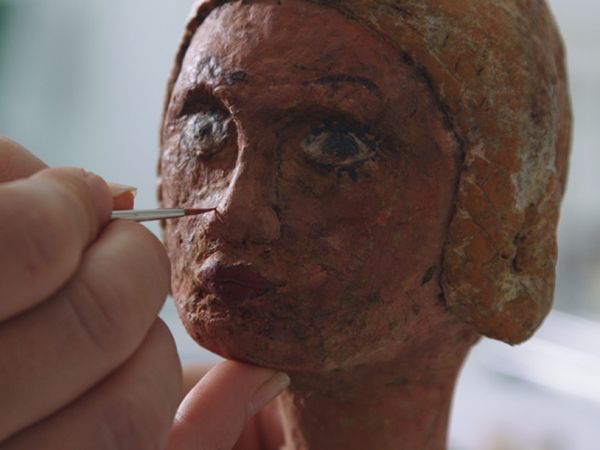
Header image: Under Kwan Tai's Gaze, Danni Lin, 2026. Winner of the Lens of Discovery Competition (HASS entry) 2026.
Program for the day
-
Time Event 10:00 Grimwade laboratories are open.
Explore artistic and cultural items from around the world, and from personal archives and collections. Guests can also view look through fine art prints, modern art, temple ephemera and more.
10:30-10:45 XRF Demonstration
XRFs emit a stream of low intensity x-rays to excite atoms in pigments, telling us what elements are present in a particular object.
11:00-11:15 Laboratory tour 11:30-11:45 Infrared demonstration
Infrared cameras can let us see beyond the canvas through to initial sketches or changes by artists, known as ‘pentimenti', earlier images, forms, or strokes that have been changed and painted over.
12:00-12:15 Laboratory tour 12:30-12:45 Presentation
Learn more about Cultural Conservation Studies at Melbourne
1:00-1:15 Laboratory tour 1:30-2:00 Research and Careers in cultural materials conservation: from lab to field
In this panel presentation, join Head of Grimwade Conservation Services, Vanessa Kowalski to explore your future career in cultural materials conservation, and learn more about conservation research opportunities as our PhD students discuss their impactful projects.