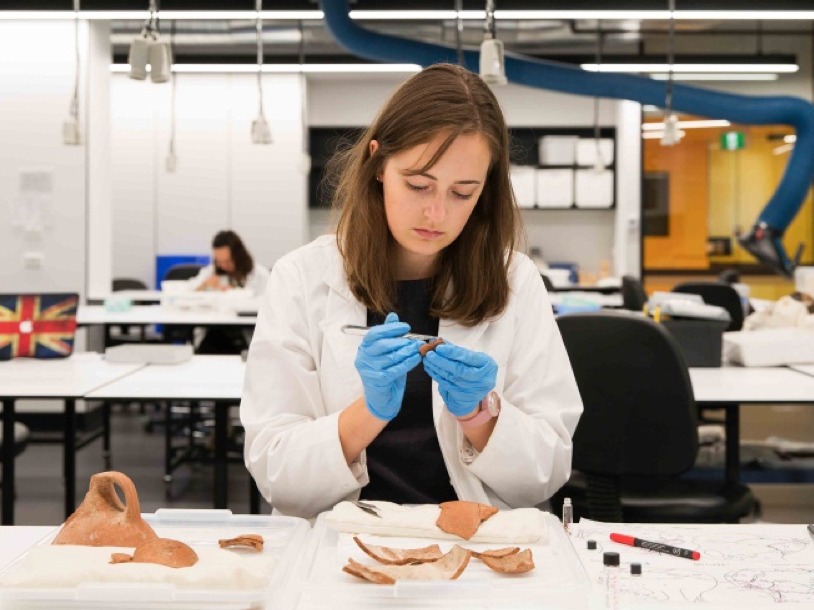
Lead the future of preservation and cultural care
The Robert Cripps Institute for Cultural Conservation offers a dynamic learning environment where education is deeply connected to real-world conservation practice.
Teaching and learning are anchored in an interdisciplinary, practice-driven ethos aimed at conserving cultural heritage for future generations. Our curriculum integrates philosophical, scientific and industry-based thinking to equip students with the conceptual, technical and ethical tools needed in the field of cultural materials conservation.
Programs range from specialist coursework certificates and a graduate certificated pathway through to the flagship Master of Cultural Materials Conservation, and research degrees such as the PhD (Arts). Our learning programs are administered through the Grimwade Centre and the University of Melbourne.
Why choose The Robert Cripps Institute for Cultural Conservation at The University of Melbourne
-
Work on conservation challenges that shape policy, museum practice and cultural heritage care across Australia and beyond.
-
Gain privileged access to conservation facilities, archives and institutional partnerships through Grimwade Conservation Services.
-
Collaborate with conservators, scientists, Indigenous knowledge holders and industry partners across sectors.
-
Position your research through exhibitions, public programs, media outreach and institutional partnerships that amplify your work.
-
Be part of a new institute driving forward-thinking approaches to sustainability, digital preservation, First Nations-led research and future conservation methods.
Master of Cultural Materials Conservation
Take advantage of our unique position as Australia's conservation research centre. Our interdisciplinary postgraduate program provides students with the opportunity to work with academics, senior heritage professionals and conservators.
Through a mix of social and material science, learn to conserve cultural knowledge for future generations. You’ll interact with Indigenous art centres, including the Warmun Art Centre, global partners like the National Museum of the Philippines, and local institutions such as Museums Victoria.
Chemistry Bridging Course
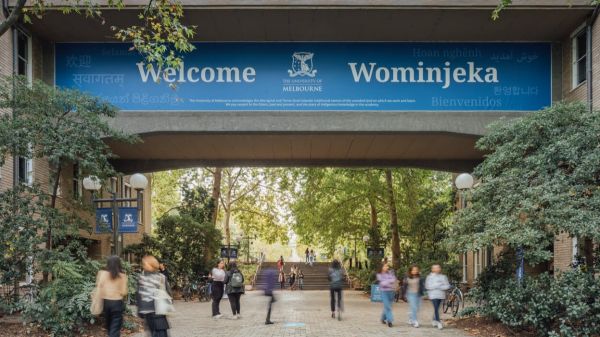
The Grimwade Centres Chemistry Bridging Course has been specifically developed to teach the fundamentals of chemistry to those entering the Master of Arts in Cultural Material Conservation. Our non-award, one-week course is tailored for students without a chemistry background.
Doctor of Philosophy - Arts
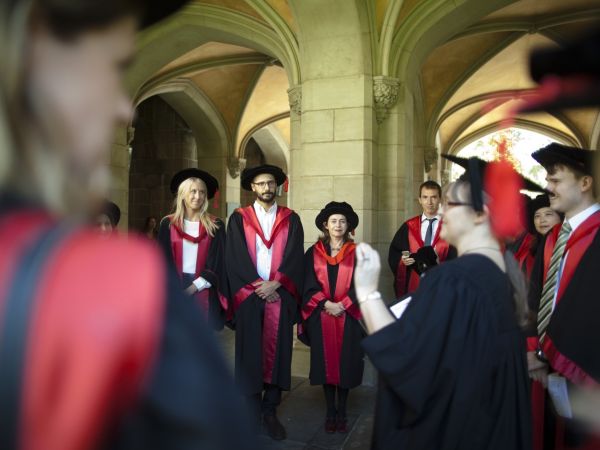
Grimwade PhD students undertake the Doctor of Philosophy, the highest Arts degree offered by the University of Melbourne. By writing a sustained thesis (80,000-100,000 words) of independent research which examines a specific problem, issue or topic, you will make a significant and original contribution to conservation in a chosen area of study. We encourage research applications in our specialisations and research groups but also emerging priority areas impacting the conservation of diverse cultural activity.

Masters Research
Master of Arts (Thesis Only) lets you showcase your ability to present and argue a coherent hypothesis (30,000 words) on your chosen conservation issue, as supported by research and analysis. It can act as a pathway to a Doctor of Philosophy – Arts degree.
Master of Arts (Advanced Seminar and Shorter Thesis) provides you the flexibility to pursue an area of conservation research that interests you and produce a thesis (20,000-22,000 words) based on original research. It can act as a pathway to a Doctor of Philosophy – Arts degree.
Graduate coursework
Specialist Certificate in Cross-Cultural Conservation and Heritage (SC-CCCONS) (25 credit points) is designed as a knowledge exchange program and draws on industry and community partnerships to combine traditional and contemporary approaches to the preservation of cultural objects across a range of cultural settings. The Specialist Certificate is a pathway to further study in the Graduate Certificate in Arts (Advanced).
Graduate Certificate in Arts (Advanced) - Cultural Materials Conservation (50 credit points) allows students to undertake coursework subjects in cultural materials conservation. It provides students with an introduction to cultural material conservation that combines theory and practice. The Graduate Certificate in Arts (Advanced) is entry pathway to the Master of Cultural Materials Conservation.