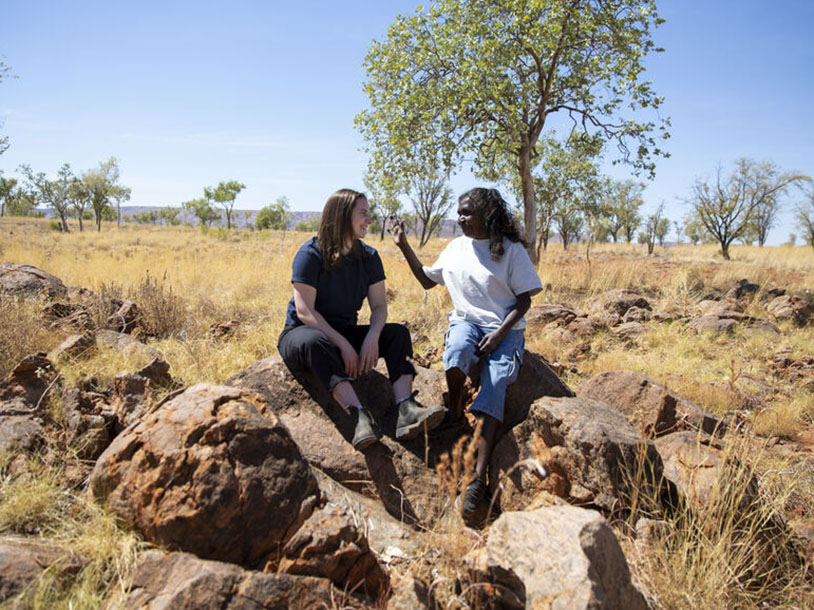
Through enterprise partnerships and engagement with cultural institutions, Indigenous and global networks, our research is translated into meaningful impact, shaping the future of conservation practice locally and internationally.
Research at the Robert Cripps Institute for Cultural Conservation is guided by:
Our research themes
-
Grounded in evidence-based content and critically-engaged pedagogy the Institute offers students a transformative learning and quality student experience. The Institute educates future conservators to articulate the relationship between cultural materials and the economic, social, and cultural well-being of individuals, communities, and nations; provide expert skills in conservation specialties; engage in, contribute to and influence national and international debates in the field; and act as informed advocates for cultural conservation.
-
The Institute expands conservation research outputs with a focus on social impacts to enable critical cultural outcomes and support leading post-graduate and early career researchers. Research development underpins the Institute’s approach to Innovation, Engagement and Education.
-
Innovation drives interdisciplinary excellence, societal engagement, and global impact with a focus on research translation and commercialisation, aimed at generation of transformative knowledge, innovative accessible technologies and commercial outcomes that support the ownership, protection, interpretation, and revitalisation of tangible and intangible heritage across diverse contexts.
-
Engagement and Enterprise provides intellectual and strategic leadership to scope new and existing partnerships and align activities to the Cripps Institute programs, and to strengthen translation and communication pathways and partnerships for social and cultural impact, and
Our research groups
-
Technical and authenticity studies
Investigates materials, ageing and conservation technologies to improve practice. Combines scientific analysis with innovation in treatment methods.
-
National conservation program
Builds capacity and access to conservation services across Australia. Focuses on education, policy, and support for regional and remote communities.
-
Issues in contemporary conservation
Addresses the challenges of contemporary conservation theory in practice. Emphasises ethics, evolving practices and future-focused methodologies.
-
Culture, Climate and Sustainability
Develops strategies to protect heritage from environmental and climate impacts. Works across regions and communities to build resilience and sustainable conservation practices.
-
Intangible and digital heritage
Defines cultural heritage as ongoing cycles of performance and production, transmitted across generations through diverse methods and perspectives.
-
Cross-cultural conservation
Exploring how conservation supports community identity, especially in Indigenous and remote contexts. Focuses on collaborative, culturally grounded approaches to heritage care.
Our commitment to Indigenous two-way partnerships
Our research reiterates our commitment to partnership and meaningful collaboration, grounded in a First Nations First ethic. We recognise that Australian Indigenous nations never ceded sovereignty and we approach all research and engagement with respect for the cultural authority, priorities and knowledge systems of the communities we work with. Guided by the principles of the Murmuk Djerring strategy, we aim to build relationships based on trust, accountability and shared purpose, ensuring that our work responds to community-led interests rather than institutional agendas.