
The Australian Centre fostered world-leading research on the settler state, its culture, institutions, sovereignty and identities across several different disciplines, including history, sociology, literature, politics, visual arts and anthropology.
ANNOUNCEMENT
The Australian Centre was established in 1989 to promote research and education excellence in Australian culture. This has included interdisciplinary scholarship and community engagement through research and programs focused on critical, anti-colonial studies of Australian society, history, and Indigenous-settler relations.
The Australian Centre closed at the end of 2025. Content on this website relating to the Critical Public Conversations and Research sections will remain available until 31 December 2026.
About The Australian Centre
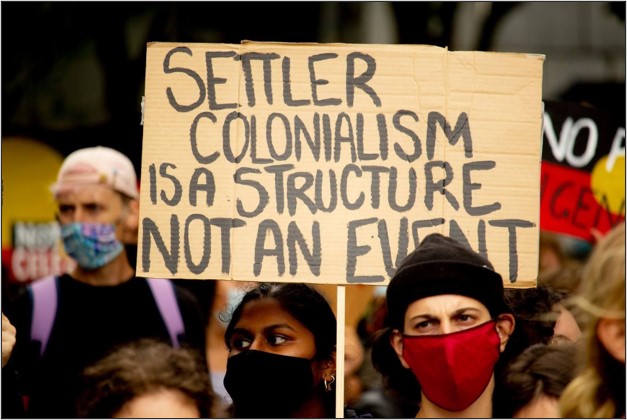
The Australian Centre aims to foster a critical examination of Australian society, culture and history, with an interdisciplinary focus on settler colonialism and its institutions.
Our values:
- A place-based ethic: We value and respect the centrality of Country and First Peoples.
- Reflexivity: We recognise settler positionality as a beneficiary of colonisation.
- Reciprocity: We use our resources to support, remunerate and reciprocate the contributions of Indigenous collaborators wherever possible.
- Justice : We think always about how our work contributes to more just relations between Indigenous and non- Indigenous peoples.
Our people
Explore what we do
The Centre offers a rich program of research and activity that includes research, events and critical conversations, education program and partnerships and projects and work closely with industry, government, NGOs, and community organisations.
-
Critical public conversations
The Australian Centre's hugely popular Critical Public Conversations (CPC) series is the Centre's flagship public event offering.
-
Graduate research
The Australian Centre supports graduate research work in Indigenous settler relations.
-
Treaty education
The Australian Centre's Treaty Education explores how treaties function in relations between Indigenous peoples and contemporary settler societies.
-
Research
Our objective is to elevate the expertise and influence of the University of Melbourne researchers through research, research training, specialised graduate education and meaningful critical public discourse.
Past news and events from The Australian Centre
Acknowledgement of Country
The Australian Centre is located at the University of Melbourne, Parkville campus, on unceded Wurundjeri Woi-Wurrung land. We acknowledge Country and the people belonging to Country, the Wurundjeri Woi-Wurrung Traditional Owners, and we value our continuing relationship with you and your on-going care for Country. We thank the Wurundjeri Woi-Wurrung Cultural Heritage Corporation for your generous and ongoing contributions to the Australian Centre.
We also acknowledge that the University of Melbourne has campuses on Country of other First Nation groups, and we acknowledge the Traditional Owners of the Parkville, Southbank, Werribee and Burnley campuses, the Wurundjeri Woi Wurrung and Bunurong/Boon Wurrung peoples; the Yorta Yorta Nations, whose Country the Shepparton and Dookie campuses are located, and the Dja Dja Wurrung Nations, Melbourne University’s Creswick campus location.
The Australia Centre acknowledges all Aboriginal and Torres Strait Islander people and First Nations peoples whose work, lives and Country intersect with ours. We acknowledge that invasion and colonisation has caused harm that is on-going to First Peoples.
The Australian Centre aims to be a leading intellectual hub, fostering a dynamic, interdisciplinary, and global network of Indigenous and non-Indigenous scholars. Recognised for its critical and anti-colonial scholarship, the Centre is dedicated to producing impactful research through collaborative partnerships with the communities it engages.
Research Streams
Supporting emerging research
The Australian Centre seeks to catalyse, incubate, and support research in Indigenous-settler relations through two key programs.

Seed Funding
In 2025, the Centre’s seed funding program is designed to support up to three research projects from any discipline that align with one of our five research streams and are working towards a grant application or publication.
Read more
Visiting Scholars
The Centre is committed to fostering knowledge exchange and international collaboration through its visiting scholar program. We welcome externally funded residencies between two weeks and one month in duration.
Read moreKey Publications
The Australian Centre supports the production of significant research outputs in Indigenous-settler relations through high-quality research events including symposia, workshops, and conferences; through research assistance and editorial support; and through other programs including visiting scholars, seed funding, and research streams. For a full list of publications from Fellows, Affiliates and the team, visit their Find an Expert page or institutional profile.
Collaborations
View recordings of past events hosted in collaboration with international partners, scholars, and networks.
-
The Racial Politics of Australian Multiculturalism
-
Indigenous Women Futuring
-
Visiting Fellows Seminar (Semester One)
-
Reflections on Indigenous Politics and Settler Colonialism in Aotearoa
-
Visiting Fellows Seminar (Semester Two)
-
Root and Branch: Essays on Inheritance
-
Refusal, Resurgence, Renewal: Indigenous Independence in the 21st Century
-
The Politics of Solidarity and Anti-Racism in Settler Colonial Contexts
-
Recoding relationally: Indigenous new media and digital storytelling
The Critical Public Conversation (CPC) series aims to enrich the university's social, cultural, and intellectual life and beyond by facilitating conversations that explore the challenges at the heart of relations between Indigenous and settler peoples. By making explicit the fraught foundations of this relationship and its centrality to the politics of this continent, the series develops capacity for scholarship that is more ethical and academically rigorous. Each year the series is organised around a central theme.
Critical Public Conversations webinar recordings
-
Settler Nationalism and its Discontents (2025)
-
Sovereignty and Solidarity: Redefining belonging in so-called Australia (2024)
-
Country, Climate, Colonialism (2023)
-
Undoing Australia (2022)
-
Exploring Indigenous Settler Relations (2021)
-
What Does Success in Indigenous Higher Education Look Like? (2020)
-
Introducing Critical Public Conversations (2020)